 Save
Save My neighbor came over on a gray afternoon, shivering from the cold, and I found myself heating broth without really thinking about it—just moving through the kitchen with ginger and garlic slices falling into the pot like they belonged there. That moment taught me something about comfort food: it doesn't announce itself with fanfare, it just wraps around you quietly. This dumpling soup became our thing after that, a quick fix for days when the weather turns and you need something warm that doesn't require hours of tending.
I made this for my sister the week she moved into her new place, still surrounded by cardboard boxes and the smell of fresh paint. She sat at her almost-empty kitchen table with a bowl cradled in both hands, and the soup seemed to matter more than any housewarming gift I could've brought. That's when I realized this recipe works because it feels like someone cares enough to make something nourishing, even when life is chaotic.
Ingredients
- Low-sodium chicken or vegetable broth (6 cups): The foundation of everything—use good broth because there's nowhere to hide when the ingredient list is this short.
- Fresh ginger, peeled and thinly sliced (1 tablespoon): Don't skip peeling it; the skin can turn bitter when it simmers, and thin slices release their warmth faster than chunks.
- Garlic, minced (2 cloves): Minced matters here because you want it to dissolve into the broth and become part of the flavor, not a chewy surprise.
- Soy sauce (1 tablespoon): This is your seasoning backbone—taste as you go because brands vary wildly in saltiness.
- Sesame oil (1 teaspoon): A small amount adds richness without overwhelming; too much tastes like you're eating perfume.
- Rice vinegar (1 teaspoon): The brightener that keeps the soup from tasting flat and one-note.
- Green onions, sliced (2, plus extra for garnish): Half go into the broth to perfume it, half sprinkle on top for color and a fresh bite.
- Baby bok choy, halved or quartered lengthwise (2 cups): The leaves wilt in seconds, so add them last or they'll turn to mush—this timing trick changed everything for me.
- Carrot, julienned or thinly sliced (1 medium): Thin cuts mean they soften just enough in the brief cooking time without becoming mushy.
- Shiitake mushrooms, stems removed and sliced (1/2 cup): The earthy umami here deepens the whole pot with almost no effort.
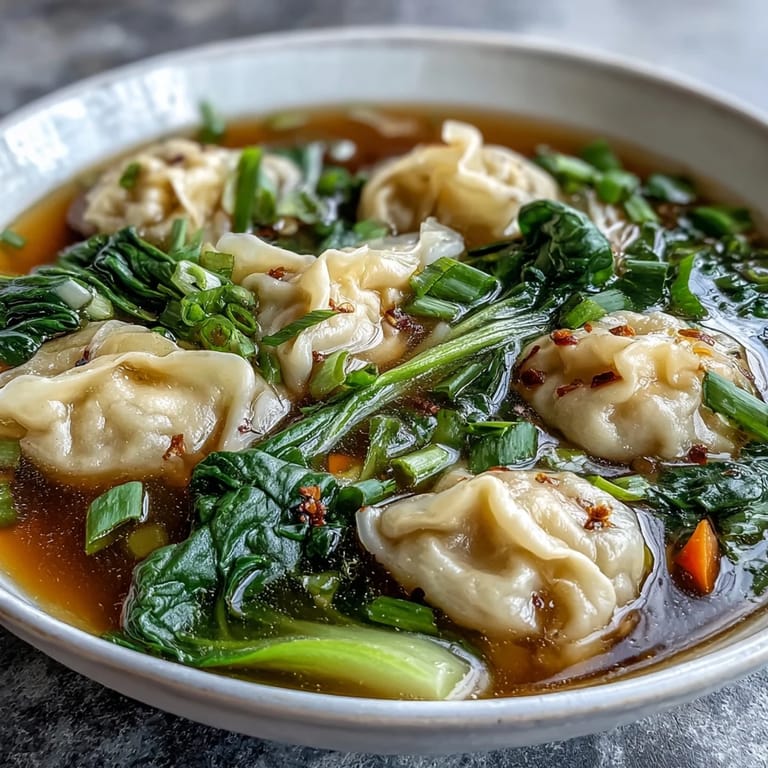
- Frozen or fresh Asian dumplings (16-20): Quality matters—read the ingredient list because some are better than others, and frozen works just as well as fresh if you don't have time to make your own.
- Fresh cilantro leaves (optional): A handful on top adds herbaceous brightness that makes people think you worked harder than you did.
- Chili oil (optional): The kind with flakes suspended in it gives both flavor and a gentle heat that builds as you eat.
- Sesame seeds (optional): Toasted ones add nuttiness and visual appeal—I always have some on hand.
Tired of Takeout? 🥡
Get 10 meals you can make faster than delivery arrives. Seriously.
One email. No spam. Unsubscribe anytime.
Instructions
- Build Your Fragrant Base:
- Pour the broth into a large pot and add the ginger slices, minced garlic, soy sauce, sesame oil, rice vinegar, and green onions all at once. Bring it to a gentle boil over medium-high heat—you'll smell the ginger and garlic releasing into the steam, which is how you know it's working.
- Let the Broth Breathe:
- Reduce heat to medium and let everything simmer together for 5 minutes without rushing it. This isn't about boiling; it's about giving the flavors time to meld and soften into the broth itself.
- Add the Vegetables that Need Time:
- Slip in the carrot slices and mushroom pieces, then simmer for 3 more minutes. They won't be fully tender yet, but that's intentional—you're giving them a head start before everything else arrives.
- Welcome the Dumplings:
- Gently add the dumplings to the broth (don't drop them like you're angry at them) and let them simmer according to package directions—usually 5 to 7 minutes for frozen, 3 to 5 for fresh. You'll see them bob to the surface when they're nearly done, and that's your signal to keep watching.
- Finish with the Tender Greens:
- Add the bok choy just before everything else is completely cooked—2 to 3 minutes gives you vegetables that are wilted but still bright green and slightly crisp. This is the moment that separates a good soup from one where everything tastes overcooked.
- Taste and Adjust:
- Before you serve, taste a spoonful and decide if it needs more soy sauce for depth or rice vinegar for brightness. Trust your instinct here; seasoning is personal.
- Serve with Style:
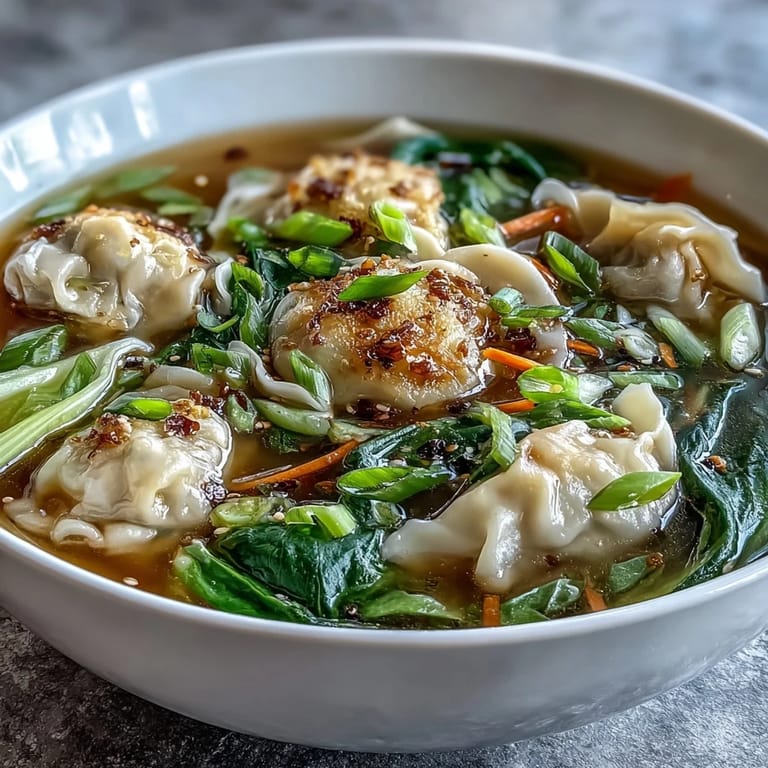
- Ladle everything into bowls with equal parts broth and vegetables and dumplings, then let people garnish their own bowls with green onions, cilantro, a drizzle of chili oil, and a sprinkle of sesame seeds if they want them. This makes it feel less like a quick weeknight dinner and more like you made something special.
 Save
Save My mother taught me that soup is a gift you can make with what's already in your kitchen, and this one proved her right. I've made it on lazy Sundays, on nights when I was exhausted, and even once at midnight when my roommate came home upset—and somehow every version tasted like care.
The Magic of Frozen Dumplings
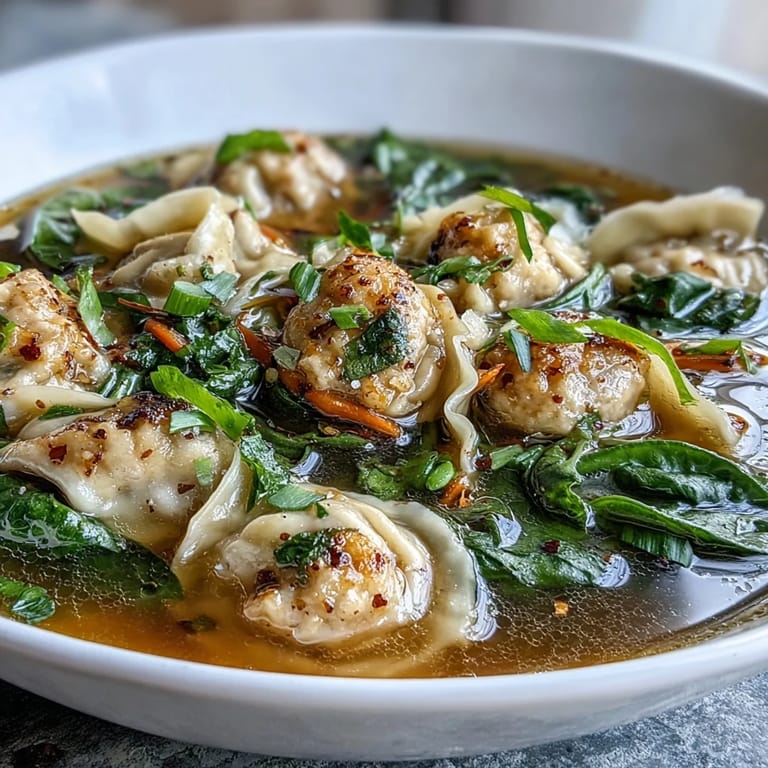
There was a time when I thought frozen dumplings were a shortcut, something less-than compared to handmade ones. Then I realized I was being a snob about it: frozen dumplings are convenient, they taste excellent in broth, and they let you spend your energy on getting everything else right instead of spending an hour folding. They cook through gently in the simmering broth, absorbing flavor as they float, and by the time they reach your bowl, they taste like they were meant to be there.
Why Thin Cuts Matter
I used to slice vegetables however I wanted and wondered why some soups had chunks that felt unfinished while others had perfectly tender pieces. The answer is simple: thinner slices cook faster and more evenly in the short time the broth simmers. Julienned carrots, sliced mushrooms, and halved bok choy all soften at nearly the same rate, which means nothing gets left crunchy or overcooked while you're waiting for something else to catch up.
Making It Your Own
This soup is a skeleton that wants to be dressed up or kept simple depending on what you have and what you're craving. One night I added a splash of fish sauce because someone mentioned it would deepen the umami, and the broth became almost meditative to sip. Another time I swapped spinach for bok choy because that's what was in the crisper drawer, and it worked beautifully. The lesson here is that recipes are guides, not laws—taste as you go and trust yourself.
- A splash of fish sauce transforms the broth if you're not vegetarian and want that mysterious depth.
- Fresh lime juice squeezed at the table adds brightness some people crave, while others prefer the soup as-is.
- Leftover dumplings can be frozen in the broth for up to three days, and the flavors actually get better as they sit.
 Save
Save This soup has become my answer to so many moments—when someone needs comfort, when I'm tired but want something real, when the weather turns cold and the kitchen feels like the only warm place in the world. It asks very little of you and gives back something that feels generous.
Recipe FAQs
- → Can I use a vegetarian broth for this dish?
Yes, substituting vegetable broth keeps the dish vegetarian while maintaining rich flavor.
- → How do I know when dumplings are cooked?
Dumplings usually float to the surface when fully cooked; check package for specific times.
- → Can I substitute bok choy with another green?
Spinach or napa cabbage can be used as alternatives, but cooking times may vary.
- → What garnishes complement this dish?
Fresh cilantro, sliced green onions, chili oil, and sesame seeds add flavor and texture.
- → Is this dish suitable for a quick weeknight meal?
Yes, with a total cooking time around 35 minutes, it’s ideal for easy, flavorful dinners.