 Save
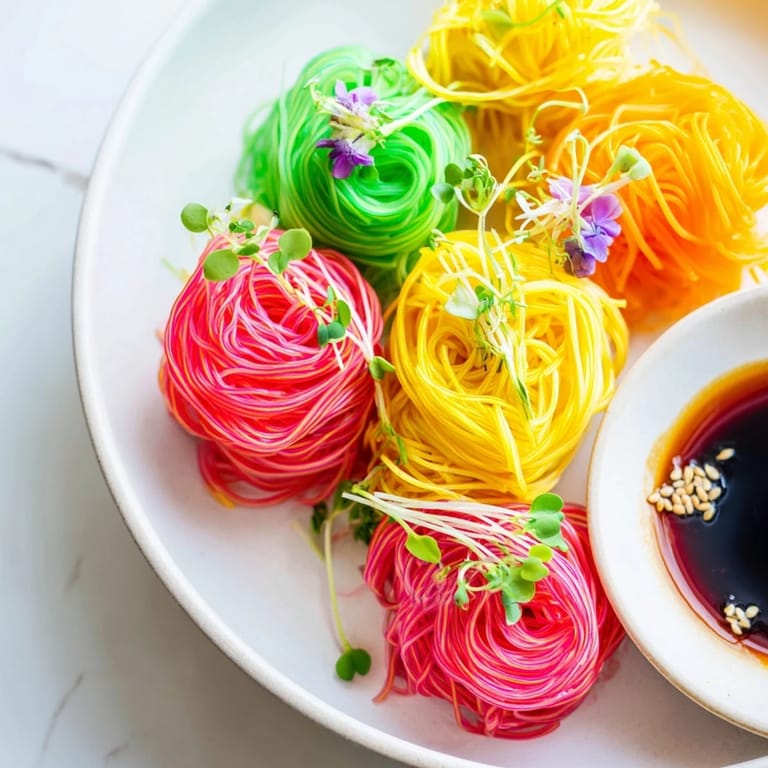
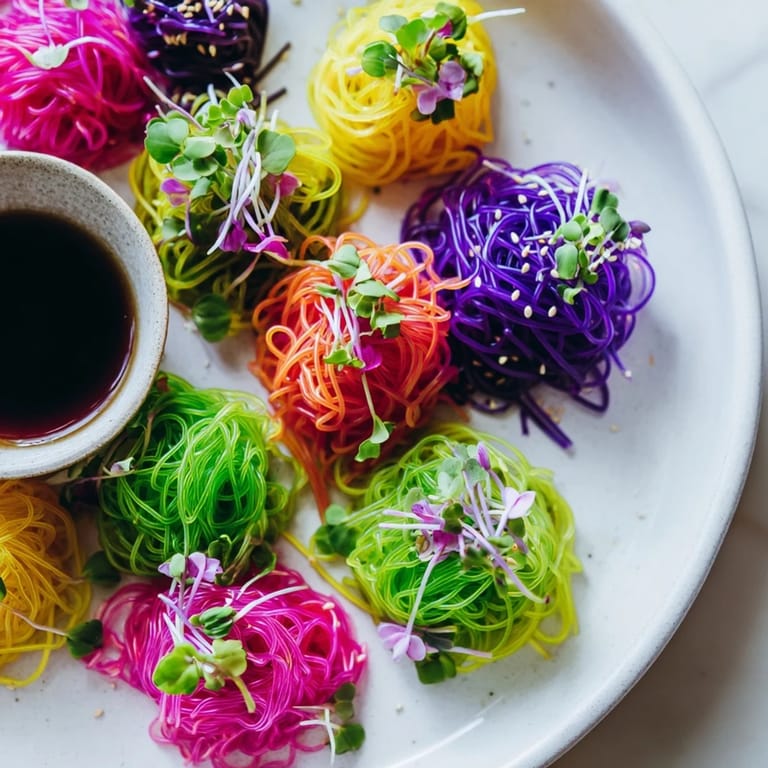
Save The first time I made these neon noodles, I was trying to impress someone skeptical about experimental cooking. I'd just discovered agar-agar at a specialty market and spent an entire evening squeezing colored gelatin through a syringe into ice water like I was performing some kind of kitchen magic trick. When those bouncy, luminous strands emerged—bright pink, electric blue, lime green—I realized I'd stumbled onto something that felt less like food and more like edible art. My guests didn't know whether to eat them or marvel at them first.
I made this for a dinner party where everyone was tired of the same old appetizers, and honestly, it was the thing people kept talking about days later. One guest asked if I'd bought them from a fancy restaurant, which felt like the highest compliment. That's when I knew this dish does something special—it surprises people and makes them feel like they're somewhere unexpected.
Ingredients
- Water (500 ml): This is your blank canvas; use filtered water if you have it, as chlorine can sometimes affect the clarity of the finished noodles.
- Agar-agar powder (7 g): This is the star ingredient that creates that signature bouncy texture—don't substitute with gelatin, which won't give you the same firm-yet-delicate result.
- Sugar (1 tbsp): Balances the savory sauce and brings out the subtle sweetness in the agar.
- Food coloring: Gel colors tend to be more vivid than liquid, and neon shades photograph beautifully; use just a drop or two, as these colors are intense.
- Soy sauce or tamari (80 ml): The foundation of your dipping sauce; tamari is the gluten-free choice and honestly tastes just as good.
- Rice vinegar (1 tbsp): Adds brightness without overpowering; it's milder than regular vinegar.
- Mirin (1 tbsp): Brings a gentle sweetness and glossy mouthfeel to the sauce.
- Sesame oil (1 tsp): Use toasted sesame oil for depth; a little goes a long way.
- Fresh ginger (1 tsp grated): Peel it just before grating to get the most fragrant, spicy kick.
- Scallion (1, finely sliced): Save the white and light green parts for the sauce; the dark green can become papery when chilled.
- Toasted sesame seeds (1 tsp optional): These add nuttiness and texture; toast them yourself if you can for maximum flavor.
- Microgreens or edible flowers: Optional but worth it—they add color contrast and a fresh peppery note.
Tired of Takeout? 🥡
Get 10 meals you can make faster than delivery arrives. Seriously.
One email. No spam. Unsubscribe anytime.
Instructions
- Make the agar base:
- Combine water, agar-agar powder, and sugar in a saucepan over medium heat, stirring constantly until everything dissolves and you see the mixture come to a rolling boil. You'll know it's ready when there are no grainy bits left—usually about 2-3 minutes—and the liquid turns completely clear and glossy.
- Divide and color:
- Remove from heat and let it cool for just a minute—it should still be liquid but not dangerously hot. Pour into separate bowls and add a drop or two of food coloring to each; the colors will be muted at first but become vivid as they cool.
- Form the noodles:
- Fill a syringe or squeeze bottle with one color at a time and pipe thin strands directly into a bowl of ice water; they'll set in about a minute and feel firm to the touch. If you don't have a syringe, pour the mixture into a flat tray, let it set completely in the fridge, then cut it into thin ribbons with a sharp knife.
- Chill and drain:
- Collect all your noodles and give them a quick rinse under cold water to remove any sticky residue. Drain well and refrigerate until serving so they stay bouncy and cold.
- Build the sauce:
- Whisk together soy sauce, rice vinegar, mirin, sesame oil, ginger, and sugar in a small bowl until the sugar dissolves completely. Stir in the scallion and sesame seeds just before serving so they stay fresh and crunchy.
- Plate and serve:
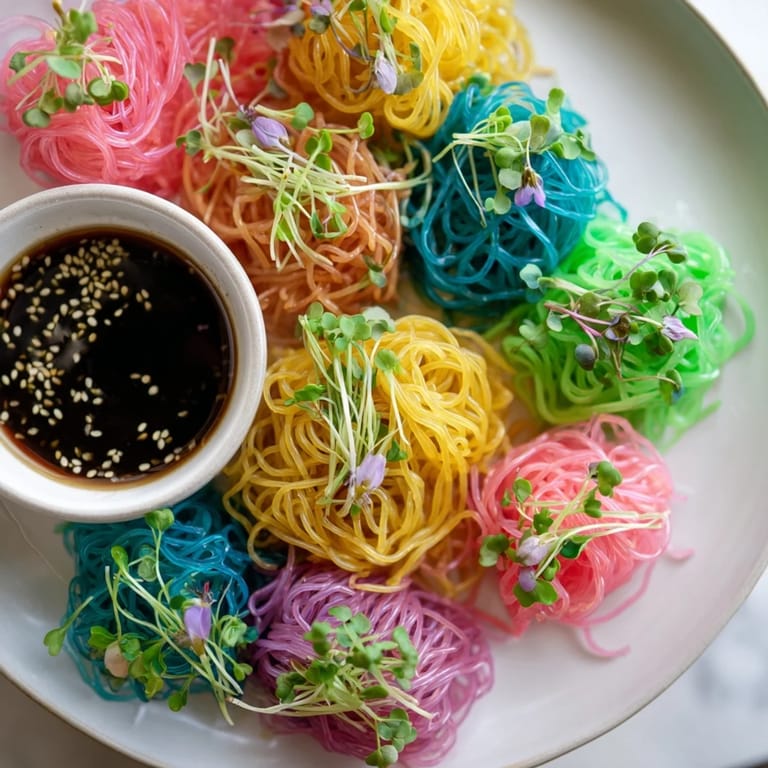
- Arrange the neon noodles in small, artistic bundles on a plate, scatter microgreens or edible flowers on top if you're feeling fancy, and pour the sauce into small dipping bowls alongside.
 Save
Save There's a moment when someone tries these for the first time and their face shifts from curiosity to genuine delight—the noodles bend without breaking, the sauce has just the right amount of zing, and suddenly the whole thing clicks as more than just a gimmick. That's the moment I made these for, really.
The Science Behind the Bounce
Agar-agar is a polysaccharide extracted from red algae, and it's been used in Asian cuisine for centuries, though most people encounter it in molecular gastronomy contexts. Unlike gelatin, which relies on protein networks to set, agar forms a gel through its own unique structure, creating something that's firmer at room temperature and genuinely bouncy rather than jiggly. This is why it's perfect for this recipe—the noodles hold their shape and texture even when sitting out for a bit, making them far more forgiving than gelatin-based alternatives.
Color Variations and Natural Options
If you want to skip synthetic food coloring, nature offers some brilliant alternatives that work surprisingly well. Spirulina creates a deep blue-green, butterfly pea flower gives you a vivid blue that shifts to purple with acid, and beet juice produces a gorgeous magenta. These natural options do dilute the agar slightly since you're adding liquid, so you might need to use a tiny bit more agar powder to compensate, but the results are visually stunning and taste cleaner.
Serving Ideas and Occasions
I've served these as an opening course, as a palate cleanser between heavier dishes, and even as a playful light lunch alongside other cold preparations. They work beautifully at modern dinner parties, potlucks where you want to stand out, or even as a striking plating element on a larger composed dish. The key is understanding that these noodles are about experience as much as flavor—they're meant to make people smile and feel a little bit delighted.
- Pair with other chilled, delicate dishes if serving as a multi-course meal.
- Make the noodles a few hours ahead and store in the fridge, but assemble the plate just before serving.
- The sauce keeps for up to three days refrigerated, so you can prep it well in advance.
 Save
Save These neon noodles taught me that food doesn't always need to be complicated to feel special; sometimes all it takes is understanding one technique and executing it with intention. Every time I make them, someone asks where I learned to do this, and I get to share the little moment of kitchen magic that started it all.
Recipe FAQs
- → What gives the noodles their unique texture?
The noodles derive their bouncy and delicate texture from agar-agar powder, a seaweed-based gelatin substitute that sets firmly when cooled.
- → Can I make the noodles gluten-free?
Yes, by using tamari instead of traditional soy sauce in the dipping sauce, this dish remains gluten-free.
- → How do you achieve the neon colors in the noodles?
Food-safe gel or liquid coloring is added to the agar-agar mixture after boiling and before setting, creating vibrant neon hues.
- → Is there an alternative to food colorings for natural hues?
Natural alternatives like spirulina, butterfly pea flower, or beet juice can be used to add color without artificial dyes.
- → What tools help shape the agar-agar noodles?
Using a syringe or squeeze bottle allows piping the colored agar-agar liquid into thin noodle strands, which set quickly in ice water.
- → How should the dipping sauce be prepared?
The sauce blends soy sauce, rice vinegar, mirin, sesame oil, fresh ginger, sugar, scallions, and toasted sesame seeds for a balanced savory and aromatic flavor.