 Save
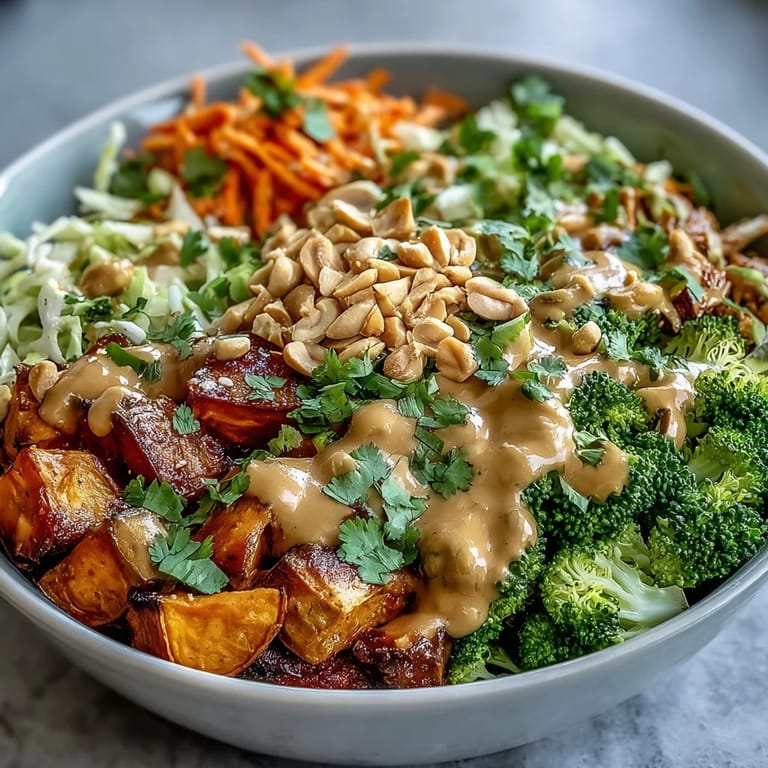
Save There's something almost meditative about building a Buddha bowl, especially when you're standing at your kitchen counter on a Tuesday evening, watching sweet potatoes turn golden in the oven while the smell of caramelizing edges fills the air. My friend Sarah brought this concept to life one afternoon, layering vegetables with such intention that it felt less like dinner prep and more like edible art. That first bite of creamy peanut sauce meeting crispy broccoli changed how I thought about weeknight meals entirely. Now, whenever I need something that feels both nourishing and exciting, this bowl is my answer.
I made this for my meal-prep Sunday last spring, and my partner wandered into the kitchen halfway through, drawn by the aroma of roasting sweet potatoes mixed with sesame oil and lime. He stood there watching me assemble the first bowl, and without saying anything, I just knew he was about to ask if we could make extra. By the time I finished plating the fourth one, he was already grabbing containers from the cabinet, understanding exactly what had just happened. That quiet moment of shared enthusiasm reminded me why I love cooking—not for perfection, but for these unplanned connections over food.
Ingredients
- Sweet potatoes, medium: The star that transforms when roasted, their natural sweetness becoming almost caramel-like at the edges.
- Olive oil: Just enough to help them crisp up without drowning them.
- Salt and black pepper: Simple seasonings that let the sweet potato flavor sing.
- Broccoli florets: These stay bright green and slightly crisp if you don't overcook them, providing satisfying crunch.
- Green cabbage, shredded: Raw cabbage adds a peppery freshness that grounds all the richer elements in the bowl.
- Carrots, grated: Their subtle sweetness echoes the potatoes without competing with them.
- Avocado, sliced: Add this last to prevent browning, and it brings creamy richness that complements the peanut sauce beautifully.
- Fresh cilantro, chopped: A handful lifts everything with brightness and herbaceous notes.
- Chopped peanuts: Toasted peanuts add texture and depth that raw ones can't quite match.
- Natural peanut butter: Look for versions with minimal ingredients—the creamier ones thin more smoothly.
- Soy sauce or tamari: The umami backbone that ties the sauce together; tamari works if you're avoiding gluten.
- Maple syrup: A touch of sweetness that balances the salty and tangy elements perfectly.
- Lime juice, fresh: Never use bottled for this—fresh lime juice makes an actual difference in how the sauce tastes.
- Sesame oil: A little goes far; it's the whisper of nutty flavor that makes people ask what they're tasting.
- Warm water: Essential for achieving that pourable consistency without breaking the sauce.
Tired of Takeout? 🥡
Get 10 meals you can make faster than delivery arrives. Seriously.
One email. No spam. Unsubscribe anytime.
Instructions
- Heat your oven and prep the sweet potatoes:
- Preheat to 400°F and get your baking sheet lined with parchment paper ready. Toss the diced sweet potatoes with olive oil, salt, and pepper until they're evenly coated, then spread them in a single layer where each piece can breathe and brown properly.
- Roast until golden and caramelized:
- Slide them into the oven for 25 to 30 minutes, turning the pan and stirring halfway through so the edges get that beautiful caramelized crispness you're after. They should be fork-tender inside with slightly charred edges.
- Prepare your vegetable components:
- While the potatoes roast, cut your broccoli into bite-sized pieces, shred the cabbage directly into a bowl, grate the carrots, and slice the avocado just before assembly to keep it from browning. Having everything prepped and ready makes assembly feel effortless.
- Whisk together the Thai peanut sauce:
- In a small bowl, combine peanut butter, soy sauce, maple syrup, lime juice, sesame oil, and 2 tablespoons of warm water, whisking until the mixture is creamy and smooth. Add more warm water one tablespoon at a time if you need it thinner—you want it to drizzle, not sit in a lump.
- Assemble your bowls:
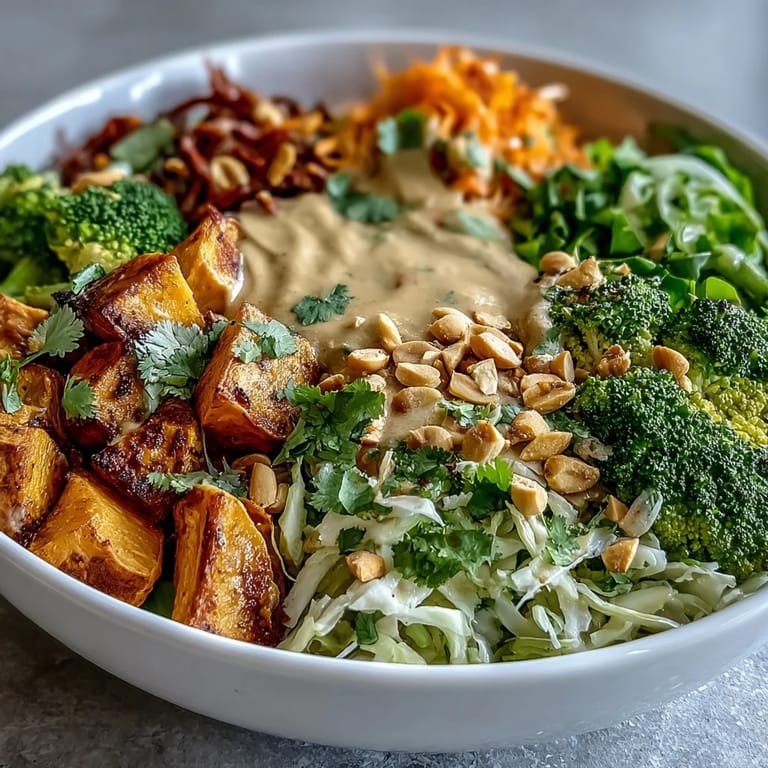
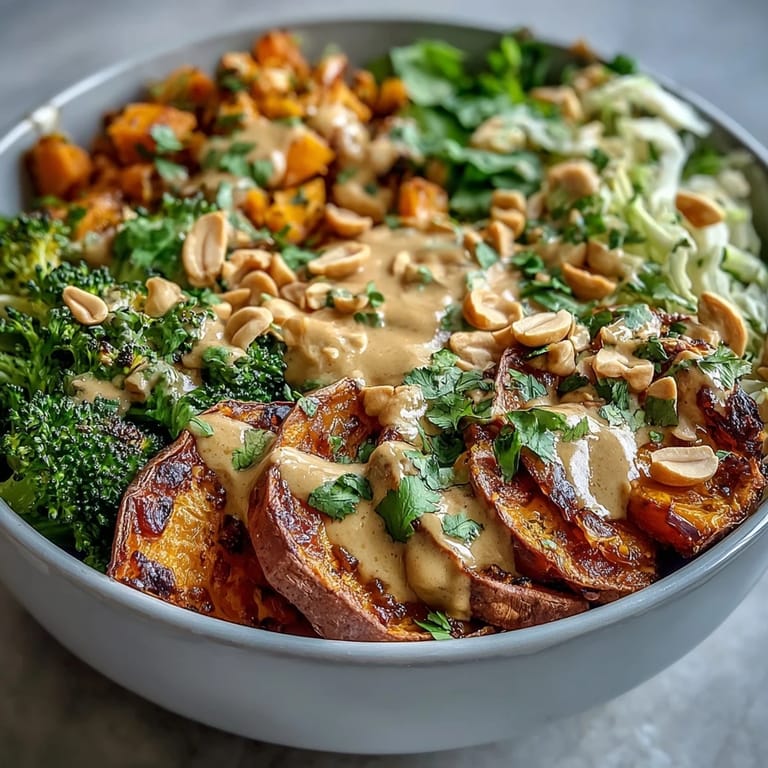
- Divide the broccoli, cabbage, and carrots among four bowls, then top each one with the warm roasted sweet potatoes and arranged avocado slices. Think about color and balance as you go—visual appeal makes the eating experience better.
- Finish with sauce and garnish:
- Drizzle each bowl generously with the peanut sauce, then sprinkle with fresh cilantro and chopped peanuts right before serving. The peanuts stay crunchier if you add them at the very last moment.
 Save
Save This bowl became my answer to the 6 PM question of what's for dinner, transforming an ordinary evening into something that felt intentional and delicious. There's genuine comfort in knowing that something this nourishing and colorful is just 45 minutes away from your plate.
The Magic of Roasting Sweet Potatoes
Roasting is where the sweetness in these potatoes deepens and caramelizes, especially if you give them space on the baking sheet and don't crowd them. I learned this the hard way after piling them too densely together, resulting in steamed disappointment instead of golden magic. Now I always use the largest baking sheet I have and spread them in a single layer, turning them halfway through to ensure every side gets time with the heat.
Making the Sauce Work for You
The peanut sauce is forgiving once you understand its basic ratio: roughly equal parts peanut butter and soy sauce, with lime and maple syrup for balance, and enough water to make it pourable. I've played with this endlessly—using almond butter one week, adding a teaspoon of ginger the next, experimenting with chili flakes when I wanted something with a kick. The beauty is that once you nail the base, you can make it your own.
Customizing Your Bowl
One of the reasons I return to this recipe constantly is how completely it adapts to what's in my fridge and what I'm craving that week. In summer, I swap out some vegetables for snap peas and cucumber, while winter versions get roasted brussels sprouts and shredded red cabbage instead. For protein, baked tofu cubes or chickpeas work beautifully, and I've even topped these bowls with a soft-boiled egg on hungrier days.
- Add sesame seeds or furikake seasoning for extra umami depth and visual interest.
- Keep extra sauce on the side since everyone has different preferences for how much they want.
- These bowls are excellent for meal prep—prepare components separately and assemble fresh each day.
 Save
Save This bowl has become my trusted ally on nights when I need something that tastes thoughtfully made but doesn't demand much thought to prepare. Every time I make it, I'm reminded that nourishing food and joyful eating are always worth the small effort they take.
Recipe FAQs
- → How do I roast the sweet potatoes for the bowl?
Cut the sweet potatoes into cubes, toss with olive oil, salt, and pepper, then roast at 400°F (200°C) for 25-30 minutes until tender and golden, flipping halfway.
- → Can I substitute peanut butter in the sauce?
Yes, almond or cashew butter can be used as alternatives, which will adjust the flavor but maintain the creamy texture.
- → What vegetables work well besides those listed?
Snap peas, red bell pepper, and cucumber are great options that pair nicely with the peanut sauce and sweet potatoes.
- → Is this bowl suitable for gluten-free diets?
Use tamari instead of regular soy sauce to keep the sauce gluten-free while maintaining its rich umami flavor.
- → How can I add more protein to this dish?
Top the bowl with baked tofu or edamame for extra plant-based protein and texture.