 Save
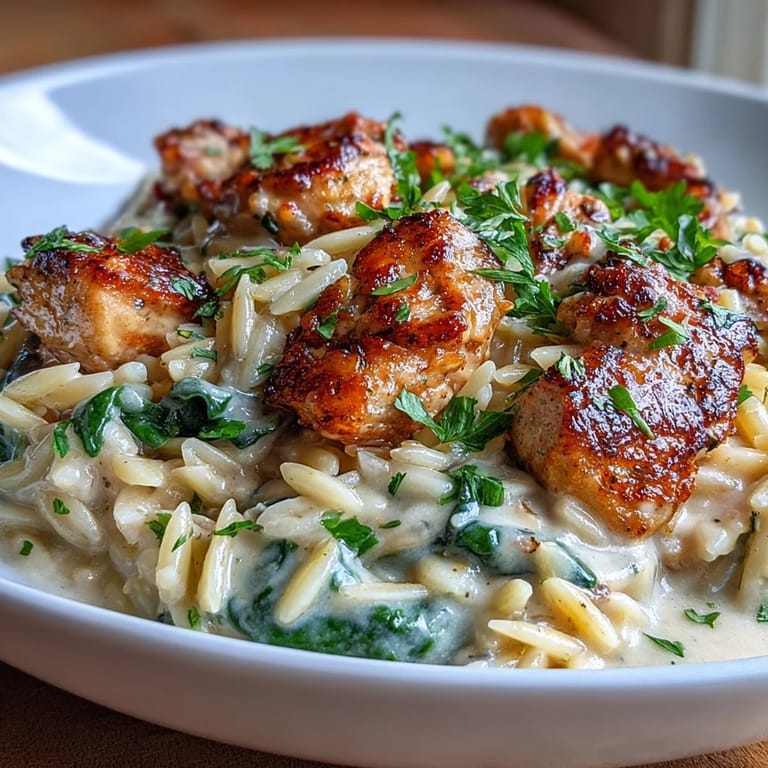
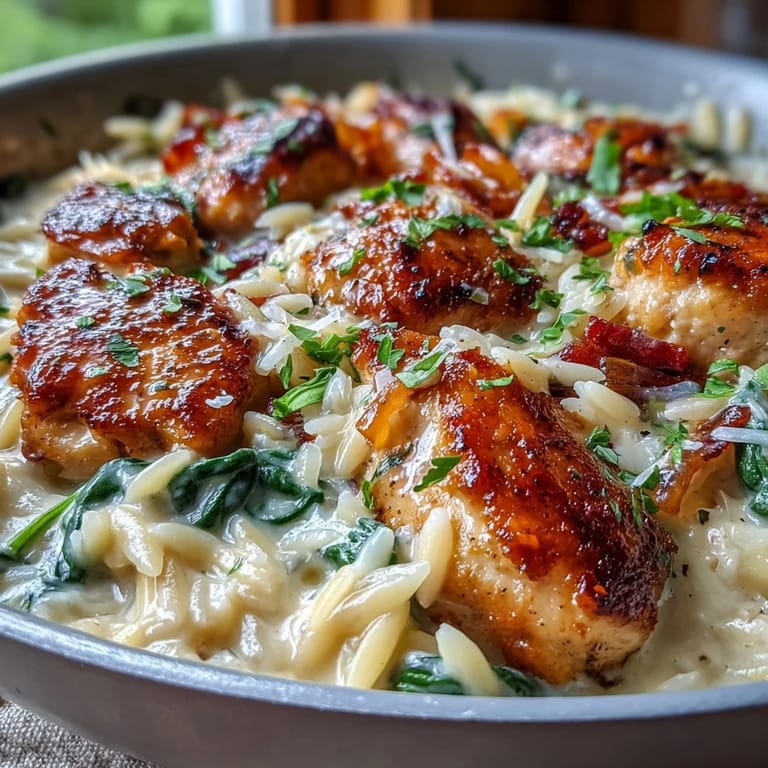
Save Last Tuesday, I was standing in my kitchen at 6 PM with exactly forty-five minutes before dinner guests arrived, and my usual game plan had fallen apart. I opened the fridge and found chicken thighs, a box of orzo, and enough cream to make something legitimately special. What emerged from that single skillet was so comforting and effortless that I've made it at least once a month since—it's become the dish I reach for when I want to feel like I actually know what I'm doing.
My neighbor Sarah came over one rainy evening and watched me make this while we caught up, and by the time the cream went in, she was already asking if she could take notes. There's something about a one-skillet dinner that makes cooking feel less stressful and more like an actual conversation—you're not hunched over multiple burners, you're just tending to one beautiful, creamy situation.
Ingredients
- Boneless, skinless chicken thighs or breasts (1 lb / 450 g), cut into bite-size pieces: Thighs stay juicier than breasts, but either works; the key is cutting them into smaller chunks so they cook quickly and absorb the sauce.
- Kosher salt (1 tsp): This seasons the chicken before it hits the pan, building flavor from the very first sear.
- Black pepper (½ tsp): Freshly cracked makes a noticeable difference in how the spice blooms through the cream.
- Italian seasoning (1 tsp): This is your flavor shortcut; it brings herbs directly into the chicken without extra chopping.
- Olive oil (1 tbsp): Use a good quality oil for searing since this is your first flavor-building step.
- Garlic (4 cloves, minced): The soul of this dish—don't skip it or use pre-minced, fresh garlic makes the cream sauce sing.
- Yellow onion (1 small, finely diced): This mellows as it cooks and creates a subtle sweetness that balances the Parmesan.
- Baby spinach (1 cup / 150 g, roughly chopped, optional): Add this if you want a pop of green and a sneaky vegetable that wilts into almost nothing.
- Orzo pasta (1½ cups / 270 g): This tiny, rice-shaped pasta is perfect because it cooks right in the broth and gets tender without turning mushy.
- Low-sodium chicken broth (3 cups / 720 ml): Low-sodium lets you control the salt level; regular broth can make the finished dish too salty.
- Heavy cream (½ cup / 120 ml): This creates that luxurious sauce, but don't use ultra-pasteurized if you can help it—it breaks easier when heated.
- Freshly grated Parmesan cheese (¾ cup / 60 g): Block cheese grated fresh melts smoother than pre-grated; the coating on pre-grated cheese prevents clumping in shakers but creates graininess in sauces.
- Unsalted butter (2 tbsp): This goes in after the chicken comes out, giving the aromatics a richer base to cook in.
- Fresh parsley (2 tbsp, chopped): A handful at the end adds color and a bright, fresh note that cuts through the richness.
- Additional Parmesan, for serving: Let people add their own—some folks love extra cheese, and it feels personal that way.
Tired of Takeout? 🥡
Get 10 meals you can make faster than delivery arrives. Seriously.
One email. No spam. Unsubscribe anytime.
Instructions
- Season and sear the chicken:
- Toss your chicken pieces with salt, pepper, and Italian seasoning—this is when the seasoning actually gets inside, not just sitting on top. Heat olive oil in your large skillet over medium-high heat until it shimmers, then add the chicken and don't move it around for at least two minutes; let it develop that golden, caramelized crust that makes the first bite taste like you actually have restaurant skills.
- Set the chicken aside:
- Once the chicken is golden and cooked through (about 5 to 7 minutes total), transfer it to a plate with any juices that collected—you'll add those back later for extra flavor. This is also a good moment to take a breath and appreciate that you're already halfway through.
- Build the base:
- Drop the butter into that same pan and reduce the heat to medium, then add your diced onion and let it soften and turn translucent, about 3 minutes. Add the minced garlic and cook for just about a minute until it smells incredible and you remember why garlic is so fundamentally necessary.
- Toast the orzo:
- Stir the dry orzo into the pan with the butter and aromatics, cooking for 1 to 2 minutes while stirring; this toasts the pasta and adds a subtle nuttiness that makes all the difference in the final flavor. You'll hear it clicking gently against the pan, which is the exact sound of things going right.
- Add the broth and simmer:
- Pour in the chicken broth and use a wooden spoon or spatula to scrape up any of those browned bits stuck to the bottom—that's pure flavor, sometimes called fond, and it dissolves right into your sauce. Bring the whole thing to a gentle boil, then lower the heat so it's barely bubbling and cover it; the orzo will cook for 8 to 10 minutes, stirring occasionally, until it's tender and the liquid has mostly disappeared.
- Bring the chicken back:
- Return your seared chicken and any accumulated juices to the pan, then pour in the heavy cream and sprinkle the freshly grated Parmesan over everything. If you're using spinach, add it now and stir gently until it wilts into the sauce like it was always supposed to be there.
- Finish with a gentle simmer:
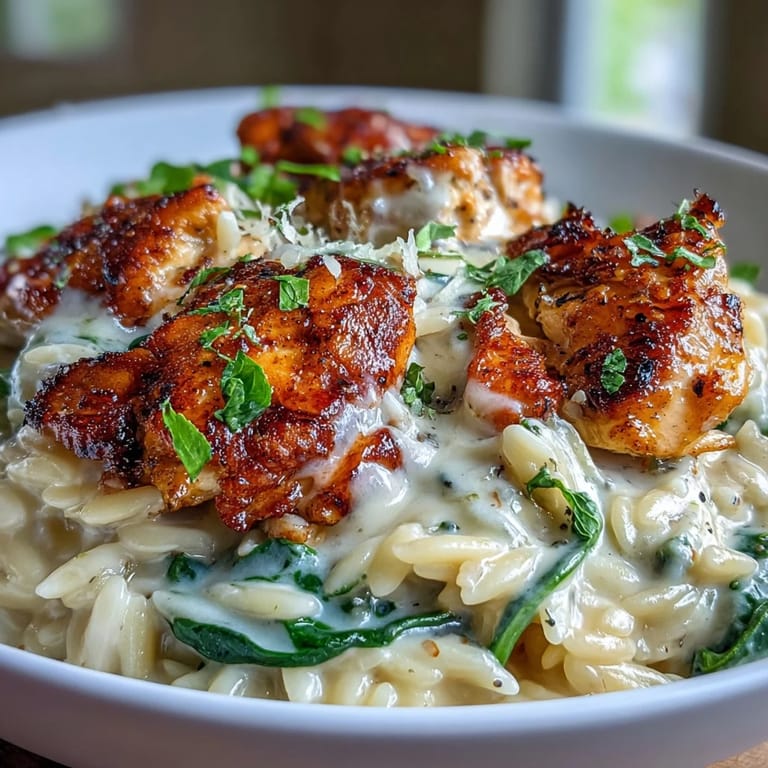
- Cook for another 2 to 3 minutes, stirring occasionally, until the sauce turns creamy and thick and the chicken is heated all the way through. Taste it and adjust salt and pepper if needed—sometimes it needs just a pinch more to make everything click into place.
- Plate and garnish:
- Divide the creamy orzo among bowls or plates, top with fresh parsley and extra Parmesan, and serve while it's still steaming. This is the moment when someone will inevitably say it was exactly what they needed, and you'll feel like you've done something wonderful.
 Save
Save A few months ago, my daughter came home from school and smelled this cooking from the hallway, and she asked if we were having it for dinner before she'd even dropped her backpack. That moment—when a simple weeknight dinner becomes something someone actually looks forward to—is when you know you've found something worth keeping around.
Why This One-Skillet Approach Changes Everything
Cooking everything in a single pan means the pasta absorbs all the savory, garlicky broth while the chicken releases its own juices back into the sauce, creating layers of flavor that would be impossible if you cooked things separately. It also means you're not dirtying multiple pots and pans, which might sound like a small thing until you're standing at the sink at 9 PM and genuinely grateful that you only have one skillet to wash. The technique is straightforward enough that you can make this with one hand while answering emails or helping someone with homework, which is sometimes the only way dinner actually happens.
Variations That Actually Work
The beauty of this recipe is that it's flexible without becoming a different dish entirely. You can add mushrooms or bell peppers alongside the onion, and they'll cook down into the sauce without changing the core flavors. Some people swap half-and-half for the heavy cream to lighten things up, which works perfectly if that's what you prefer, though you do lose a little of that luxurious, velvety mouthfeel. You can also experiment with different pasta shapes—ditalini or small shells work well if you don't have orzo, and I've even made this with rice when that's what was in the pantry and it was equally delicious.
Storage, Reheating, and Serving Suggestions
This keeps in the refrigerator for about three days if you store it in an airtight container, and it reheats beautifully on the stovetop over low heat with a splash of broth or cream to refresh that silky sauce. Leftovers also make an excellent lunch because it tastes even better the next day when all the flavors have settled into each other. This pairs wonderfully with a crisp green salad to cut through the richness, roasted vegetables if you want something on the side, or honestly, crusty bread to soak up every last drop of that creamy sauce. Here are a few final thoughts:
- Make extra Parmesan available at the table because everyone has different preferences for how much they want.
- If you're meal prepping, divide it into containers and add extra pasta or rice on the day you're eating it since it absorbs liquid over time.
- This is an excellent dish to make when you're feeding people on a weeknight and want to feel like you've actually put in effort, even though it barely took any time.
 Save
Save This is the kind of recipe that becomes a regular in your rotation not because it's fancy or complicated, but because it genuinely delivers comfort and flavor in forty-five minutes. Make it once, and you'll be reaching for it on those evenings when you want something that feels special but doesn't demand anything difficult from you.
Recipe FAQs
- → Can I use chicken breasts instead of thighs?
Yes, boneless skinless chicken breasts work well. Just be careful not to overcook them, as breasts can dry out faster than thighs. Cut into similar-sized pieces for even cooking.
- → What can I substitute for orzo pasta?
Small pasta shapes like ditalini, small shells, or even risotto rice work as alternatives. Cooking times may vary slightly, so adjust liquid accordingly.
- → How do I store and reheat leftovers?
Store in an airtight container in the refrigerator for up to 3 days. Reheat gently with a splash of cream or broth to restore the creamy consistency.
- → Can I make this dish lighter?
Substitute half-and-half for heavy cream and reduce the Parmesan slightly. You can also add more vegetables like mushrooms, bell peppers, or zucchini to bulk it up.
- → Why is my sauce too thick?
The orzo continues absorbing liquid as it sits. If the sauce becomes too thick, simply stir in additional warm chicken broth or cream until reaching your desired consistency.
- → Can I freeze this dish?
Freezing is not recommended as cream-based sauces can separate when thawed. However, the chicken and orzo base can be frozen separately if needed.