 Save
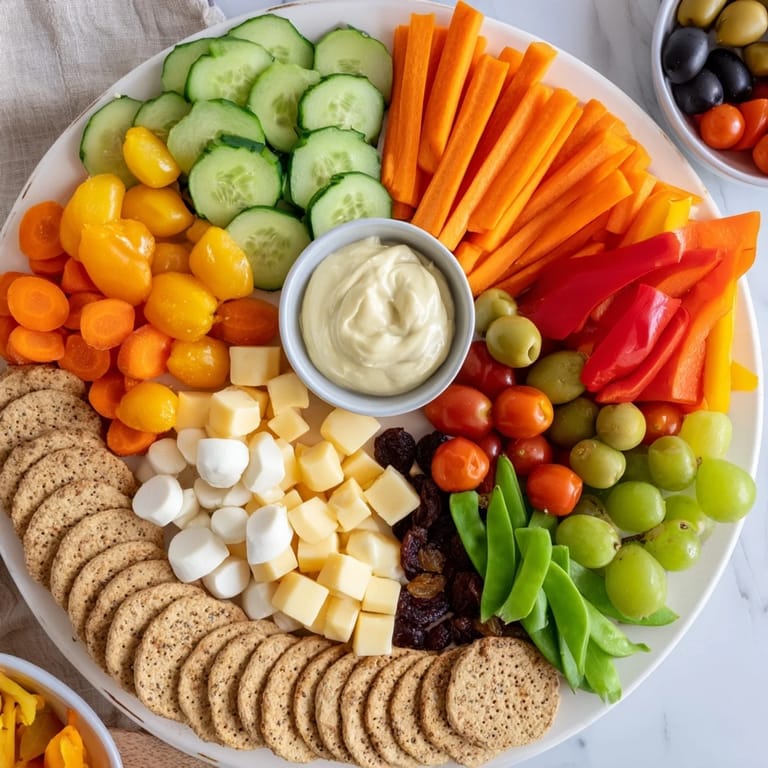
Save I stumbled onto the idea for this board on a Tuesday afternoon when I had leftover vegetables crowding my crisper drawer and a friend texting that she was stopping by in twenty minutes. Instead of panicking about a proper lunch, I grabbed a big wooden board from the cabinet, started slicing and arranging, and something magical happened—what could have been a sad assortment turned into this gorgeous, edible landscape that somehow felt like a celebration. She called it an adult Lunchable, and the name stuck because it captured that playful confidence of knowing exactly what you want to eat and serving it with style.
A few months later, I made this for a casual work lunch where someone brought the most judgmental energy about office food, and honestly, watching her carefully compose her perfect plate—a little hummus, some cheese, exactly three snap peas—then genuinely enjoy it was the moment I realized this wasn't just easy, it was actually kind. It lets people slow down and choose.
Ingredients
- Baby carrots: Their natural sweetness makes them disappear fastest, and keeping them whole means they stay crisp longer than pre-cut versions.
- Cucumber slices: Cut them just before serving or they'll weep water onto the board, but that's not a flaw—it's a reminder to build these closer to eating time.
- Cherry tomatoes: Hunt for ones that still smell faintly like the vine because those taste like actual tomatoes, not the pale imposters.
- Bell pepper strips (mixed colors): The sweet ones hold better than hot peppers and the rainbow keeps the board from looking monotonous.
- Sugar snap peas: Bite into one raw before adding to the board because if you're arranging something special, taste it first to make sure you're serving the version you love.
- Hummus: The kind with a little olive oil swirl on top signals you care, even if you bought it from the store.
- Ranch dressing or Greek yogurt dip: Greek yogurt is a quiet revelation—it's creamy like ranch but feels lighter, and people always ask what it is.
- Cheddar cheese, cubed: Room temperature cheese tastes better than cold cheese, so pull it out a few minutes before serving if you can remember.
- Mozzarella balls (bocconcini): These are the secret weapon because they're elegant and taste like you put real thought into the board.
- Gouda or Swiss cheese, sliced: Gouda brings a faint sweetness that plays beautifully with the crackers and dried fruit.
- Whole grain crackers: Sturdy ones that won't crumble under the weight of hummus and cheese are essential, or go gluten-free if that matters to your table.
- Roasted nuts: Almonds are reliable, but cashews feel luxurious and walnuts add an earthy note that surprises people.
- Olives: The Castelvetrano ones are buttery and mild if you're feeding people who usually skip olives.
- Dried fruit: Tart apricots and cranberries balance the richness of cheese better than sweet versions.
Tired of Takeout? 🥡
Get 10 meals you can make faster than delivery arrives. Seriously.
One email. No spam. Unsubscribe anytime.
Instructions
- Wash and dry everything with intention:
- Wet vegetables make the board soggy and weird, so dry them properly with a cloth—it takes an extra minute and changes everything. Think of it as respect for both the vegetables and whoever's eating them.
- Map out your board like you're designing something:
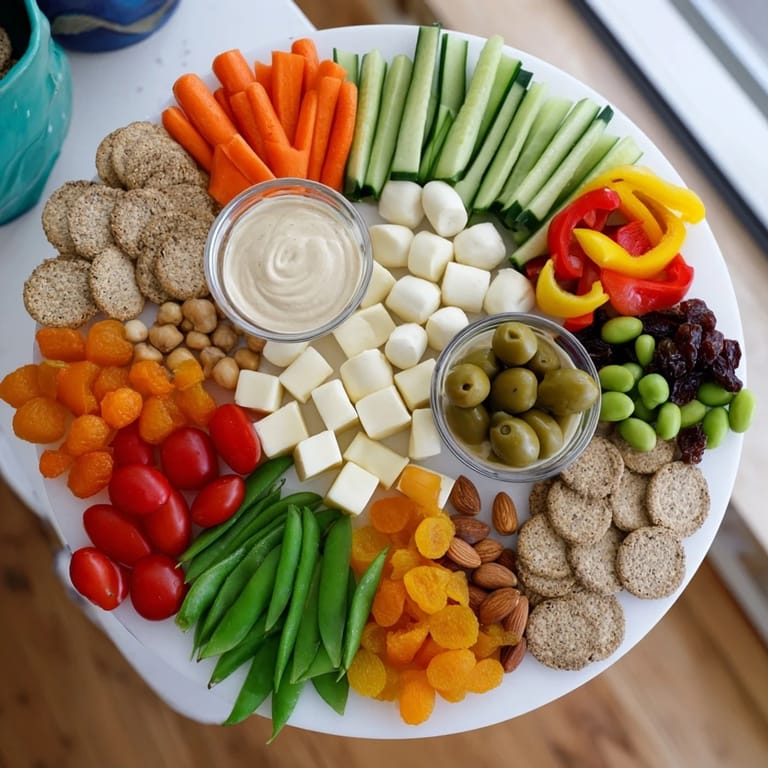
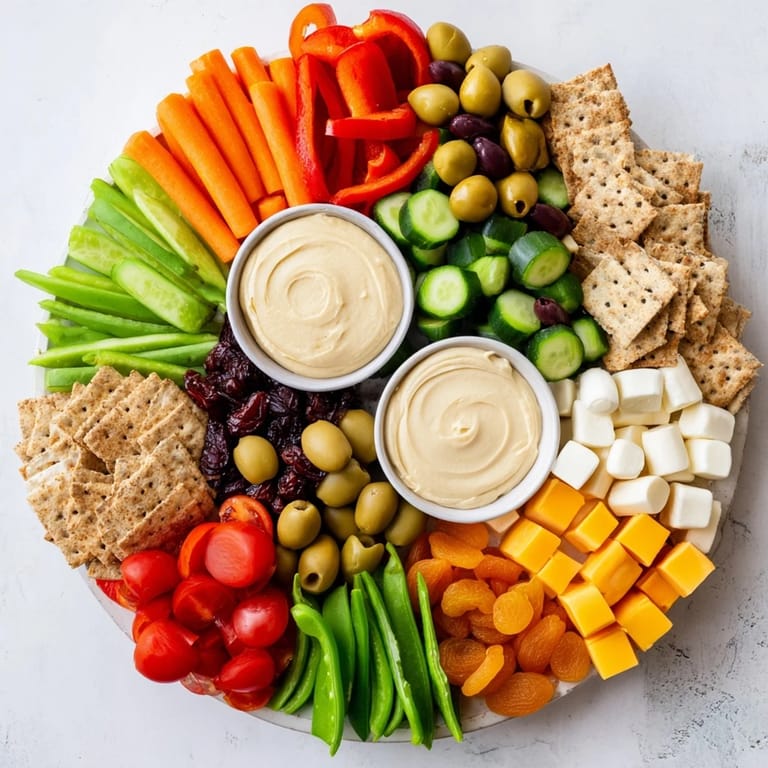
- Start with vegetables in clusters of color and shape, not scattered randomly—they should look intentional, like you knew exactly what you were doing. This takes longer to describe than it does to actually do.
- Nestle the dips into their own small bowls:
- Don't let them touch the vegetables directly or everything tastes faintly of dip, which sounds fine until it's not. Small bowls also signal that you thought about the logistics, not just threw things on a board.
- Build cheese clusters that make sense together:
- The soft mozzarella next to the firm cheddar next to the nutty Gouda creates a little flavor journey for people's palates. Slicing the Gouda thin helps it feel lighter and more generous.
- Fill the gaps with personality:
- Crackers, nuts, and dried fruit are your board's jewelry—they should fill empty spaces while looking natural. A scatter of almonds between vegetables, a line of cranberries along an edge, a cluster of olives—this is where it stops being just ingredients and becomes a moment.
- Serve when you're ready, not when it's perfect:
- Boards benefit from being eaten within a couple hours, so time it close to when people arrive. If you must make it ahead, cover loosely with plastic wrap and pull it out about ten minutes before serving so cheese can wake up a little.
 Save
Save The real magic happened when my nephew, who picks at everything, spent forty-five minutes making different combinations and actually eating what he built instead of pushing food around a plate. That's when I understood that this isn't a recipe, it's permission—permission to eat exactly what you want, to take your time, to enjoy lunch like it's not a hurried obligation.
Making It Your Own
The beauty of this board is that it's genuinely customizable without needing a recipe adjustment, so let it be a reflection of what you actually want to eat. Some people add hard-boiled eggs for more protein, others layer in salami or prosciutto because they like richness. I once made one with smoked salmon for someone who loved seafood, and it was just as much an adult Lunchable—the only rule is that everything should feel intentional and taste good to the people eating it.
Timing and Preparation Strategy
Prep these ingredients in the order I've listed them because it's actually logical—cut raw vegetables first while your knife is already out, then set up your dips, then add cheese and crackers. The whole thing takes about fifteen minutes if you move naturally instead of rushing, and you can prep vegetables an hour or two ahead by storing them in airtight containers if your day is chaotic. Just assemble the board itself within an hour of serving so nothing gets soggy or temperatures get weird.
Serving Ideas and Pairings
These boards are stunning as a solo lunch but they also work as a casual appetizer for gatherings, a bridge between lunch and dinner when everyone's hungry at different times, or honestly just as permission to build your own perfect bite at home. They pair beautifully with sparkling water if you want to feel fancy, light white wine if it's that kind of day, or iced tea if you're being practical. The vegetables have a fresh, clean taste that doesn't demand anything complicated—just something to sip while you're eating.
- Make it vegan by swapping cheeses for dairy-free versions and checking that your dip is plant-based.
- Go protein-forward by adding grilled chicken strips, beans, or tofu if you want something more substantial.
- Build seasonal boards by choosing vegetables that are actually good right now instead of pushing for summer peppers in December.
 Save
Save This board has become my answer to 'what's for lunch' because it's honest food that doesn't pretend to be something it's not. It asks you to show up, to eat with intention, and to maybe slow down for a minute.