 Save
Save The first time I made bulgogi at home, I was standing in my kitchen on a random Tuesday evening, thinking about the bowl I'd had at a small Korean spot downtown. That memory wouldn't leave me alone—the way the beef had that perfect char, how the sweetness of the marinade played against the heat. I decided right then to figure out how to recreate it, and what started as a curious experiment became something I now make almost every week. There's something about slicing the beef thin, watching it dance in a hot pan, that makes the whole process feel like a small celebration, even on a weeknight.
I made this for my brother last month when he was going through a rough patch, and he sat at my kitchen counter with that bowl in front of him, and for the first time in weeks, he actually smiled while eating. The conversation flowed easier after that first bite, like the food had unlocked something. That's when I realized this dish does more than fill you up—it brings people to the table in a real way.
Ingredients
- Beef sirloin or ribeye, thinly sliced: The thinness matters more than the cut—ask your butcher to slice it, or pop it in the freezer for 30 minutes before slicing yourself for cleaner cuts.
- Soy sauce: This is your salt and umami foundation; don't skimp on quality here.
- Brown sugar: The sweetness balances the salty soy and adds caramelization when you hit the pan.
- Sesame oil: Use the toasted kind—it has a deeper, nuttier flavor that regular sesame oil can't match.
- Rice vinegar: A touch of acidity brightens everything and prevents the marinade from tasting one-note.
- Garlic and ginger: Mince the garlic fine and grate the ginger fresh; they're the backbone of the flavor.
- Grated pear: This is the secret ingredient that adds subtle sweetness and helps tenderize the meat—an Asian pear works best, but a Bosc pear or even apple works in a pinch.
- Gochujang: Optional, but if you want that subtle Korean heat and depth, add it—start with a little and taste your way up.
- Scallions and toasted sesame seeds: These finish the dish with brightness and texture; toast your own sesame seeds if you can, they taste so much better.
- Jasmine or short-grain rice: Short-grain holds the sauce better than long-grain, and the starchy creaminess pairs perfectly with the beef.
- Carrot, cucumber, and bean sprouts: Keep these crisp and fresh—they're your textural contrast and the place where the bowl gets its color.
- Kimchi: If you love funk and heat, this is your moment to add it; if you're unsure, leave it out and let people add their own.
Tired of Takeout? 🥡
Get 10 meals you can make faster than delivery arrives. Seriously.
One email. No spam. Unsubscribe anytime.
Instructions
- Build your marinade:
- In a large bowl, whisk together soy sauce, brown sugar, sesame oil, and rice vinegar until the sugar dissolves. Fold in the minced garlic, grated ginger, grated pear, and gochujang if you're using it, then add the sliced scallions, sesame seeds, and black pepper.
- Coat the beef:
- Add your thinly sliced beef to the marinade and toss it so every piece gets coated in that glossy, fragrant liquid. Cover the bowl and let it sit for at least 15 minutes—I often do 30 minutes or even an hour if I'm thinking ahead, because the longer it sits, the deeper the flavor becomes.
- Get your pan screaming hot:
- Heat a large skillet or wok over high heat until it's almost smoking; this is where the magic happens. You want that sizzle and char, not a gentle cook.
- Sear the beef in batches:
- Working in batches so you don't crowd the pan, add the marinated beef and let it sear for 2 to 3 minutes, stirring constantly, until the edges are caramelized and the meat is just cooked through. The marinade will reduce and glaze the meat—listen for that satisfying sizzle.
- Assemble your bowls:
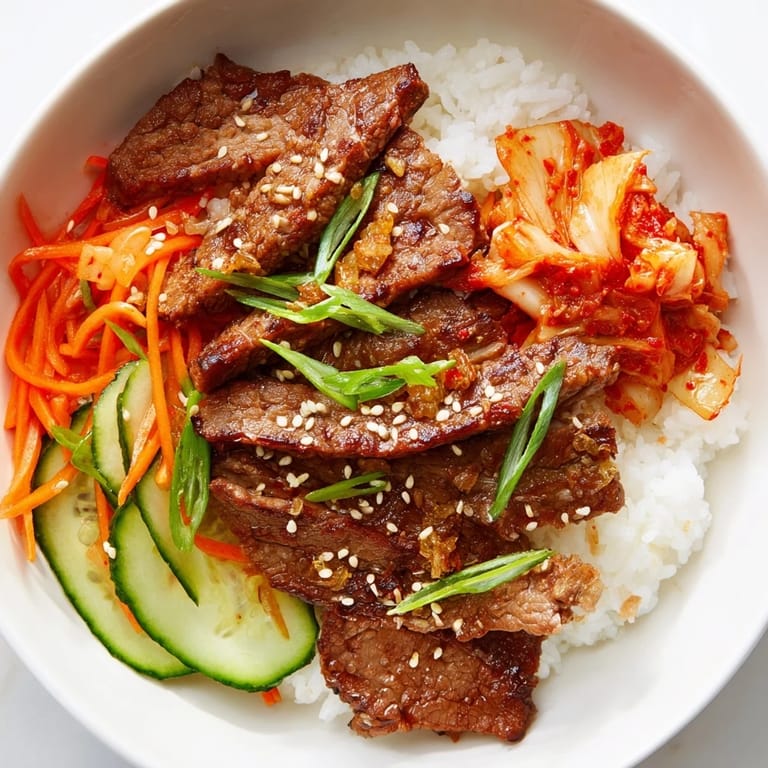
- Divide the cooked rice among four bowls, creating a base, then arrange the seared beef on top like you're presenting something special. Scatter the julienned carrot, sliced cucumber, blanched bean sprouts, and kimchi (if using) around the beef.
- Finish and serve:
- Garnish each bowl with fresh scallions and a sprinkle of toasted sesame seeds, then get it to the table while everything is still warm and the rice is steaming.
 Save
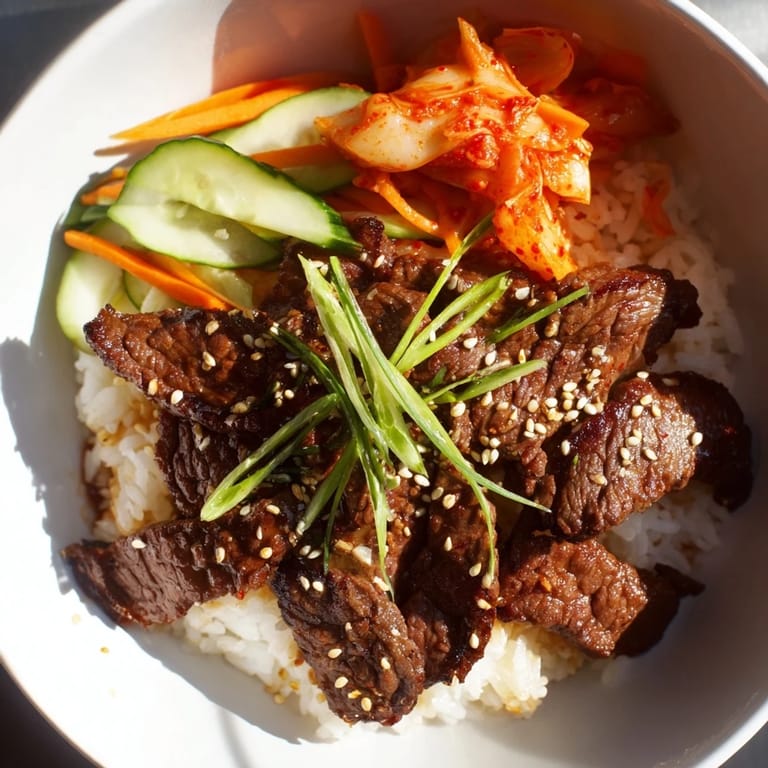
Save There's a moment, right when the beef hits the hot pan, where your kitchen fills with this incredible aroma—sweet, savory, toasty all at once—and that's when you know you're doing it right. That moment has become my favorite part of making this dish.
Building Your Perfect Bowl
The beauty of a bibimbap-style bowl is that it's endlessly customizable, which means you can build it to match your mood or whatever you have in your fridge. Some days I add a fried egg on top for richness, letting the yolk run through the warm rice. Other times, I load it heavy with kimchi because I'm craving heat and funk. You could also swap the rice for cauliflower rice if you're going low-carb, and the beef will taste just as incredible. The core—the marinated, seared beef—is always the star, but everything else is your canvas.
Timing and Prep Tricks
If you're cooking for a crowd or just want to make your life easier, you can prep almost everything ahead of time. Slice the beef and make the marinade the morning of, cover both, and let them hang out in the fridge until dinner. You can even julienne your vegetables hours before and keep them in airtight containers or covered bowls. The only things you should do fresh are cooking the rice and searing the beef—those two things are worth waiting for. Having everything else ready means you're only about 5 minutes of active cooking away from a restaurant-quality meal.
Variations That Work
Once you nail the classic version, you can play with it. I've made it with thinly sliced pork instead of beef—it's lighter but still incredible. I've also experimented with adding a touch of honey instead of brown sugar, or swapping the pear for a grated apple if that's what I had. The structure stays the same; the flavors bend and shift. The real power of this recipe is that it's a foundation you can build on, not a rigid set of rules you have to follow.
- Try adding a dollop of gochujang mayo to the rice before assembling for an extra flavor bomb.
- A squeeze of fresh lime juice over the finished bowl brightens everything right at the end.
- Swap kimchi for pickled radish if you want brightness without the heat.
 Save
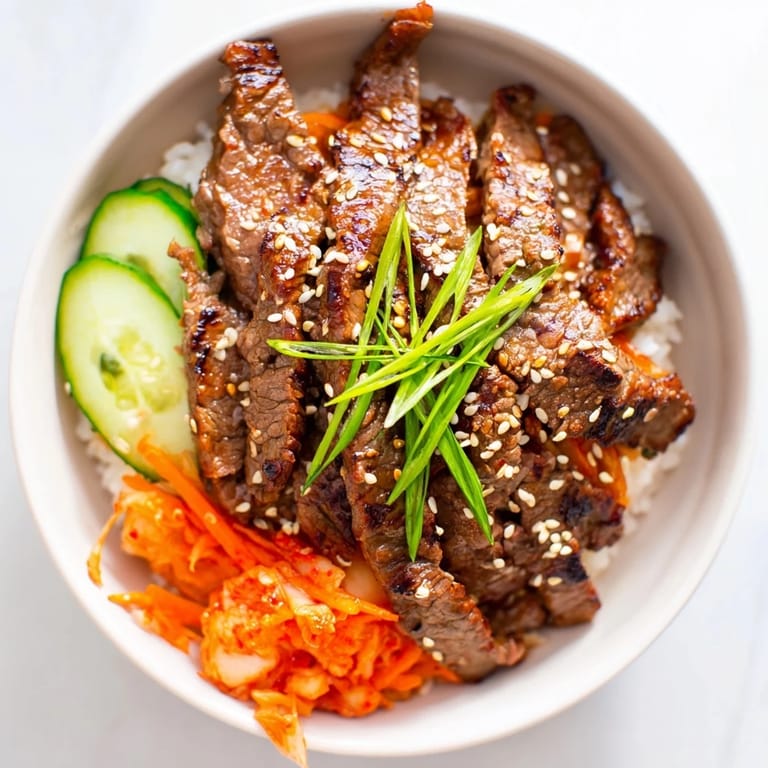
Save This bowl has become my answer to so many things—a quick dinner after a long day, a way to use up vegetables before they go bad, a meal that brings people together without making me feel like I've been cooking forever. Make it once and you'll understand why.
Recipe FAQs
- → What cut of beef works best for this dish?
Use tender, quick-cooking cuts such as ribeye or sirloin, thinly sliced for optimal texture and flavor absorption.
- → Can this be made spicy?
Yes, adding gochujang or increasing its amount in the marinade introduces a mild to medium heat level suited to your taste.
- → What can I substitute for rice?
Cauliflower rice makes a great low-carb alternative while maintaining the dish's textural contrast.
- → How long should the beef marinate?
Marinating for at least 15 minutes is recommended, but extending up to an hour enhances the depth of flavor.
- → Are there any common allergens in the ingredients?
This dish contains soy and sesame; gluten may be present depending on the soy sauce and gochujang used. Gluten-free alternatives can be chosen.