 Save
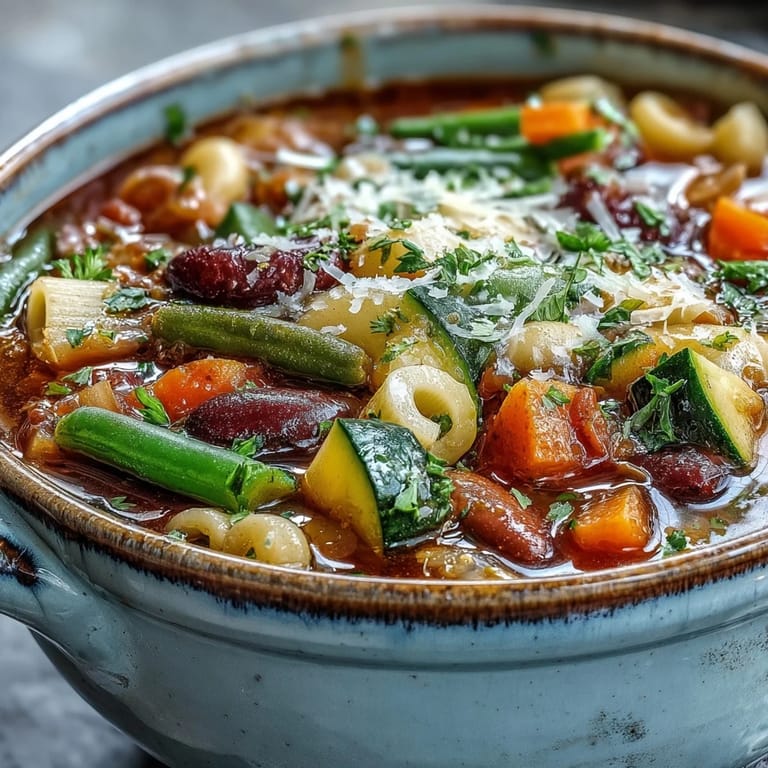
Save The steam rising from a pot of minestrone on a rainy November afternoon always takes me back to my tiny apartment in Florence. I was studying abroad, homesick and drenched from the downpour when my elderly neighbor knocked with this soup in hand. Between my broken Italian and her welcoming gestures, I understood this wasn't just food but comfort in a bowl. She scribbled the recipe on a scrap of paper that I've treasured for fifteen years now, its edges softened from countless uses.
Last winter, when my sister was recovering from surgery, I brought over a big container of this minestrone. Her face brightened instantly at the familiar aroma. We sat at her kitchen table, steam fogging her glasses as she took her first spoonful. No words were needed as I watched her shoulders relax for what seemed like the first time in weeks. The soup disappeared quickly, but the moment of shared peace remained.
Ingredients
- Vegetables (onion, carrots, celery, zucchini): The foundation that creates the aromatic base your grandmothers would recognize, with each vegetable adding its own layer to the soup symphony.
- Both cannellini and kidney beans: Using two varieties gives the soup different textures and makes each spoonful a little adventure, while boosting the protein content.
- Small pasta: I learned from my Italian neighbor to choose tiny shapes like ditalini or small shells that nestle perfectly between vegetables in your spoon rather than awkwardly hanging off the edge.
- Fresh greens: Adding spinach or kale at the very end preserves their vibrant color and nutrients while giving the soup that final pop of freshness.
Tired of Takeout? 🥡
Get 10 meals you can make faster than delivery arrives. Seriously.
One email. No spam. Unsubscribe anytime.
Instructions
- Create your aromatic foundation:
- Heat the olive oil in a large pot until it shimmers, then add your diced onion, carrots, and celery. Listen for that gentle sizzle as they hit the hot oil and stir occasionally until they soften and release their sweet aroma.
- Build the flavor base:
- Toss in the garlic, zucchini, and green beans, allowing them to mingle for 3-4 minutes. Your kitchen should start filling with an earthy garden smell that signals youre on the right track.
- Develop the brothy goodness:
- Pour in those tomatoes, vegetable broth, and herbs, watching as the liquid transforms into a ruddy, fragrant base. Let this mixture bubble gently for about 15 minutes, giving the flavors time to become acquainted.
- Add the hearty elements:
- Stir in your pasta and both types of beans, then simmer uncovered until the pasta reaches that perfect al dente stage. The soup will begin to thicken slightly as the pasta releases some starch.
- Finish with fresh greens:
- Fold in your spinach or kale and watch it wilt into the hot soup, brightening both the color and flavor. Fish out that bay leaf before it becomes someones surprise discovery.
- Taste and adjust:
- This is your moment to play conductor with a spoon instead of a baton. Add a pinch more salt or pepper until the flavor sings in perfect harmony.
 Save
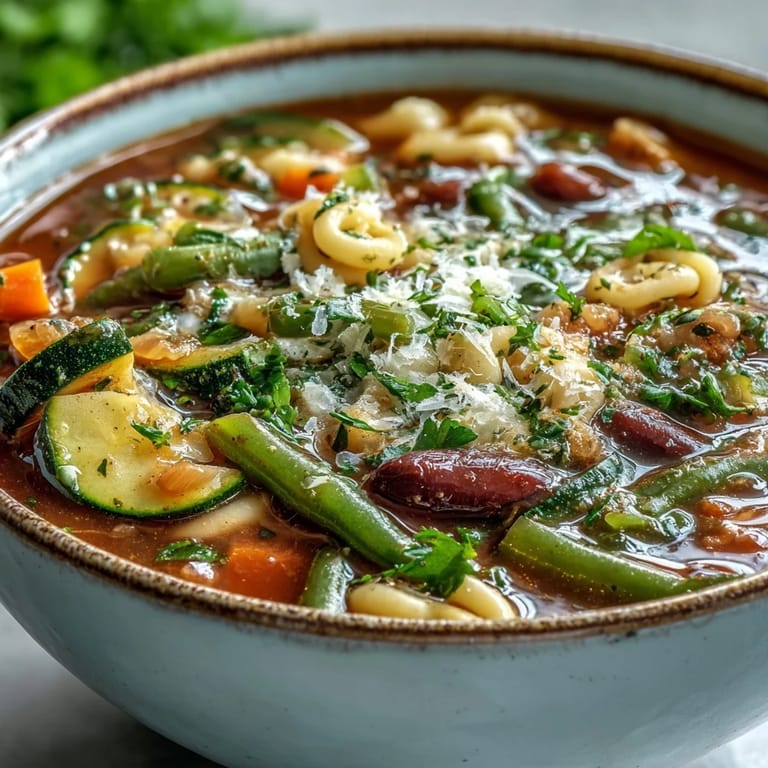
Save My husband, generally skeptical of meatless meals, was working late one winter evening when I had this simmering on the stove. He walked in the door, paused, and asked what smelled so amazing. Without waiting for an answer, he grabbed a bowl and served himself before even taking off his coat. Standing there in the kitchen, snow still melting on his shoulders, he finished the entire bowl in silence before finally saying, Maybe we dont need meat every night. In our house, thats the equivalent of a standing ovation.
Seasonal Adaptations
One of the beautiful things about minestrone is how it evolves with the seasons. In summer, I go heavy on zucchini, fresh green beans, and even add corn cut straight from the cob. Fall brings butternut squash and kale to the pot. Winter versions might include potatoes and cabbage, while spring welcomes asparagus tips and fresh peas. The soup becomes a calendar of whats growing, a liquid timeline of the year.
Making It Ahead
Minestrone possesses that magical quality where it actually improves with time. The first day, its bright and distinct, each flavor recognizable. By day two, those flavors have melded into something deeper and more cohesive. I often make a double batch on Sunday, deliberately planning for it to taste even better during the mid-week rush. The broth thickens slightly as it sits, creating an even more satisfying texture.
Serving Suggestions
In Italy, soup is rarely just soup but rather an experience built with thoughtful accompaniments. A crusty loaf of ciabatta for dunking turns this from meal to ritual, while a simple green salad dressed with lemon and olive oil provides bright contrast. On particularly cold evenings, I serve minestrone in pre-warmed bowls that keep the soup hot until the last spoonful.
- For special occasions, try topping each bowl with a small bruschetta instead of plain bread, adding another layer of flavor and texture.
- A small dish of extra virgin olive oil for drizzling tableside allows everyone to add their own finishing touch.
- Keep a wedge of Parmesan with a grater at the table so guests can add freshly grated cheese to taste rather than having it melt into the soup before serving.
 Save
Save This soup has traveled with me through student apartments, first homes, and family kitchens, each pot slightly different yet somehow always the same. It remains a reminder that good food isnt about perfection but connection, whether to distant places or to the people gathered around your table.
Recipe FAQs
- → What vegetables work best in minestrone?
Traditional minestrone uses onions, carrots, celery, zucchini, green beans, and leafy greens like spinach or kale. You can also add potatoes, cabbage, or peas depending on what's in season or available in your kitchen.
- → What type of pasta should I use?
Small pasta shapes work best—try ditalini, elbow macaroni, or small shells. These compact shapes hold up well during simmering and are easy to spoon up with the vegetables and beans.
- → Can I make this gluten-free?
Absolutely. Simply substitute the regular pasta with your favorite gluten-free pasta variety. The rest of the ingredients are naturally gluten-free, making this an easy adaptation.
- → How long does minestrone keep in the refrigerator?
Minestrone stores beautifully for 4-5 days in an airtight container in the refrigerator. The flavors actually develop and deepen over time, making leftovers often tastier than the first day.
- → Can I freeze minestrone soup?
Yes, though the pasta may become softer upon reheating. For best results, consider freezing the soup without pasta and adding freshly cooked pasta when reheating. It keeps well for up to 3 months in the freezer.
- → What can I serve with minestrone?
Crusty Italian bread is the classic accompaniment, perfect for soaking up the flavorful broth. A light red wine like Chianti complements the tomato base beautifully, or serve with a simple green salad for a complete meal.