 Save
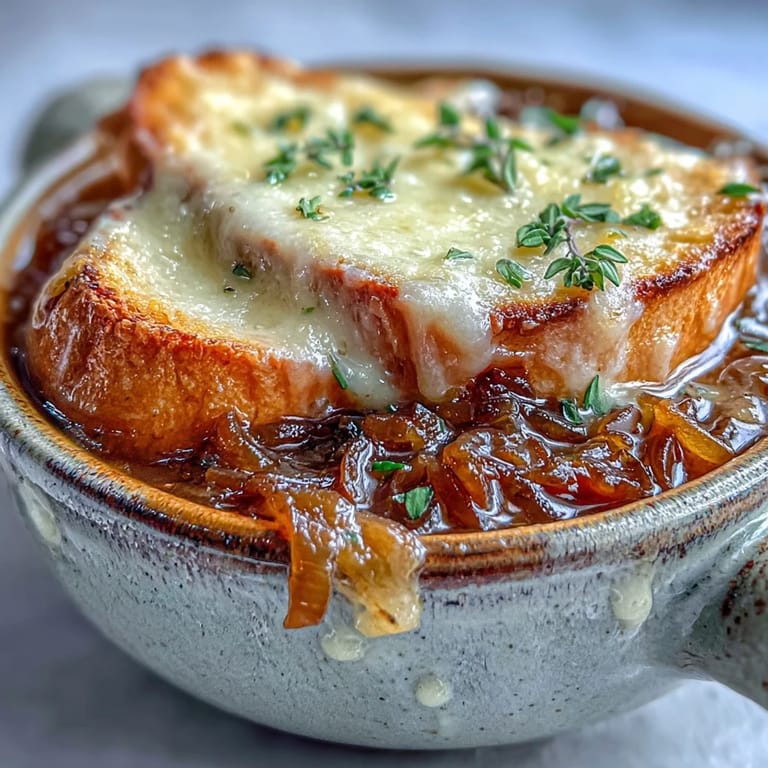
Save The steam rises from my Dutch oven on a brisk autumn evening, carrying with it the rich aroma of caramelized onions that have been transforming for nearly an hour. I first made French onion soup after returning from a trip to Paris where I'd had the real thing - standing at my kitchen counter with teary eyes from slicing all those onions, wondering if the result would be worth it. The first spoonful, breaking through that perfect cheese crust into the dark broth below, answered that question forever.
Last winter during that terrible snowstorm, I made this soup for neighbors who had lost power. We crowded around my dining table with steaming bowls, the windows frosted over, and even Jim who claimed to hate onions went back for seconds. Something about the way the cheese stretched between bowl and spoon made everyone laugh, and suddenly we weren't strangers sharing a meal of necessity but friends breaking bread together.
Ingredients
- Yellow onions: The foundation of this soup deserves attention - look for firm onions with tight, dry skins and slice them as consistently thin as possible for even caramelization.
- Beef broth: I discovered that using a mix of store-bought and homemade gives the perfect balance of convenience and depth without spending hours making stock from scratch.
- Gruyère cheese: After experimenting with various cheeses, nothing beats authentic Gruyère for that nutty complexity and perfect melt that forms the signature golden crown on top.
- White wine: The splash of acidity cuts through the richness and helps deglaze those precious caramelized bits from the bottom of the pot.
- Baguette: Slightly stale works better than fresh as it soaks up the broth without disintegrating completely.
Tired of Takeout? 🥡
Get 10 meals you can make faster than delivery arrives. Seriously.
One email. No spam. Unsubscribe anytime.
Instructions
- Patience with onions:
- Melt butter with olive oil in your Dutch oven, then add all those thinly sliced onions with a sprinkle of sugar. This is where magic happens, but slowly - stir occasionally as they transform from sharp and pungent to meltingly sweet and amber-colored over the next 40-45 minutes.
- Building flavor layers:
- Once onions reach that gorgeous caramel color, add minced garlic just until fragrant. Pour in wine and watch it sizzle as you scrape up all those flavorful browned bits hiding on the bottom.
- The brothy simmer:
- Pour in your broth, thyme, bay leaves, and Worcestershire sauce, then let everything get acquainted on a gentle simmer for 20-30 minutes. Your kitchen will smell increasingly irresistible as the flavors meld together.
- Bread preparation:
- While the soup develops, toast your baguette slices under the broiler until golden on both sides. They should be crisp enough to hold up when floating but not so hard they become challenging to eat.
- The cheesy finale:
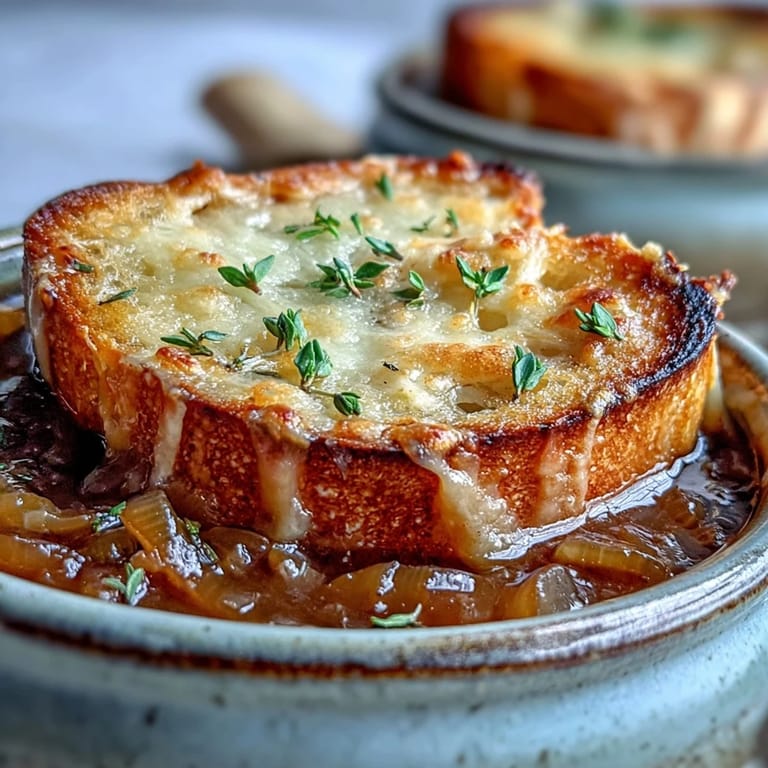
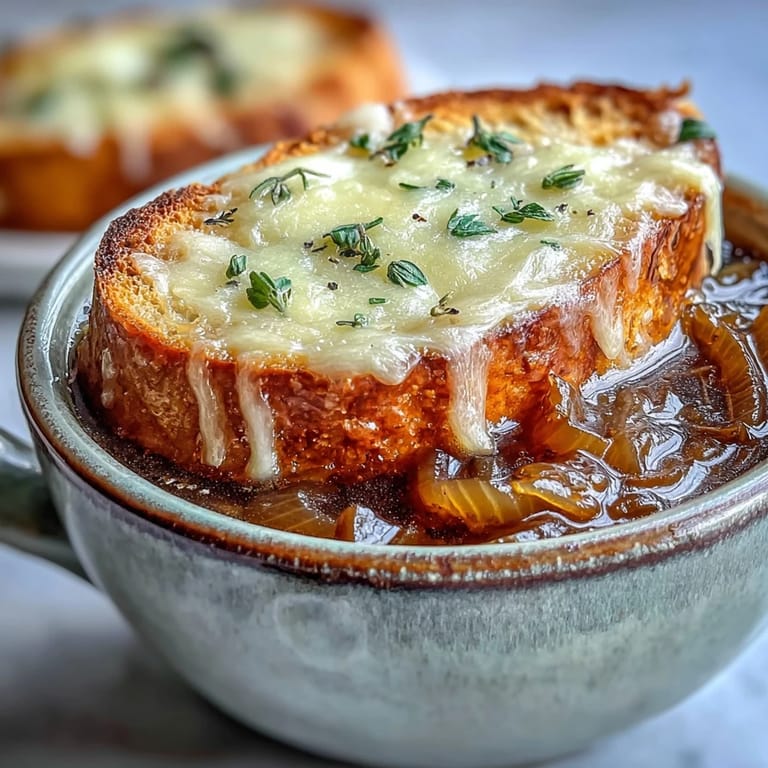
- Ladle that dark, fragrant soup into oven-safe bowls, float your toasted bread on top, and blanket generously with grated Gruyère. Watch closely under the broiler as the cheese bubbles and browns to perfection in just a few minutes.
 Save
Save My mother-in-law, who has strong opinions about cooking, fell silent after her first spoonful of this soup. The table remained quiet except for the sound of spoons against bowls until she finally looked up and asked for the recipe. It was the culinary equivalent of earning a medal, and now this soup appears at our family gatherings alongside her traditional specialties.
The Art of Onion Caramelization
The most crucial technique in this recipe is properly caramelizing the onions. One afternoon when I had nowhere to be, I experimented with different heat levels and timing. Too high, and they burn quickly with a bitter aftertaste. Too low, and you spend hours waiting for color to develop. Medium heat with occasional stirring creates the Maillard reaction that transforms simple onions into something transcendent. The onions should gradually shrink to about a quarter of their original volume and turn a rich amber color that signals their sugars have developed fully.
Serving Suggestions
French onion soup stands beautifully on its own, but I've found it pairs wonderfully with certain accompaniments. A simple green salad dressed with a sharp vinaigrette provides refreshing contrast to the soup's richness. For wine pairing, the classic choice is a crisp white Burgundy, but a light-bodied Pinot Noir works surprisingly well too. When serving for guests, I prepare everything in advance and only handle the final broiling step right before we eat so everyone gets that perfect cheese pull moment.
Storage and Reheating
This soup actually improves with time as the flavors continue developing, making it perfect for batch cooking. The base soup can be refrigerated for up to 5 days or frozen for 3 months, though I always hold the bread and cheese elements until serving time.
- When reheating from refrigerated, warm gently on the stovetop rather than microwaving to preserve the texture.
- If freezing portions, leave about an inch of headspace in containers as the broth will expand when frozen.
- For leftover portions with cheese already melted, reheat covered with foil at 325°F until warmed through instead of using the microwave.
 Save
Save Every time I make this soup, I'm reminded of how simple ingredients transform through care and patience into something extraordinary. That transformation feels like the perfect metaphor for gathering around a table with people you love.
Recipe FAQs
- → Why does caramelizing onions take so long?
Proper caramelization requires 40–45 minutes over medium heat to slowly break down the onions' structure and draw out their natural sugars. Rushing this step means missing the deep, sweet flavor that makes this dish special. Stir occasionally and adjust heat if onions brown too quickly.
- → Can I make this vegetarian?
Absolutely. Swap beef broth for a high-quality vegetable broth and either omit the Worcestershire sauce or choose a vegetarian brand. The result remains deeply satisfying, with the caramelized onions providing plenty of savory richness.
- → What cheese works best for the topping?
Gruyère is traditional for its excellent melt and nutty flavor. Swiss or Emmental make fine substitutes. For extra depth, mix in some grated Parmesan. The key is choosing a cheese that melts smoothly and bubbles beautifully under the broiler.
- → Can I freeze leftovers?
The soup base freezes beautifully for up to three months. Store without the bread and cheese topping. Thaw overnight in the refrigerator, reheat gently, and add fresh toasted bread and cheese when serving.
- → Why use both butter and olive oil?
Butter provides rich flavor while olive oil raises the smoke point, preventing the butter from burning during the long caramelization process. This combination ensures the onions cook evenly without scorching.
- → What type of onions work best?
Yellow onions are ideal for their balanced sweetness and robust flavor that holds up to long cooking. Sweet onions work well too but may caramelize faster. Red onions can be used but will yield a darker, slightly different flavor profile.