 Save
Save My aunt's kitchen in Manila always smelled like this—the sharp tang of vinegar mingling with soy sauce and garlic hitting you the moment you walked through the door. She'd have a pot going by mid-afternoon, the chicken browning in that particular way that made you know something good was happening. Years later, making this at home felt like stepping back into that memory, except now I understand why she never rushed the braise.
I made this for my roommate on a random Thursday when she'd had a terrible day at work, and watching her face when she tasted it—like something shifted—reminded me why home cooking matters. She asked for the recipe that same night, and now it's her go-to dish when she needs comfort in a bowl.
Ingredients
- Bone-in, skin-on chicken thighs and drumsticks (1.5 lbs): Dark meat stays juicy through the long braise and develops incredible flavor, unlike breasts which can dry out.
- Soy sauce (1/3 cup): Use a good quality one—it's the backbone of the sauce and worth the slightly better bottle.
- Cane vinegar or white vinegar (1/3 cup): Cane vinegar is traditional and adds a subtle sweetness, but white vinegar works fine if that's what you have.
- Garlic cloves (6), smashed: Smashing them instead of mincing releases more flavor into the sauce and makes them easier to fish out later.
- Bay leaves (2): These quietly build depth; don't skip them even though you remove them at the end.
- Whole black peppercorns (1 teaspoon): Toasting them in the pan first intensifies the flavor, though ground pepper works in a pinch.
- Brown sugar (1 tablespoon, optional): A touch of sweetness balances the vinegar's bite and mimics the traditional Filipino flavor profile.
- Water (1/2 cup): This extends the cooking liquid so the chicken braises gently rather than stews.
- Cooking oil (2 tablespoons): Use something neutral like vegetable or canola oil for browning.
Tired of Takeout? 🥡
Get 10 meals you can make faster than delivery arrives. Seriously.
One email. No spam. Unsubscribe anytime.
Instructions
- Gather and marinate:
- Combine your chicken, soy sauce, vinegar, smashed garlic, bay leaves, peppercorns, and brown sugar in a large bowl. Toss everything together so the chicken is well coated in that golden-brown marinade. Even 30 minutes makes a difference, but overnight in the fridge means the flavors seep deep into the meat.
- Pat and prepare:
- Pull the chicken out of the marinade and pat it completely dry with paper towels—this matters for getting a good sear. Pour that precious marinade into a separate container so it's ready to go.
- Brown the chicken:
- Heat your oil in a large deep skillet or Dutch oven over medium-high heat until it shimmers. Place chicken pieces skin-side down and let them sit undisturbed for about 3 to 4 minutes until the skin turns golden and crispy, then flip and brown the other side the same way.
- Braise low and slow:
- Pour that reserved marinade and the water back into the pan, scraping up any browned bits from the bottom. Bring everything to a boil, then lower the heat, cover the pot, and let it simmer gently for 25 minutes, turning the chicken halfway through.
- Reduce and finish:
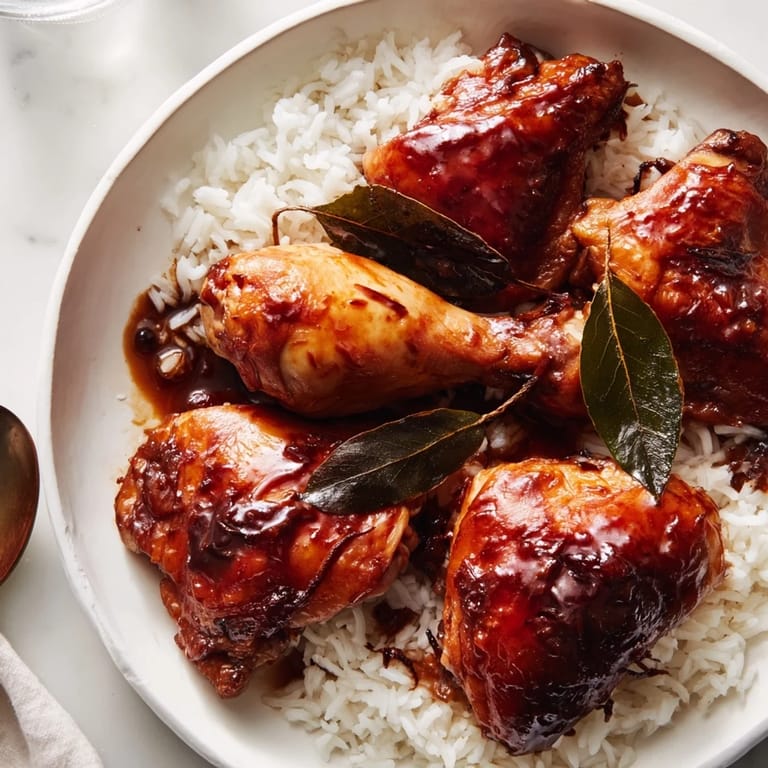
- Uncover the pot and simmer for another 10 to 15 minutes—this is when the magic happens and the sauce thickens into something glossy and concentrated. Skim off excess fat from the top if you like, taste for salt and pepper, and pull out those bay leaves.
- Plate and serve:
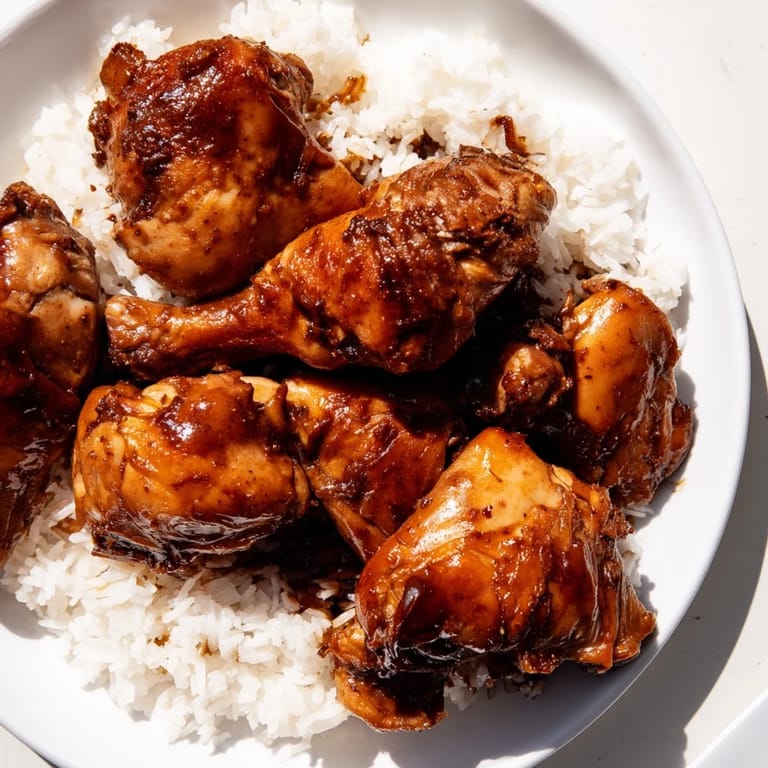
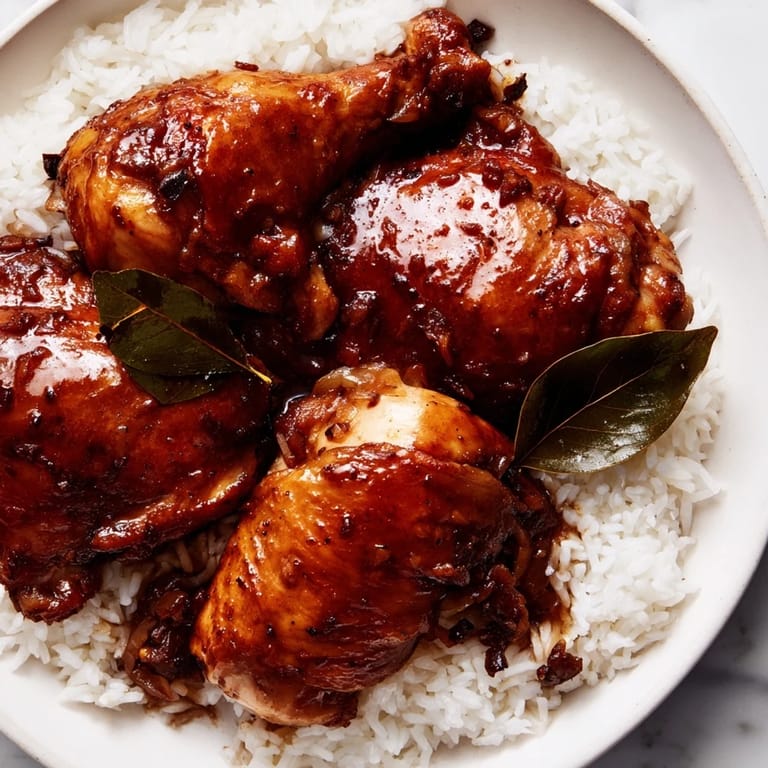
- Spoon the chicken and sauce over steaming white rice, scatter some chopped scallions on top if you have them, and serve while everything's still hot.
 Save
Save There's something about the smell of adobo that feels like home, no matter where you are. It's the kind of dish that brings people to the table without anyone needing to ask twice.
Why This Dish Works
Adobo is built on a beautiful principle: vinegar and soy sauce together create a balance where neither overpowers, and the long braise lets the chicken absorb all that flavor while becoming fall-apart tender. The browning step adds depth, the marinade infuses everything ahead of time, and the final reduction concentrates all those tastes into something silky. It's a technique that has worked for generations because it actually works.
Scaling and Variations
This recipe doubles easily if you're feeding a group—just give yourself more time for browning all the chicken and a few extra minutes for the sauce to reduce. You can swap pork shoulder or butt for chicken and it becomes pork adobo, which honestly might be even richer. Some people add a splash of coconut milk toward the end for creaminess, or toss in a few dried chilies if you want heat.
Make It Your Own
The beauty of adobo is that it's forgiving and adaptable to what you have on hand. If you don't have cane vinegar, white or even rice vinegar works. No brown sugar? Skip it or use regular sugar. This is a dish meant to be made by feel, tasted as you go, and adjusted to your preference. That's how it became such a cornerstone of Filipino cooking in the first place.
- Leftovers keep for at least 4 days in the fridge and actually taste better as flavors deepen.
- You can serve this over rice, with bread, or even eat it cold straight from the container the next day.
- If your sauce hasn't thickened enough by the time the chicken is tender, just simmer it uncovered for a few minutes more.
 Save
Save This is one of those recipes that tastes like it took hours but barely touches your weeknight schedule. Make it once and you'll understand why it's become such a beloved classic.
Recipe FAQs
- → What cut of chicken works best for this dish?
Chicken thighs and drumsticks with skin on provide tender meat and flavorful fat that enrich the braise.
- → Can the marinade time be shortened?
While 30 minutes minimum is suggested, marinating longer enhances depth and tenderness, up to 8 hours.
- → Is it necessary to brown the chicken first?
Browning adds a rich color and depth to the dish by caramelizing the skin before simmering.
- → How can I adjust the flavor balance?
Modify vinegar or brown sugar amounts to shift tanginess or sweetness to taste.
- → What can be served alongside this dish?
Steamed white rice is traditional, absorbing the flavorful sauce and balancing the tangy notes.