 Save
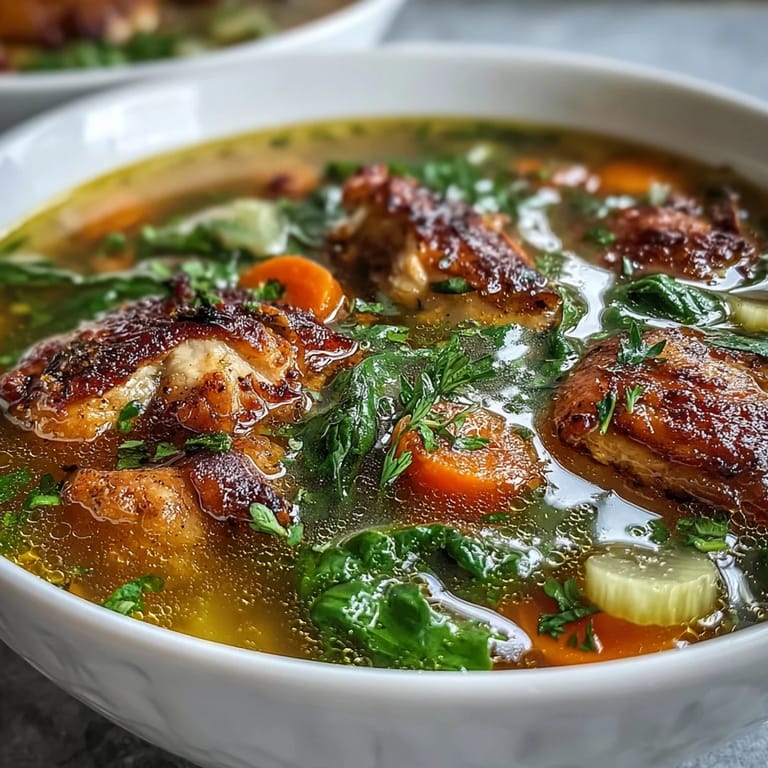
Save My neighbor showed up at my door one gray afternoon with a thermos of golden soup, saying her grandmother swore by turmeric for everything from creaky joints to gloomy moods. She ladled a bowlful into a mug and I sat on her kitchen steps, tasting something that felt less like dinner and more like being wrapped in warmth. That was years ago, but I still chase that same feeling every time I make this soup, especially when the weather turns cool or someone I care about needs a little extra comfort.
I made this for my sister when she was recovering from surgery, worried the flavors might be too bold, but she asked for seconds before I'd even sat down. Her husband kept sneaking spoonfuls straight from the pot as it cooled, and by evening they were both moving around the kitchen like themselves again. That's when I realized this soup does something beyond nutrition—it signals care in a way plain broth never could.
Ingredients
- Boneless, skinless chicken thighs or breasts: Thighs stay more tender and forgiving, but breasts work fine if that's what you have—just watch them so they don't dry out.
- Medium onion, finely chopped: This is your flavor foundation, so take a minute to chop it properly rather than rough chunks.
- Medium carrots and celery stalks, sliced: These three vegetables are the holy trinity of soup—they build a subtle sweetness and depth that turmeric can really shine through.
- Garlic cloves and fresh ginger: Minced garlic burns easily, so add it after softer vegetables have had their moment; ginger root grated fresh makes all the difference in brightness.
- Baby spinach or kale: Spinach wilts faster and feels silkier, while kale holds more structure if you prefer something with more chew.
- Low-sodium chicken broth: Good broth is the skeleton of this dish—taste it before you buy if you can, because quality varies wildly.
- Olive oil: Just enough to keep everything from sticking without making the soup heavy.
- Ground turmeric: This is the star, so make sure your jar isn't years old sitting in the back of your cabinet.
- Ground cumin, black pepper, and sea salt: Cumin echoes turmeric's earthiness; don't skip the black pepper because it actually helps your body absorb the turmeric's benefits.
- Crushed red pepper flakes: Optional, but a tiny pinch wakes everything up without making it hot.
- Fresh lemon juice: The acid at the end is crucial—it cuts through the richness and makes every spice taste brighter.
- Fresh parsley or cilantro: Cilantro if you love that bright, almost soapy note; parsley if you prefer something more neutral.
Tired of Takeout? 🥡
Get 10 meals you can make faster than delivery arrives. Seriously.
One email. No spam. Unsubscribe anytime.
Instructions
- Heat your pot and build the base:
- Pour olive oil into a large pot over medium heat and let it shimmer for a few seconds. Add your onion, carrots, and celery, stirring occasionally until the edges of the onion turn translucent and everything softens—you're aiming for about 5 minutes, but don't rush it.
- Wake up the aromatics:
- Add your minced garlic and grated ginger, stirring constantly for just one minute until the smell hits you—that's when you know the aromatics are releasing their oils. Don't let them brown or they'll taste bitter.
- Bloom the spices:
- Stir in your turmeric, cumin, black pepper, and salt, cooking for about 30 seconds while everything coats evenly. This brief moment of heat unlocks the spices' flavors in a way dry spices alone never can.
- Sear the chicken:
- Add your chicken pieces and let them sit for a minute or two on each side until they just lose their raw pink color—you're not cooking them through yet, just getting a subtle golden surface. This takes about 2 to 3 minutes.
- Build the broth:
- Pour in your chicken broth, watching it bubble and rise as the heat increases. Let it come to a boil, then immediately lower the heat to a gentle simmer, cover with a lid, and let it be for 20 minutes—resist the urge to keep stirring.
- Finish with greens:
- After 20 minutes, add your spinach or kale and let everything simmer for another 5 minutes until the leaves are completely wilted and the chicken is cooked through with no pink inside. Give it a stir to help the greens distribute evenly.
- Brighten with acid:
- Turn off the heat and stir in your lemon juice, tasting as you go—a squeeze of acid is what separates a one-note soup from something memorable. Adjust salt and pepper if needed.
- Serve with intention:
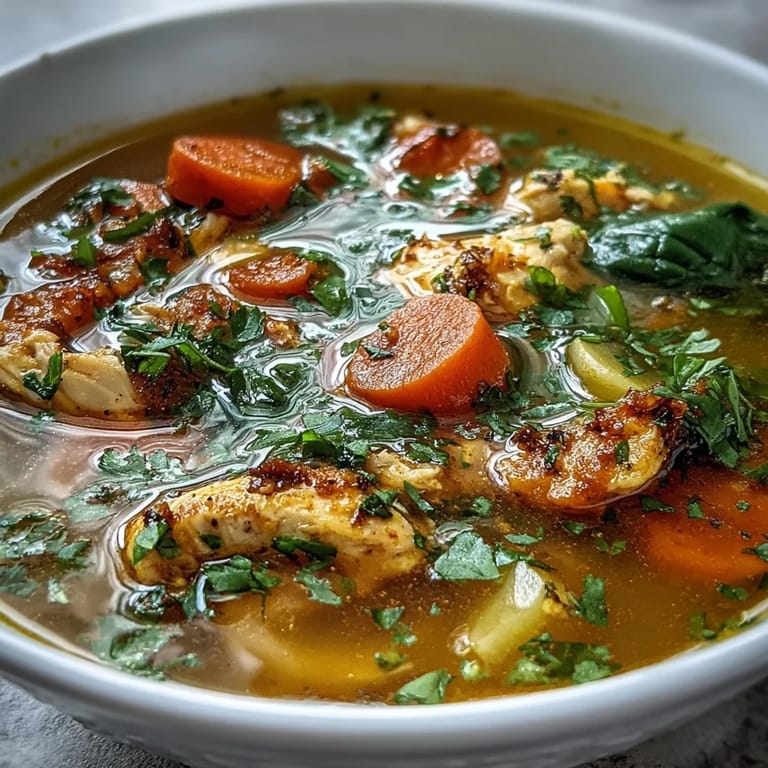
- Ladle into bowls, scatter fresh herbs on top, and serve while it's steaming hot. The warmth matters almost as much as the flavor.
 Save
Save My mother tasted this soup and immediately asked if I'd added something she couldn't quite place—not realizing that the combination of spices creates something almost meditative, the kind of flavor that makes you slow down and actually taste what's in your bowl. She started making it weekly, and now I hear it through the grapevine that she's been giving thermoses to friends who are having rough weeks.
The Turmeric Advantage
Turmeric has been used for thousands of years in traditional medicine, and modern research keeps validating what people already knew—it genuinely does seem to help with inflammation and support overall wellness. The spice has a warm, slightly bitter earthiness that can feel overpowering if you're not careful, which is why pairing it with ginger, cumin, and a squeeze of lemon is so smart. In this soup, it doesn't announce itself aggressively but rather wraps around you, making you feel nourished from the inside out.
Why Broth Quality Actually Matters Here
Because this is a soup and not a stew, the broth isn't just a cooking medium—it's actually 50 percent of what you're eating. A thin, bland broth will make even perfect spices taste hollow, so it's worth taking time to find a really good one. I started making my own bone broth last year and the difference was almost shocking, but a really good store-bought broth works beautifully too.
Making It Your Own
The beauty of this soup is how it welcomes additions without losing its identity—I've made it with roasted sweet potatoes, added jasmine rice, even thrown in coconut milk on days when I wanted something richer. The core of turmeric, ginger, and lemon stays constant, but you get to decide what else lives in your bowl.
- Add 100 grams of cooked rice or quinoa in the last few minutes if you want something more substantial.
- Stir in a splash of coconut milk at the very end for richness, or use chickpeas instead of chicken for a vegetarian version.
- A cinnamon stick or star anise during simmering adds complexity, but remove before serving.
 Save
Save This soup sits somewhere between medicine and comfort, which is maybe why people keep coming back to it. Make it when someone needs care, make it when you need care, and let the golden color and fragrant steam do some of the healing work.
Recipe FAQs
- → What makes this soup golden?
The vibrant golden color comes from ground turmeric, which also provides anti-inflammatory benefits and warm, earthy flavor notes.
- → Can I make this vegetarian?
Yes, substitute the chicken with chickpeas and use vegetable broth instead of chicken broth for a satisfying plant-based version.
- → How spicy is this soup?
This soup has mild warmth from black pepper and optional red pepper flakes. The turmeric and cumin provide aromatic depth rather than heat.
- → Can I freeze this soup?
This soup freezes well for up to 3 months. Cool completely before storing in freezer-safe containers, leaving space for expansion.
- → What can I serve with this?
Pair with crusty bread, crackers, or a simple side salad. For added heartiness, serve over cooked rice or quinoa.
- → How long does this keep in the refrigerator?
Store in an airtight container for up to 4 days. The flavors often deepen and improve after a day or two.