 Save
Save There's something almost magical about watching a pot of chopped green vegetables transform into velvet-smooth soup. I discovered this particular blend on a gray Tuesday afternoon when my fridge was overflowing with spring produce and my immune system could use a serious boost. The cashew base seemed like an odd choice at first, but that first spoonful changed everything—creamy without a drop of dairy, nourishing in a way that felt intentional rather than accidental.
My partner came home that same Tuesday to find our kitchen steamed with the aroma of sautéed garlic and fresh herbs, and without a word, just inhaled deeply over the pot. We sat at the kitchen table with oversized bowls, rain pattering against the window, and neither of us spoke for several minutes—just ate. That's when I knew this soup had become something I'd make again and again.
Ingredients
- Olive oil: Use a generous tablespoon to build a flavorful base; it's the foundation that makes the aromatics sing.
- Large onion and garlic cloves: These create the aromatic backbone, so don't rush the sauté—you want them soft and fragrant.
- Broccoli florets: Cut them smaller than you think you need, since they'll blend smooth and distribute their nutrients throughout.
- Asparagus: Trim the woody ends and chop into roughly one-inch pieces for even cooking.
- Baby spinach: Added at the very end so it stays bright green and full of life.
- Zucchini: This mild vegetable adds volume and creaminess without overpowering the other flavors.
- Raw cashews: The secret weapon—soak them first to soften, then they blend into silky richness that mimics cream.
- Low-sodium vegetable broth: Choose quality broth since it becomes the soul of the soup; taste as you go and adjust salt accordingly.
- Lemon juice: This brightens everything at the end, waking up the flavors you've built.
- Sea salt, black pepper, nutmeg, and thyme: Nutmeg is the subtle player here—just a whisper transforms the soup from good to memorable.
Tired of Takeout? 🥡
Get 10 meals you can make faster than delivery arrives. Seriously.
One email. No spam. Unsubscribe anytime.
Instructions
- Build the aromatic base:
- Heat olive oil in your largest pot over medium heat, then add the chopped onion and minced garlic. Listen for that gentle sizzle and let them soften for three to four minutes until the kitchen smells like possibility—golden onions, fragrant garlic, no browning.
- Add the green vegetables and seasonings:
- Toss in the broccoli florets, asparagus pieces, zucchini, salt, pepper, nutmeg, and thyme. Stir everything together and let it cook for four to five minutes, allowing the seasonings to coat each piece and the vegetables to begin releasing their natural sweetness.
- Simmer until tender:
- Pour in the vegetable broth and bring it to a gentle boil, then reduce the heat, cover, and let it simmer for twelve to fifteen minutes. The vegetables should be fork-tender and the broccoli starting to break apart at the edges—this is exactly what you want.
- Wilt in the spinach and cashews:
- Add the baby spinach and drained soaked cashews, then simmer for just two more minutes. Watch as the spinach transforms from bright green leaves to soft ribbons integrated throughout.
- Blend to silky smoothness:
- Remove from heat and carefully transfer the soup to your blender in batches, or use an immersion blender directly in the pot. Blend until completely smooth and creamy, holding the lid firmly if using a traditional blender and letting steam escape carefully.
- Finish and taste:
- Stir in the fresh lemon juice and taste the soup. This is your moment to adjust seasoning—a pinch more salt, a crack of pepper, perhaps another squeeze of lemon if it needs brightness.
- Serve with intention:
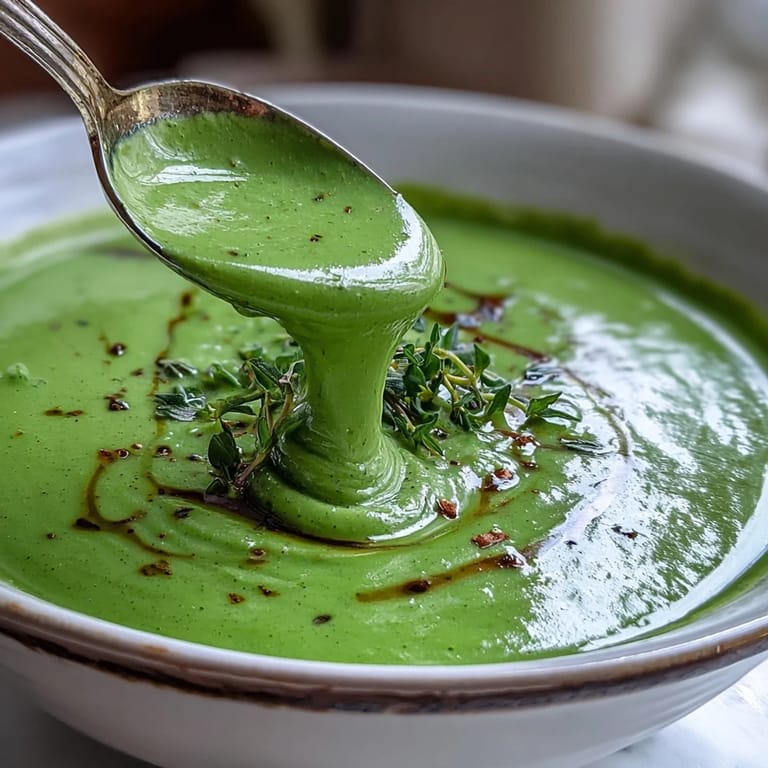
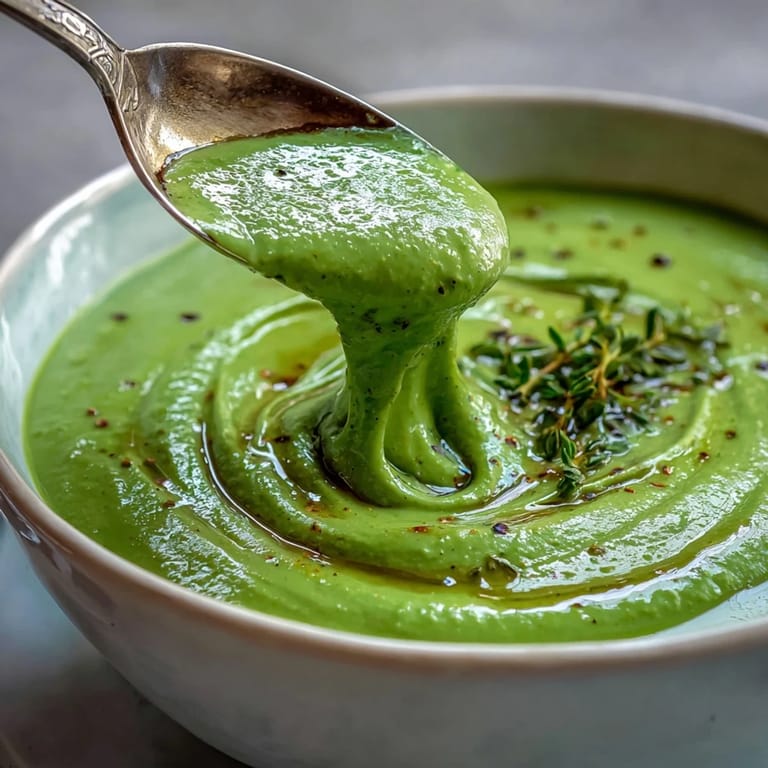
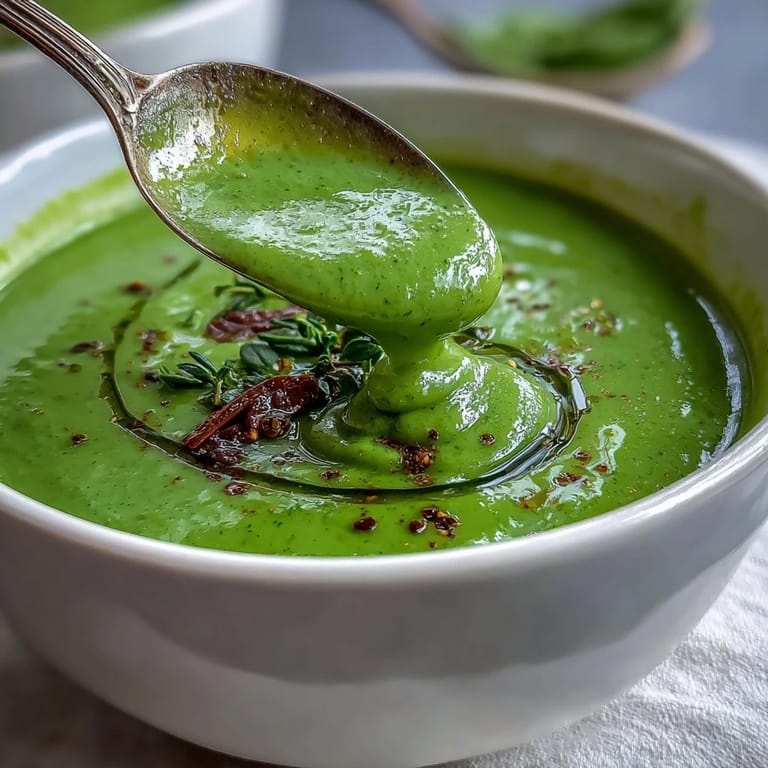
- Ladle into bowls and top with extra spinach leaves or a delicate drizzle of olive oil if you want something beautiful. This soup deserves to be presented as the nourishment it is.
 Save
Save This soup became my go-to when friends were fighting colds or when I simply needed to feel like I was doing something kind for my body. There's real nourishment in a bowl, not just calories—you can taste the intention.
Customizations That Work
The beauty of this soup is how flexible it is without losing its character. White beans added before blending turn it into something heartier and more substantial for when you need lunch rather than a side. Sunflower seeds swap perfectly for cashews if tree nuts aren't on your table, and the creaminess comes through just as well. I've added fresh dill in place of thyme on mornings when I wanted a different kind of brightness, and I've used roasted red pepper broth instead of plain vegetable broth when I wanted something with more depth.
Pairing and Serving Ideas
This soup stands confidently on its own, but it also welcomes a friend—crusty whole-grain bread torn apart and used to scoop up every last spoonful, a crisp Sauvignon Blanc alongside if you're in the mood to make dinner feel special. I've served it in tiny cups at the beginning of larger meals, and I've also made a double batch to have for quiet lunches throughout the week. It reheats gently on the stovetop with a splash of broth to restore its pourable consistency, and it freezes beautifully in containers for up to three months.
The Science of Why This Works
Every vegetable in this soup brings something specific to the table—broccoli and spinach are nutritional powerhouses loaded with vitamins and minerals, asparagus brings a subtle earthiness, and zucchini adds bulk without competing for attention. The cashews aren't just for creaminess; they bring healthy fats that help your body absorb the fat-soluble vitamins from all those greens, and they anchor the soup with natural protein. This combination of colors, textures, and nutrients is what makes it genuinely immunity-supporting rather than just a nice idea.
- Make sure your vegetables are fresh and vibrant colored—this is where the real nutritional benefit lives.
- Don't overcook the spinach before blending, or it will turn dark and lose its fresh character.
- Taste as you go and adjust the lemon juice and salt to your preference; these final touches make all the difference.
 Save
Save This soup proved to me that nourishing food doesn't have to be complicated or require a list of unfamiliar ingredients. Make it when you need to feel like you're taking care of yourself, and notice how it tastes like genuine kindness in a bowl.
Recipe FAQs
- → How long does it take to make?
Total time is 40 minutes: 15 minutes for preparation and 25 minutes for cooking. The cashews need 20 minutes to soak in hot water, which you can do while prepping vegetables.
- → Can I make this soup ahead of time?
Yes, this soup stores beautifully. Keep refrigerated in an airtight container for up to 4 days. Reheat gently on the stovetop, adding a splash of broth or water if it thickens.
- → What can I substitute for cashews?
Sunflower seeds work well for a nut-free version. For extra creaminess, try raw macadamia nuts or blend in a peeled potato while cooking.
- → Is it freezer-friendly?
Absolutely. Cool completely before freezing in portions for up to 3 months. Thaw overnight in the refrigerator and reheat on the stovetop.
- → How do I achieve the smoothest texture?
Use a high-speed blender and blend in batches if needed. An immersion blender works but may leave slight texture. For ultra-smooth results, strain through a fine-mesh sieve after blending.
- → What protein additions work well?
Stir in cooked white beans before blending, add cubed tofu while simmering, or serve with roasted chickpeas on top. A dollop of hemp hearts adds protein and nutty flavor.