 Save
Save One rainy Sunday afternoon, I was craving something warm and comforting but didn't want to leave the house. I remembered watching my neighbor knead dough on her back porch years ago, the smell of rosemary drifting over the fence. That memory nudged me into trying focaccia for the first time. The dough was stickier than I expected, clinging to my fingers as I worked it, but the moment it puffed up in the oven and filled my kitchen with that golden, herby aroma, I knew I'd stumbled onto something special. Now it's my go-to whenever I need to feel grounded.
I made this for a birthday dinner once, just as a side, and it completely stole the show. People kept tearing off pieces, dipping them in olive oil, and pausing mid-conversation to savor the salt and rosemary. One friend asked if I'd bought it from a fancy bakery. I didn't tell her how easy it actually was until she'd had three slices.
Ingredients
- Bread flour: The higher protein content gives focaccia its chewy, airy crumb, I tried all-purpose once and it worked but didn't have quite the same lift.
- Instant dry yeast: No need to proof it first, just mix it right in, which saves time and one less bowl to wash.
- Fine sea salt: This goes inside the dough for flavor, don't skip it or the bread will taste flat no matter how much you top it.
- Extra virgin olive oil: Use the good stuff, it soaks into every dimple and becomes part of the crust, you'll taste the difference.
- Lukewarm water: Too hot kills the yeast, too cold slows it down, aim for bath-water warm and you'll be fine.
- Fresh rosemary leaves: Dried works in a pinch, but fresh rosemary releases oils as it bakes and perfumes the whole loaf.
- Flaky sea salt: Those crunchy crystals on top are non-negotiable, they burst on your tongue and make every bite feel intentional.
Tired of Takeout? 🥡
Get 10 meals you can make faster than delivery arrives. Seriously.
One email. No spam. Unsubscribe anytime.
Instructions
- Mix the base:
- Whisk together the flour, yeast, and fine salt in a big bowl until evenly distributed. This step takes ten seconds but ensures the yeast won't clump in one spot.
- Bring it together:
- Pour in the oil and water, then stir with a wooden spoon until a shaggy, sticky mass forms. It should look rough and unrefined, that's exactly right.
- Knead until smooth:
- Turn the dough onto a lightly oiled counter and knead for eight to ten minutes, folding and pressing until it stops fighting you and becomes silky. Your arms might complain, but the rhythm is oddly meditative.
- First rise:
- Tuck the dough into an oiled bowl, cover it with a damp towel, and let it rest somewhere warm for an hour. It should double in size and feel puffy when you poke it.
- Prep the pan:
- Line your baking sheet with parchment and drizzle a tablespoon of olive oil across it. This prevents sticking and starts building that crispy bottom crust.
- Shape and rest again:
- Place the risen dough on the sheet and gently press it outward with your fingertips until it fills the pan. Cover it loosely and let it puff up for another thirty minutes.
- Preheat and dimple:
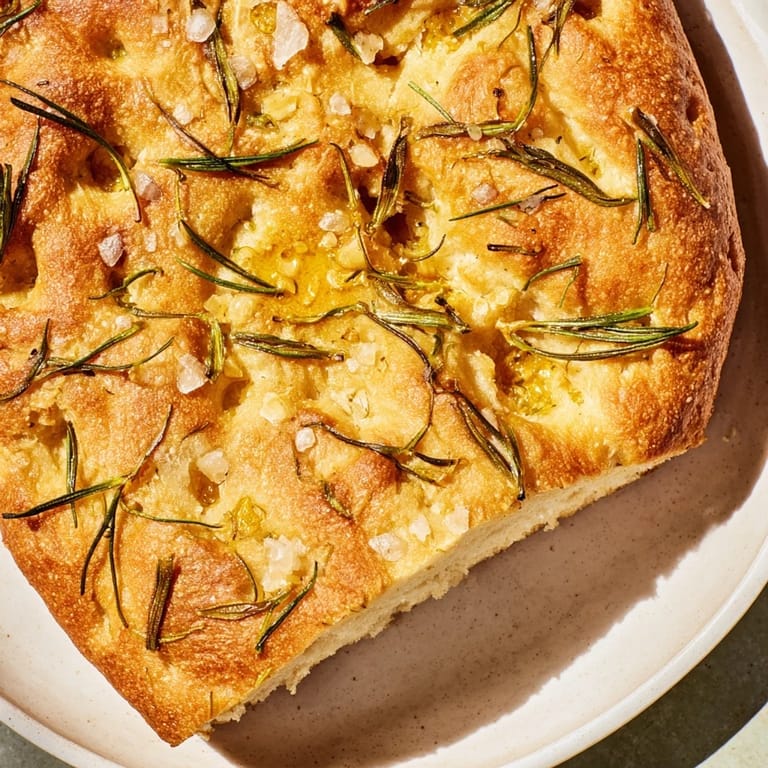
- Heat your oven to 220°C, then press your fingers deep into the dough all over to create those signature dimples. Drizzle the remaining oil into the wells, scatter rosemary and flaky salt on top.
- Bake until golden:
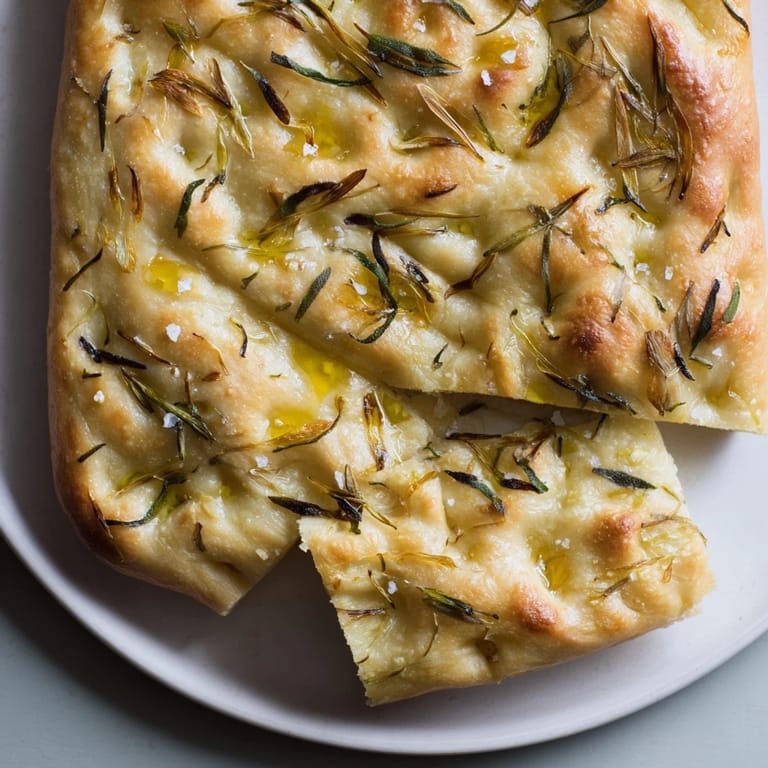
- Slide it into the oven and bake for twenty to twenty-five minutes, until the edges turn amber and crisp. The smell alone will have people wandering into the kitchen.
 Save
Save There's a moment right after it comes out of the oven when the crust crackles as it cools, a sound so satisfying it almost feels like applause. I've learned to just stand there for a minute, listening, before I let anyone tear into it. It reminds me that some of the best things require patience, even when the smell is driving you wild.
Serving Suggestions
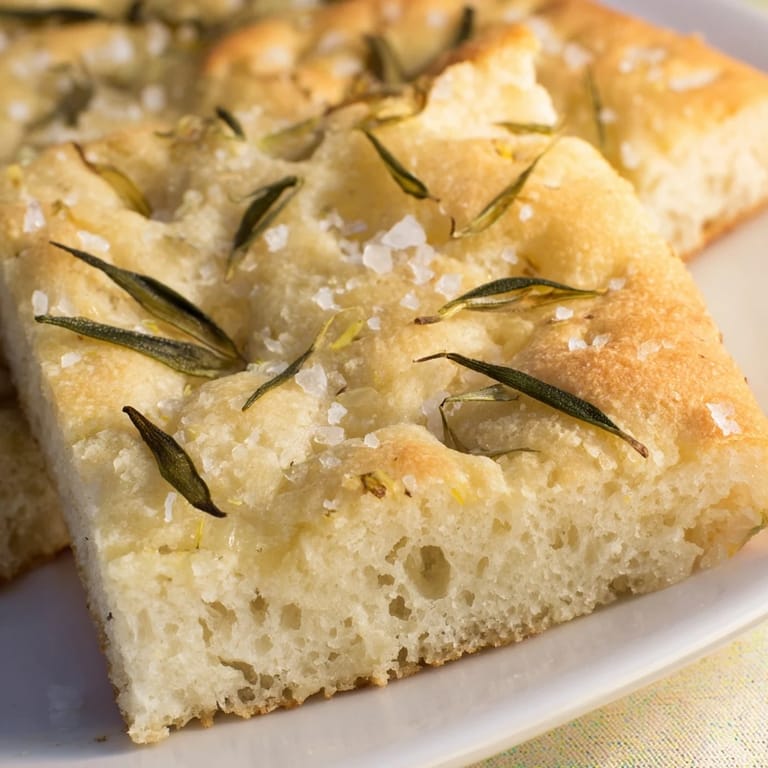
I like to serve this warm, torn into rough pieces and piled on a wooden board with a small bowl of balsamic vinegar and olive oil for dipping. Sometimes I'll scatter halved cherry tomatoes or olives on top before baking, which turns it into a full meal. It also makes an incredible sandwich base, slice it horizontally and fill it with mozzarella, basil, and roasted peppers.
Storage and Reheating
Focaccia is best the day you bake it, but leftovers can be wrapped in foil and stored at room temperature for a day or two. To bring it back to life, pop it in a warm oven for five minutes, the crust crisps up again and it tastes almost fresh. I've also frozen slices wrapped tightly, then toasted them straight from the freezer for a quick breakfast.
Common Tweaks and Variations
Some people like to add a handful of grated Parmesan to the dough for extra richness, or swap rosemary for thyme and lemon zest. I've seen versions topped with caramelized onions, roasted garlic, or even grapes and honey for a sweet-savory twist. The dough is a blank canvas, so once you've made it once, you'll start dreaming up your own combinations.
- Try adding a drizzle of honey before baking for a subtle sweetness that plays off the salt.
- Brush the hot focaccia with garlic-infused oil right out of the oven for an extra flavor hit.
- Use a cast iron skillet instead of a baking sheet for an even thicker, crispier crust.
 Save
Save Every time I pull this focaccia from the oven, I feel a little proud, not just of the bread, but of the quiet ritual that goes into making it. I hope it brings you the same kind of simple, fragrant joy.