 Save
Save The first time I made okonomiyaki at home, I stood in my kitchen with a head of cabbage and absolutely no idea what I was doing, armed only with a vague memory of eating one in Osaka years ago. My friend had texted me a photo of hers—all golden and topped with those dancing bonito flakes—and I suddenly had to know if I could recreate that magic. Turns out, all you need is a hot skillet, confidence, and the willingness to flip something that looks fragile but is actually tougher than it seems. Now these savory pancakes are my go-to when I want something that feels both indulgent and somehow light, a dish that tastes like a street stall but lives in my own kitchen.
I made these for a dinner party once, thinking they'd be a starter, but my guests literally didn't touch anything else—they just kept asking for more okonomiyaki. I remember standing at the stove, flipping pancake after pancake, my kitchen smelling like caramelized cabbage and toasted seaweed, and realizing I'd accidentally created the main event. That night taught me that simple food cooked with intention often wins the room.
Ingredients
- All-purpose flour: This is your binder, and one cup is the perfect amount—too much and you lose that tender crumb; too little and your pancake falls apart on the flip.
- Dashi stock: If you can find it, use it; it adds an umami depth that water just can't touch, but water works fine if you're in a pinch.
- Eggs: These two beauties are what make the batter cohesive and the pancake sturdy enough to flip without fear.
- Salt and baking powder: A half teaspoon of each gives you lift and seasoning—don't skip either one.
- Shredded green cabbage: Three cups might seem like a lot, but it wilts down beautifully and becomes almost creamy when cooked.
- Green onions: A half cup of these, thinly sliced, adds a sharp note that cuts through the richness perfectly.
- Julienned carrot: Optional, but it adds sweetness and a hint of color if you're feeling it.
- Shrimp or bacon: A half cup of cooked, chopped protein makes this heartier; either one works, or skip it altogether.
- Okonomiyaki sauce: This brown, tangy drizzle is non-negotiable—it's what makes this feel authentically Japanese and not just a fancy pancake.
- Japanese mayonnaise: Kewpie is the real deal, creamier and richer than American mayo, and it makes all the difference.
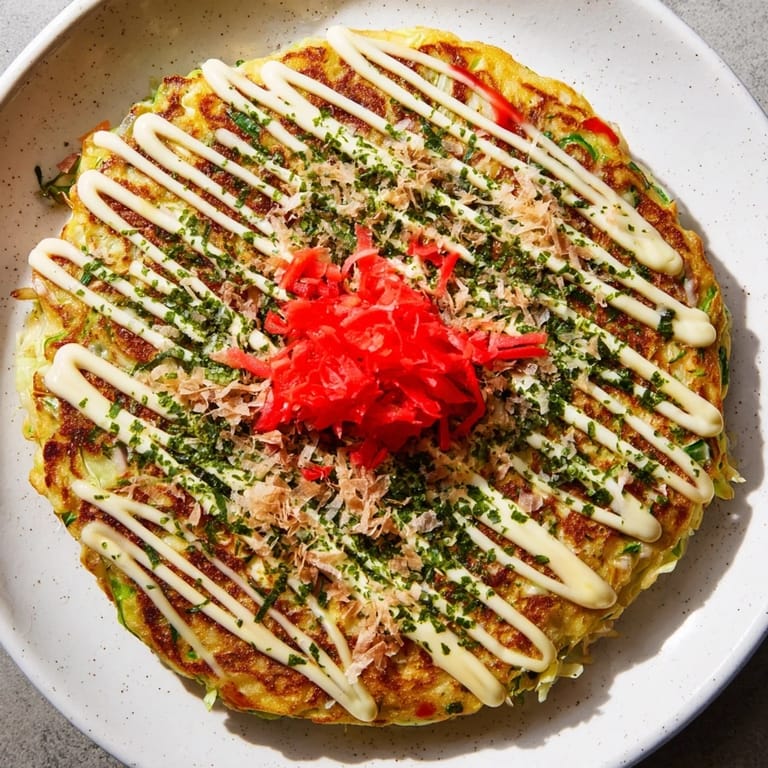
- Bonito flakes: These thin, paper-thin shards of smoked fish actually move from the heat of the pancake, which is both delightful and a little bit magical.
- Aonori: Dried seaweed powder that tastes bright and oceanic—sprinkle it generously.
- Pickled ginger: Optional, but it adds a sharp, cleansing bite if you want it.
- Neutral oil: Two tablespoons total gets you through all four pancakes without them sticking or browning unevenly.
Tired of Takeout? 🥡
Get 10 meals you can make faster than delivery arrives. Seriously.
One email. No spam. Unsubscribe anytime.
Instructions
- Make the batter:
- In a large bowl, whisk together your flour, dashi stock, eggs, salt, and baking powder until you have a smooth mixture with no lumps. Don't overthink it—just make sure everything is combined.
- Add the vegetables:
- Fold in your shredded cabbage, green onions, carrot, and protein of choice, stirring gently until everything is evenly distributed through the batter. The batter should look thick and chunky with vegetables.
- Heat your skillet:
- Get a nonstick skillet going over medium heat with about a half tablespoon of oil, letting it shimmer and get just barely smoking.
- Shape and cook:
- Scoop about a cup of batter onto the hot skillet and gently shape it into a thick round pancake about six inches wide, pressing it down slightly so it cooks evenly. Let it sit undisturbed for four to five minutes until the bottom turns golden brown and slightly crispy.
- The flip:
- Using a sturdy spatula, slide underneath the pancake, take a breath, and flip it confidently—hesitation is the enemy. Cook the other side for another four to five minutes until it's cooked through and golden.
- Repeat:
- Transfer your first pancake to a warm plate and repeat with the remaining batter, adding a bit more oil to the skillet as needed.
- Top and serve:
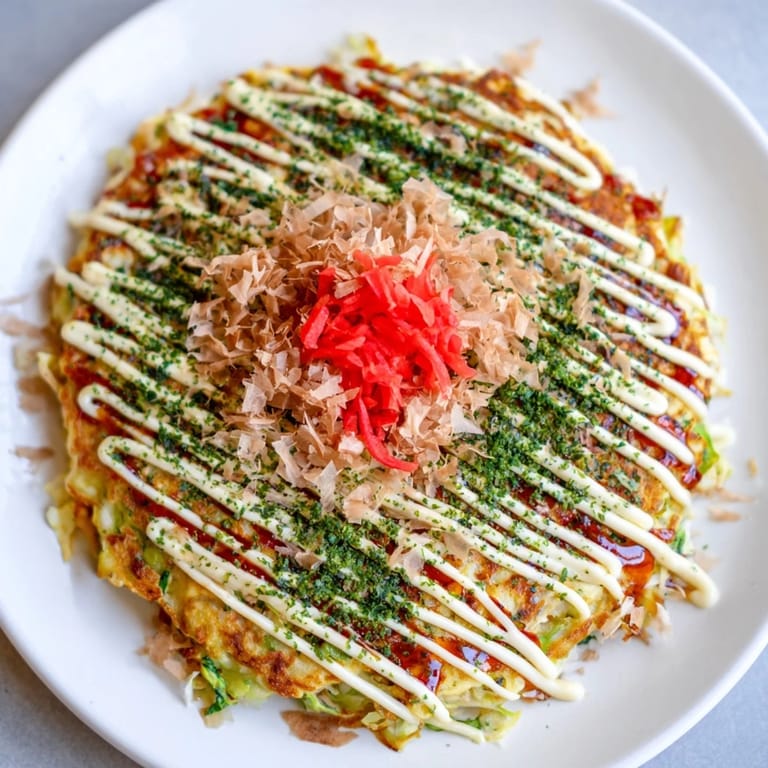
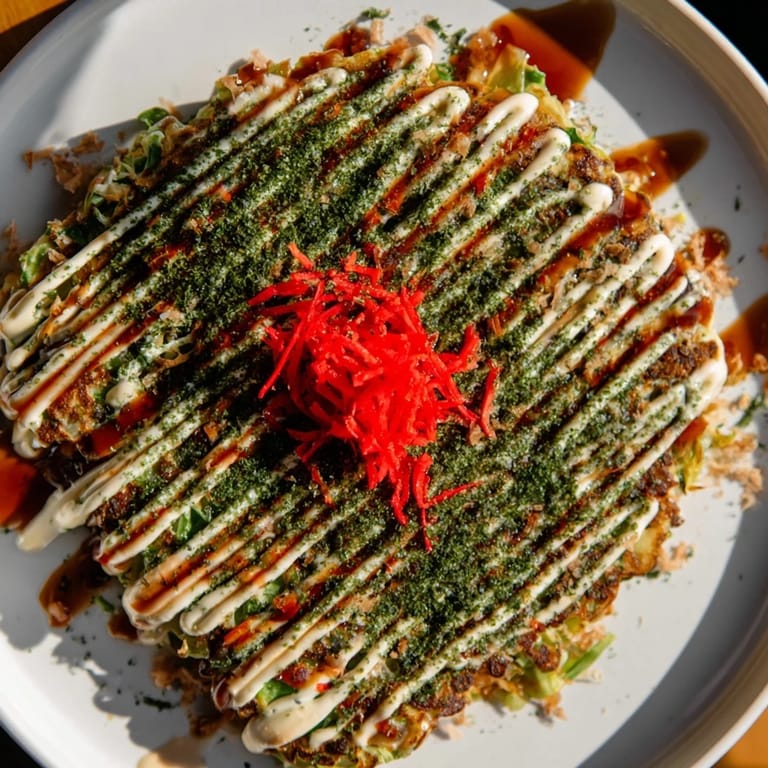
- Drizzle both sides of each pancake generously with okonomiyaki sauce and Japanese mayonnaise in a crisscross pattern, then shower with bonito flakes, aonori, and pickled ginger if you like. Serve hot while the pancake is still warm enough for the bonito flakes to dance from the heat.
 Save
Save What I love most is watching someone take their first bite and have that moment where the crispy edges meet the soft interior, where the umami sauce hits their tongue at the same time as the sweetness of the cabbage. It's one of those dishes that feels like a small gift to the people you're feeding, and honestly, to yourself.
Why These Pancakes Are a Game-Changer
Okonomiyaki sits in this perfect middle ground where it's not quite a main dish, not quite a side, and not quite a snack—it's whatever you need it to be. I've served it as an appetizer before a sushi dinner, as a casual lunch with a cold beer, and as a late-night kitchen experiment with leftover vegetables. The formula is flexible enough that you can make it your own, swapping proteins or piling on extra vegetables depending on what you have and what you're craving. This is the kind of recipe that gets better the more you make it, because you start to trust your instincts about how thick the batter should be, how long to cook each side, and how generous to be with the toppings.
The Secret Ingredient: Timing
The moment between when you flip the pancake and when it hits the plate is where a lot of the magic happens—the bottom side gets those caramelized, crispy edges while the inside stays tender, and that contrast is what makes this dish sing. I learned this by making them too fast the first few times, rushing from skillet to plate because I was nervous about the flip. But okonomiyaki actually rewards patience; if you let it cook undisturbed for those full four to five minutes on each side, you'll get a pancake with real depth of flavor instead of something pale and soggy. Temperature matters too—medium heat is your friend here, hot enough to get good color but not so hot that the outside burns before the inside cooks through.
Building Flavor Layers
This dish works because every layer—the savory batter, the sweet cabbage, the umami sauce, the bright aonori, the wispy bonito flakes—all contribute something different, and together they create a flavor experience that's bigger than any one ingredient. The dashi stock in the batter might seem like a small thing, but it quietly anchors everything in that Japanese umami space that makes these pancakes taste authentic. And the okonomiyaki sauce is crucial; don't skip it or try to substitute it with plain ketchup, because it's specifically formulated to balance the savory pancake with a touch of sweetness and tang.
- If you can't find bonito flakes, thinly shaved smoked fish or even a sprinkle of nori will echo some of that smoky flavor.
- Make sure your vegetables are prepped before you start cooking, because once the oil is hot, you're moving quickly.
- Leftovers can be wrapped in foil and reheated in a low oven, though they're honestly best fresh and still warm from the skillet.
 Save
Save These pancakes are a reminder that some of the most satisfying food comes from simple ingredients treated with respect and care. They're approachable enough for a weeknight dinner but impressive enough to pull out when you want to cook something that feels a little bit special.
Recipe FAQs
- → What is the main ingredient in okonomiyaki pancakes?
The base is a batter of flour, dashi stock, eggs, and baking powder combined with shredded cabbage for texture and flavor.
- → Can I substitute dashi stock in the batter?
Yes, water can be used as a substitute, though dashi adds a subtle umami depth to the batter.
- → How do I get the pancakes crispy on the outside?
Cook them over medium heat with a small amount of oil until the underside is golden brown before flipping gently to cook through.
- → What toppings enhance the flavor of these pancakes?
Generous drizzles of okonomiyaki sauce and Japanese mayonnaise combined with bonito flakes, dried seaweed, and pickled ginger add layers of savory and tangy taste.
- → Can I make a vegetarian version?
Omit shrimp or bacon and bonito flakes, and increase the amount of vegetables for a rich vegetarian option.