 Save
Save The first time I made laksa, my kitchen filled with a perfume so intoxicating that my roommate emerged from their room asking what smelled like heaven. I'd picked up a jar of laksa paste on a whim at an Asian market, drawn to the mysterious rust-colored glob and the promise of Malaysia on the label. That evening, watching the spice bloom in hot oil—garlic and ginger releasing their secrets—I understood why this soup had traveled continents. Now, whenever I make it, I'm transported back to that moment of delicious uncertainty, knowing exactly how this story ends: with a steaming bowl that tastes like an adventure.
I made this for my sister during a particularly gray February, and watching her eyes light up after that first spoonful reminded me why cooking matters. She'd been stressed about work, and somehow a bowl of laksa—with its warm spices and gentle heat—became exactly what she needed that day. She's made it three times since, each time calling to ask if she's doing it right. That's when I knew I had to get this recipe down perfectly.
Ingredients
- Vegetable oil: Use a neutral oil like canola or sunflower to let the curry spices shine without competing flavors.
- Onion, garlic, ginger, and lemongrass: These four are the aromatic backbone—don't rush them or skip the lemongrass, as it's what makes laksa unmistakably laksa.
- Laksa paste: Store-bought is perfectly fine and saves time; look for it in Asian markets or online, and check the label if you need it vegan.
- Coconut milk: Full-fat is essential here—it creates that silky, luxurious mouthfeel that makes the dish memorable.
- Vegetable broth: Use good quality broth; it's the liquid foundation that carries all those beautiful spices to your palate.
- Soy sauce, sugar, and salt: These balance the richness and heat, so taste as you go rather than adding all at once.
- Rice noodles: Thick or vermicelli work equally well—soak them just before serving so they stay tender without becoming mushy.
- Tofu: Firm tofu fries up golden and crispy, creating textural contrast against the soft noodles.
- Fresh vegetables: Bean sprouts, carrots, bell peppers, and snow peas add crunch and brightness that cuts through the curry's richness.
- Spring onions and cilantro: These final garnishes feel like the exclamation point on the dish.
- Lime wedges: Squeeze them in for acidity that awakens every flavor.
Tired of Takeout? 🥡
Get 10 meals you can make faster than delivery arrives. Seriously.
One email. No spam. Unsubscribe anytime.
Instructions
- Build the flavor base:
- Heat your oil over medium heat and add the onion, garlic, ginger, and lemongrass. You're looking for that moment when the kitchen fills with aroma and the onions turn translucent—usually 3 to 4 minutes. This is the foundation; rushing it means a flatter-tasting broth.
- Deepen with laksa paste:
- Stir in the paste and let it cook for about 2 minutes, stirring constantly. Watch as it transforms from a concentrated blob into something that coats the pot with spiced color—this is when the real magic happens.
- Create the creamy broth:
- Pour in the coconut milk and vegetable broth, stirring well to break up any paste clumps. Bring it to a gentle simmer—not a rolling boil—and let it settle.
- Season and meld:
- Add soy sauce, sugar, and a pinch of salt. Simmer uncovered for 10 minutes, tasting occasionally. You want the flavors to become cohesive, almost like they've been simmering for hours even though they haven't.
- Prepare the noodles and tofu:
- While the broth simmers, soak or cook your rice noodles according to the package, then drain them. In a separate skillet, fry your tofu cubes until they're golden and slightly crispy on the edges—this takes about 5 to 7 minutes total.
- Add the vegetables:
- Toss the carrots, bell peppers, and snow peas into the broth and let them simmer for just 3 to 4 minutes. You want them tender but still with a whisper of crunch.
- Assemble and serve:
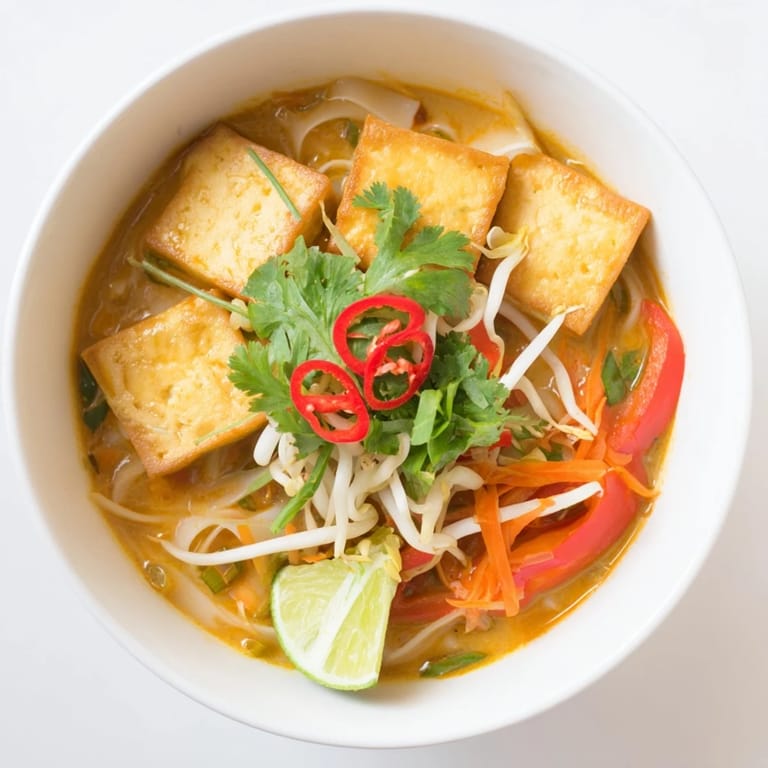
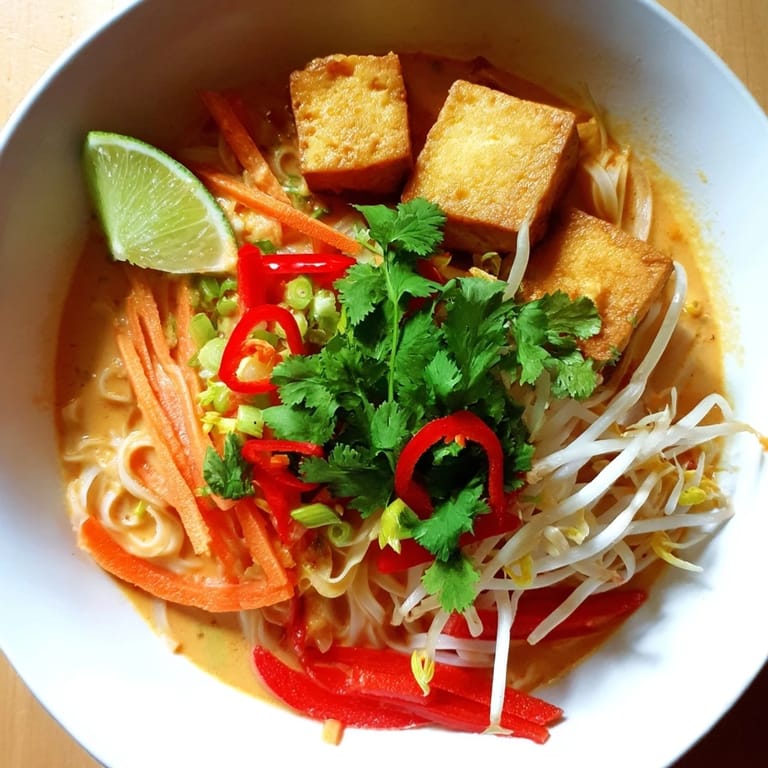
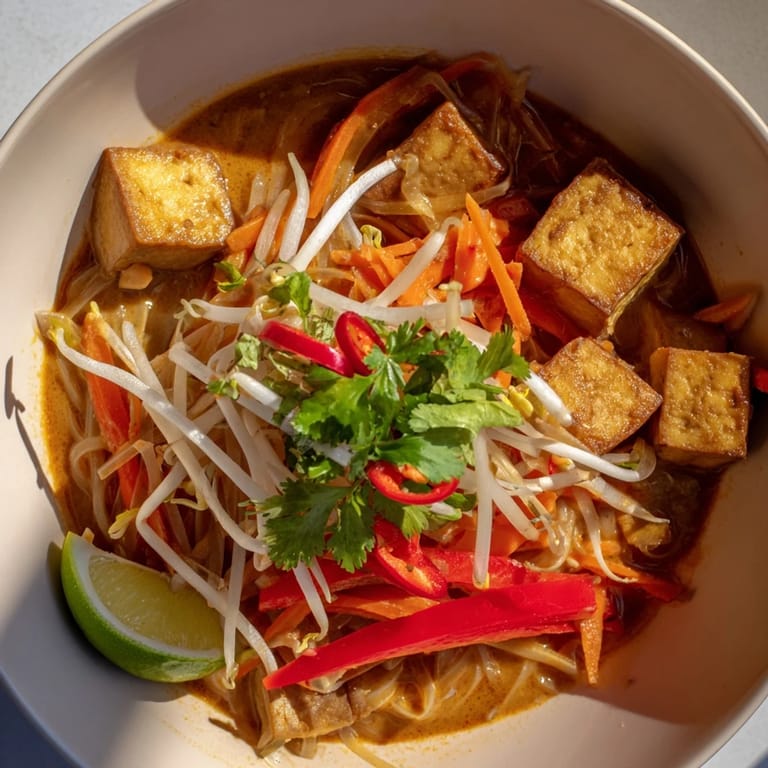
- Divide the drained noodles among four bowls, then ladle the hot broth and vegetables over top. Crown each bowl with fried tofu, a handful of bean sprouts, spring onions, fresh cilantro, and a sprinkle of chili if you like heat. Serve with lime wedges on the side.
 Save
Save There's a moment when you're standing over that pot, watching the steam rise and smelling the lemongrass and spice, when you realize this isn't just dinner—it's comfort in a bowl. For me, laksa became the dish I reach for when I want to feel capable in the kitchen and cared for at the table. It's showstopping enough to impress, but simple enough that even a weeknight version feels like a celebration.
Why This Soup Travels So Well
Laksa is one of those dishes that bridges cultures and kitchens because it's endlessly adaptable. I've made it with different vegetables depending on what's in season or what my friends prefer, swapped in cashew cream for part of the coconut milk, and even added a beaten egg at the end for richness. The core—that fragrant, creamy, spiced broth—stays constant and honest. What makes laksa special is that it tastes like someone understood exactly what would make you happy on that particular day.
The Art of Tofu Crisping
Getting tofu golden and slightly crispy was a small revelation for me. I used to just drop soft tofu into the broth and wonder why it fell apart, until a friend suggested a quick pan-fry first. Now I press my firm tofu between paper towels for a few minutes to remove excess moisture, cut it into cubes, and fry it in a hot skillet with just a touch of oil until the edges turn golden. It takes maybe seven minutes, but it changes the entire textural experience of eating the dish—suddenly you have creamy broth, tender noodles, crisp vegetables, and pockets of crispy-edged tofu. That contrast is when laksa becomes truly memorable.
Building Your Own Laksa Traditions
One of the joys of making laksa regularly is discovering what makes it feel like yours. Some people add a splash of lime juice straight into the broth, while others keep it entirely separate so each person can control the brightness. I've seen versions topped with boiled eggs, served with sambal on the side for heat lovers, or finished with crispy fried shallots for crunch. The best version is the one that arrives in your kitchen and slowly becomes a signature dish—something people ask you to make because they associate it with you.
- If you have mushrooms, baby corn, or bok choy on hand, add them to the broth alongside the other vegetables.
- For non-vegetarians, a boiled egg on top of each bowl adds protein and a beautiful visual element.
- Make the laksa paste yourself if you're curious and have a food processor—it's easier than you'd think and tastes impossibly better fresh.
 Save
Save Laksa is proof that some of the best meals come from a willingness to try something unfamiliar and the courage to make it your own. I hope this becomes a favorite in your kitchen, the way it's become woven into mine.
Recipe FAQs
- → What type of noodles work best in this laksa?
Rice noodles, either thick or vermicelli, soak or cook easily and complement the rich broth perfectly.
- → Can tofu be substituted in the dish?
Yes, firm tofu adds texture and absorbs flavors well; you can also use tempeh or soft tofu for variation.
- → How can I adjust the spiciness of the laksa curry?
Adjust the amount of laksa paste or add fresh chili slices to increase heat, or reduce them for a milder flavor.
- → What fresh toppings enhance the dish?
Bean sprouts, spring onions, cilantro, and lime wedges add fresh, bright notes that balance the creamy broth.
- → Is coconut milk essential for the curry base?
Coconut milk provides the creamy richness critical to the broth’s flavor and texture; replacing it changes the dish’s character.