 Save
Save There's a particular evening I can't forget, sitting in a small restaurant in Delhi with friends who kept insisting I had to learn how to make paneer tikka masala myself. The chef there, a woman with flour permanently dusting her dupatta, watched me watch her cook and then handed me a handwritten note with rough measurements scribbled in Hindi and English. That note led me to this recipe, and now every time I grill those golden paneer cubes, I think of how she laughed when I nervously asked if cream was really necessary.
I made this for my partner's family dinner once without telling anyone what I was preparing, and I'll never forget the moment his mother tasted it and went completely quiet. She looked at me, then at the bowl, then back at me, and said it reminded her of a place she hadn't thought about in years. That's when I understood this dish does something beyond just feeding people—it carries memory and warmth in every spoonful.
Ingredients
- Paneer cheese: Make sure it's firm and fresh; soft paneer falls apart during grilling, which I learned the frustrating way my first attempt.
- Greek yogurt: The tanginess matters here—it tenderizes the paneer and balances the richness of the cream sauce beautifully.
- Gram flour: This creates a light coating that crisps up when grilled; plain yogurt alone won't give you that texture contrast.
- Ginger-garlic paste: Use fresh, not the jarred stuff if you can help it; the flavor difference is real and worth the five minutes of chopping.
- Kashmiri chili powder: It's milder and gives that signature reddish color without overwhelming heat—mild paprika works if you can't find it.
- Heavy cream: Don't skip this or substitute with yogurt; it's what transforms the tomato sauce into something luxurious and rounded.
- Crushed tomatoes: Canned is perfect here and honestly more reliable than fresh; you want consistent acidity, not the surprise of a mealy tomato.
- Basmati rice: Something about the delicate grains feels right with this sauce; it catches and holds the flavors in a way other rice doesn't.
Tired of Takeout? 🥡
Get 10 meals you can make faster than delivery arrives. Seriously.
One email. No spam. Unsubscribe anytime.
Instructions
- Build your marinade into something alive:
- Whisk the yogurt, lemon juice, and gram flour together until the mixture feels like liquid silk, then fold in all your spices and the ginger-garlic paste. The marinade should smell immediately complex and warm; if it smells flat, you probably underseasoned it.
- Coat the paneer like you're tucking it into bed:
- Add your paneer cubes and vegetables gently—rough handling tears the delicate cheese. Cover and let everything hang out in the cold for at least thirty minutes; overnight is even better, and the time matters more than you'd think.
- Char those cubes until they're speckled and golden:
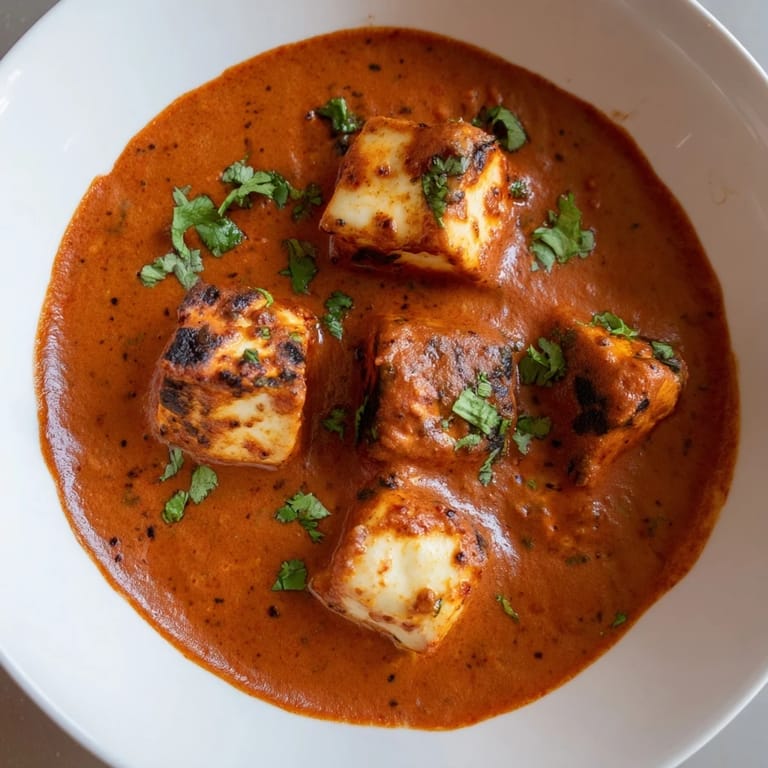
- Whether you're using an oven or grill pan, medium-high heat is key; too hot and the outside burns before the inside cooks, too cool and it steams instead of grills. Watch for those little dark spots—that's flavor developing, not a mistake.
- Make your sauce foundation with patience:
- Heat the butter and oil together, then add your onions and let them turn deep golden brown without rushing; this takes about eight minutes and builds the whole flavor base. Once the ginger-garlic paste goes in, stay close and stir—the smell will tell you exactly when it's ready to move on.
- Build the sauce body with the tomatoes:
- Pour in your crushed tomatoes and spices, then let it bubble away gently for ten to fifteen minutes while you steal tastes with a spoon. The sauce should smell warm and rounded, not sharp; if it tastes tart, add a pinch more sugar.
- Finish with cream and intention:
- Stir in the heavy cream slowly so it swirls through the sauce in ribbons before fully combining; this visual moment is worth pausing for because it shows the transformation happening.
- Reunite the paneer with its sauce:
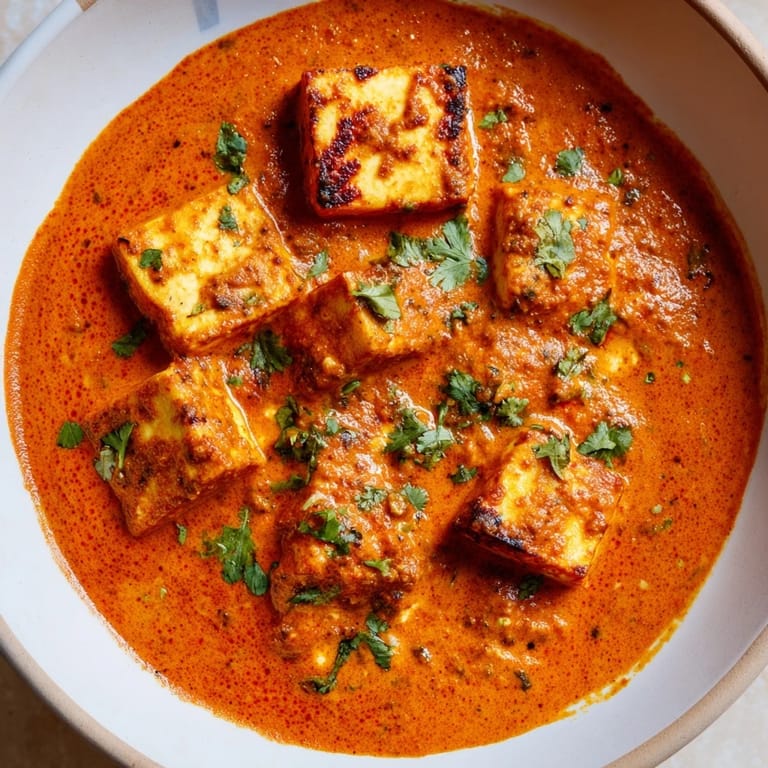
- Add the grilled paneer, peppers, and onions back into the sauce gently and let everything simmer together for five minutes; this is when all the different elements stop being separate and become a single, cohesive dish.
 Save
Save There was a moment last winter when I made this on a cold Sunday afternoon, and my neighbor knocked on the door asking if everything was okay because the smell had drawn her in from her front steps. We ended up eating together in my kitchen, and she told me about learning to cook in a small town in Punjab, and how this particular dish connected her to her grandmother. These are the moments this recipe keeps creating for me—doors opening, memories shared, strangers becoming less strange.
The Grilling Moment
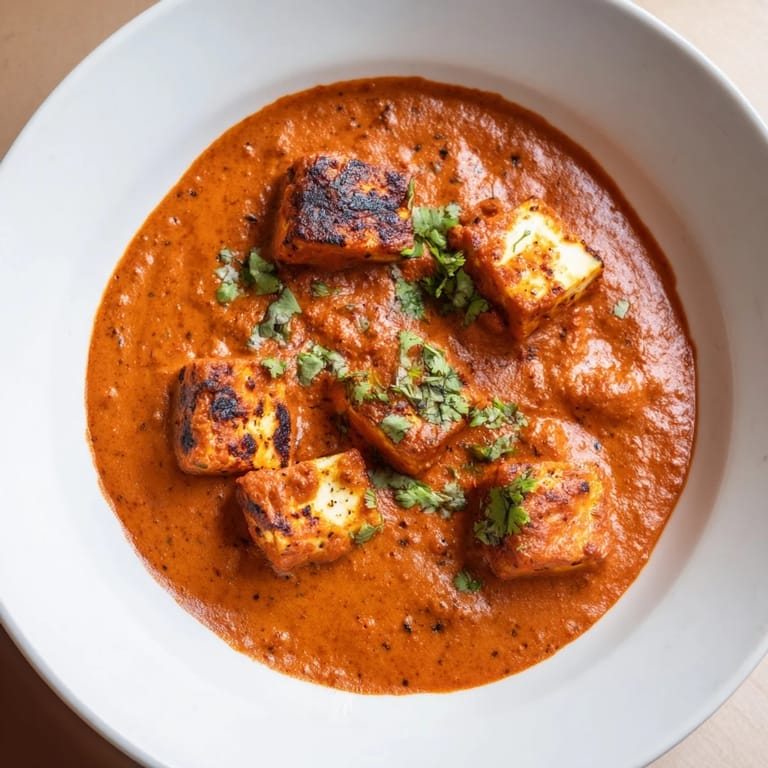
Grilling the paneer is where the magic really happens, and it's also where most people second-guess themselves. The cheese will release moisture and stick slightly to the pan—this is normal and fine; you're not failing. What you're listening and watching for are those little crackling sounds and the smell shifting from fresh and milky to something deeper and caramelized. If you have access to a charcoal grill, use it; if you're pan-grilling indoors like I usually do, medium-high heat on a cast iron or well-seasoned stainless steel pan works beautifully and gives you the control you need.
Why This Sauce Works
The sauce is built in layers, and each one matters. The butter and oil create a base that carries flavor; the onions give sweetness and body; the tomatoes provide structure and acidity; the spices build warmth; and the cream at the end softens everything and makes it feel like a hug in a bowl. Most people think tikka masala is complicated, but it's really just these elements taking their turn in the pan, each one announcing itself before the next one arrives. Understanding this progression makes you feel less like you're following orders and more like you're creating something.
Serving and Variations
Basmati rice is traditional, but I've also served this over cauliflower rice on nights when I wanted something lighter, or over chickpea pasta when I was in the mood for something different. The sauce is forgiving and adapts well, though I always serve it with fresh lemon wedges and a scatter of cilantro because those bright elements cut through the richness in a way that feels necessary and right. A piece of warm naan on the side transforms this from dinner into an experience.
- For extra indulgence, swirl a tablespoon of cashew paste into the cream before adding it to the sauce; it deepens the richness in a subtle way.
- If you're cooking for someone with dairy restrictions, the paneer substitute with firm tofu actually works better than you'd expect—it takes on the char differently but the sauce carries the whole dish.
- Make the sauce a day ahead if you can; it tastes noticeably better after the spices have time to fully merge and deepen.
 Save
Save This dish has become my answer to so many moments—when I want to feel like I'm cooking something from somewhere else, when I'm trying to impress someone, when I just want to feed myself something that tastes like care. Every time you make it, it becomes a little more yours.
Recipe FAQs
- → How long should paneer marinate for best flavor?
Marinate the paneer and vegetables for at least 30 minutes to let the spices penetrate well, enhancing the overall taste.
- → Can I use tofu instead of paneer?
Yes, firm tofu works well as a substitute, especially for those seeking a vegan option; marinate and cook it similarly to paneer.
- → What cooking methods suit the tikka portion?
Grilling or baking on skewers works best to create a slight char and smoky flavor, though a grill pan can also be used.
- → How is the masala sauce prepared?
The sauce begins with sautéed onions and ginger-garlic paste, combined with crushed tomatoes and spices, simmered before stirring in cream for richness.
- → What sides complement this dish?
Steamed basmati rice is traditional, but naan or roti breads also pair wonderfully to soak up the flavorful sauce.
- → Can the sauce be made richer?
Adding a tablespoon of cashew paste to the sauce enriches the creaminess and adds depth to the flavor profile.