 Save
Save The first time I made chili crab, my hands were sticky before I'd even cracked open a shell. My friend had just returned from Singapore raving about it, and I was convinced that something so messy couldn't possibly be worth the effort. But then I tasted that balance of tangy, spicy, and sweet, and suddenly I understood why people abandon etiquette entirely over this dish. Now whenever I make it, I remember how skeptical I was and laugh at myself.
I cooked this for my neighbors on a humid summer evening, and watching them dive into the crabs without hesitation taught me something about food transcending language and cultural boundaries. My mother-in-law, who grew up in Malaysia, nodded approvingly at my sauce—a gesture I still think about with pride. That night, the napkins piled up faster than the empty shells, and everyone asked for the recipe.
Ingredients
- 2 whole live mud crabs (about 1.5 kg total), cleaned and cut into pieces: Mud crabs have sweeter, firmer meat than other varieties, and their shells are sturdy enough to handle aggressive stirring without breaking apart into fragments.
- 3 tbsp vegetable oil: A neutral oil lets the aromatics shine; avoid anything with a strong flavor that might compete with the chili sauce.
- 1 medium onion, finely chopped: This builds the foundation of your sauce and sweetens naturally as it softens.
- 5 cloves garlic, minced: Fresh garlic is non-negotiable here; jarred garlic won't deliver the same punch and clarity.
- 3 red chilies, deseeded and chopped: Deseeding removes the hottest parts while keeping the fruity flavor—a technique I learned after making a batch so fiery that guests struggled to taste anything else.
- 2 birds eye chilies, chopped (adjust to taste): These are small but relentless; if you love heat, keep the seeds, but start conservatively if you're unsure.
- 2 cm piece fresh ginger, peeled and minced: Fresh ginger adds a sharp brightness that lifts the entire dish; dried ginger tastes stale by comparison.
- 250 ml tomato ketchup: The ketchup is your secret weapon for sweetness and umami—it's what gives chili crab its signature depth.
- 2 tbsp chili sauce (such as Sriracha or sambal oelek): Choose a chili sauce you enjoy eating on its own, since its character will define the final flavor.
- 1 tbsp sugar: A small amount balances the acidity and heat, creating that addictive tangy-sweet complexity.
- 1 tbsp soy sauce: Adds a quiet savory undertone that makes people ask what's in your sauce.
- 1 tsp fish sauce: This is non-negotiable for authentic flavor, but use just one teaspoon or it can overpower.
- 250 ml chicken or seafood stock: Seafood stock is ideal if you have it, but chicken stock works beautifully too.
- 1 tsp cornstarch mixed with 1 tbsp water: This creates a slurry that thickens the sauce to a glossy, clingy consistency that coats the crab perfectly.
- 2 large eggs, lightly beaten: These swirl through the hot sauce and create silky ribbons that add richness and absorb all those amazing flavors.
- 2 spring onions, sliced: A bright, fresh finish that adds textural contrast to the rich sauce.
- Fresh cilantro, chopped: Its sharp, herbaceous note cuts through the richness and makes each bite feel lighter.
- Lime wedges, to serve: A squeeze of lime is your final layer of brightness; it's essential, not optional.
Tired of Takeout? 🥡
Get 10 meals you can make faster than delivery arrives. Seriously.
One email. No spam. Unsubscribe anytime.
Instructions
- Build your aromatics:
- Heat the oil in your wok until it shimmers, then soften the onion for two minutes—it should be translucent but still have some texture. Add garlic, ginger, and all the chilies, stirring constantly for two to three minutes until the kitchen smells incredible and the mixture turns golden and fragrant.
- Sear the crab:
- Add the crab pieces and toss them vigorously, coating every piece in the aromatic mixture. You'll see the shells start turning red as the meat begins cooking, which takes about three to four minutes and is deeply satisfying to watch.
- Build the sauce:
- Pour in the ketchup, chili sauce, sugar, soy sauce, fish sauce, and stock all at once, stirring to combine evenly. The sauce will look a bit thin, but trust the process—it's about to become something special.
- Simmer until perfect:
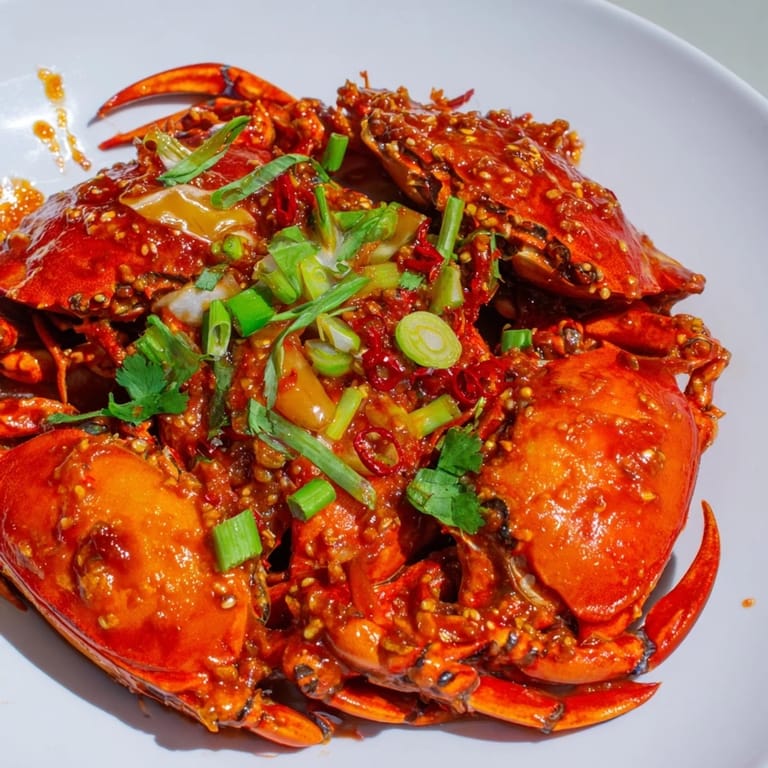
- Bring everything to a boil, then reduce to a gentle simmer and let it bubble away uncovered for ten to twelve minutes, turning the crab pieces occasionally so they cook evenly and absorb all those flavors. The sauce will smell intoxicating and the crabs will be completely cooked through when the shells are bright red and the meat pulls easily from the shell.
- Thicken and enrich:
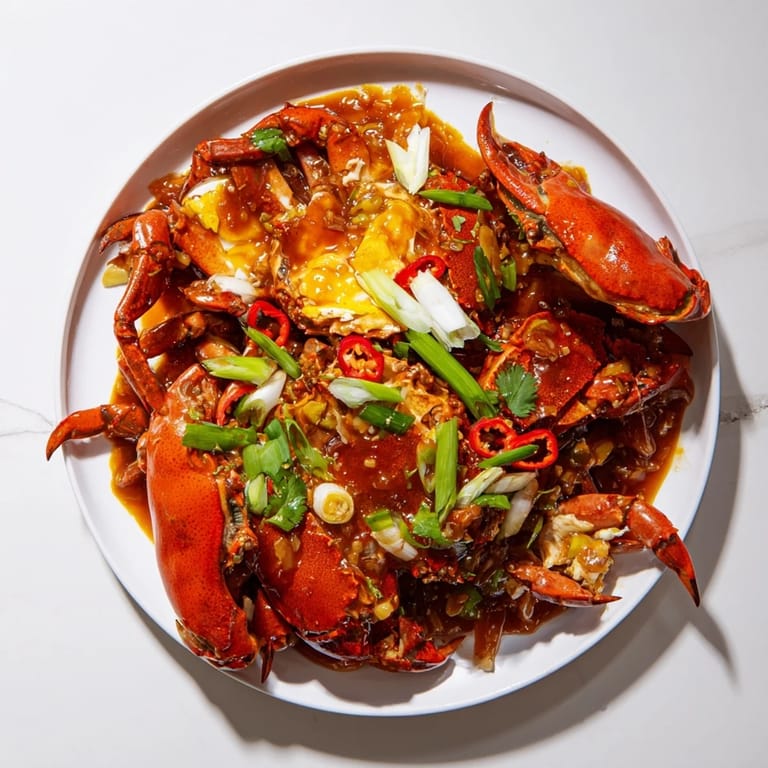
- Stir in your cornstarch slurry and watch as the sauce transforms into something glossy and clingy. Drizzle the beaten eggs slowly into the bubbling sauce in a thin stream, stirring gently with a fork to create those silky ribbons that catch the light.
- Finish and serve:
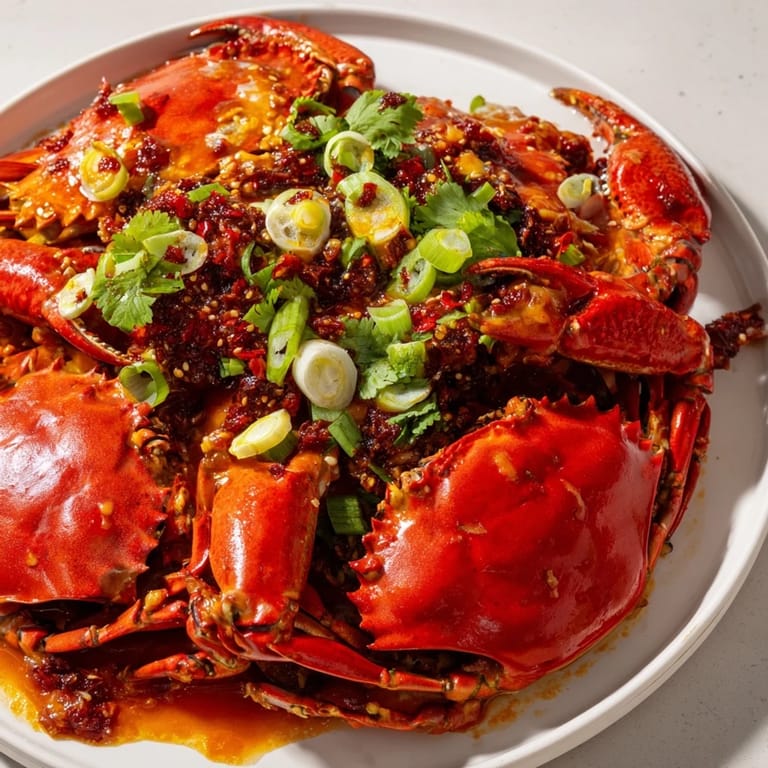
- Remove from heat immediately once the eggs are set. Scatter spring onions and cilantro over the top, squeeze a lime wedge over everything, and bring it to the table while it's still steaming—this dish is best enjoyed hot, messy, and without pretense.
 Save
Save I once made this for my daughter's graduation dinner, and her friends ate so enthusiastically that they forgot to talk—which, for a table of teenagers, was nothing short of miraculous. That meal became the dish everyone requested for celebrations after that.
Why This Dish Deserves Your Time
Chili crab walks a beautiful line between sophistication and joy. It's impressive enough to serve at a dinner party, but casual enough that nobody expects formal manners at the table. Every element of the sauce—the tomato ketchup, the chili heat, the sweetness, the umami depth—works together to create something that tastes more complex than the ingredient list suggests, and that's the mark of true cooking wisdom.
Choosing and Preparing Your Crabs
Live crabs are ideal because the meat is at its sweetest and most tender, and there's something honest about cooking something that was alive moments before. If mud crabs aren't available, blue swimmer crabs or Dungeness crabs work beautifully, though they may be slightly less sweet. Ask your fishmonger to clean and crack the crabs for you if the prospect intimidates you; they'll do it in seconds and charge next to nothing.
Sides and Serving Strategy
Steamed mantou buns are traditional, and they're glorious for sopping up every drop of sauce, but jasmine rice, plain white rice, or even crusty bread all work. I've served this with rice to some guests and buns to others, and everyone finishes their plate completely. The key is having something mild and absorbent alongside the rich, spicy sauce; it provides textural contrast and gives your palate a place to rest between bites.
- Serve with a stack of napkins so tall that guests don't have to hold back.
- Squeeze fresh lime over each bite just before eating to brighten the flavors and cut through the richness.
- Have extra chilies and lime wedges on the table so guests can customize their heat and acidity levels.
 Save
Save Making chili crab is less about following a recipe and more about understanding how all these flavors work together—once you get that, you own it. Every time you make it, you'll find yourself tweaking something small, and that's exactly how it should be.
Recipe FAQs
- → What type of crab is best for this dish?
Fresh whole mud crabs are preferred for their sweet meat and sturdy shells, but blue swimmer or Dungeness crab can also be used.
- → How can I control the spiciness level?
Adjust the amount of bird's eye chilies or remove seeds from the red chilies to vary the heat to your preference.
- → What is the purpose of adding beaten eggs?
Slowly drizzling beaten eggs into the simmering sauce creates silky ribbons, enriching the texture and adding a delicate touch.
- → Can I prepare the sauce in advance?
Yes, the sauce base can be made ahead and combined with freshly cooked crab when ready to serve for best flavor and texture.
- → What are typical accompaniments for this dish?
Steamed mantou buns or plain rice complement the rich, tangy sauce, helping to soak up every flavorful drop.