 Save
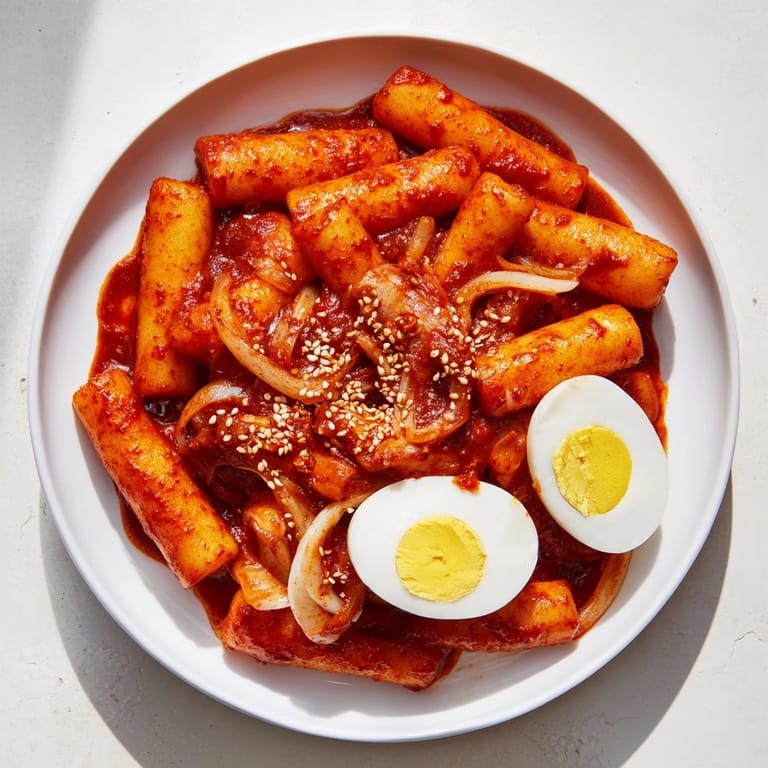
Save The first time I grabbed a paper cone of tteokbokki from a street vendor in Seoul, I burned my mouth instantly—but I didn't care. Those chewy rice cakes coated in that fierce, crimson gochujang sauce were absolutely worth it. Years later, I still chase that same thrill when I make it at home, except now I've learned to let it cool for exactly thirty seconds. There's something about the way the sauce clings to each rice cake, spicy and sweet at once, that makes you want to keep eating long after you're full.
I made this for my roommate on a random Tuesday when she mentioned missing street food from her time abroad, and watching her face light up as she twirled a rice cake on her spoon was honestly worth more than any restaurant visit. She asked for the recipe that night, and I realized then that tteokbokki isn't just a snack—it's a conversation starter, a moment where people slow down and actually taste what they're eating.
Ingredients
- Korean cylindrical rice cakes (tteok), 500 g: These are the heart of the dish; they should be slightly chewy and tender when cooked, not mushy. If yours are rock-hard from the freezer, a quick soak in warm water will soften them perfectly without making them fall apart.
- Large eggs, 4: The boiled eggs are your little treasure hidden in the sauce, so don't skip them or rush the cooling step.
- Gochujang (Korean chili paste), 3 tablespoons: This fermented paste is where all the magic lives—it's spicy, slightly sweet, and deeply savory in a way that no other ingredient can replicate.
- Gochugaru (Korean chili flakes), 2 tablespoons: These add texture and a sharper heat that builds as you eat; taste as you go if you prefer milder spice.
- Soy sauce, 2 tablespoons: Choose one you trust; it's the backbone that ties the sauce together with umami.
- Sugar and honey, 1 tablespoon each: Together they create a subtle sweetness that balances the heat without making it dessert-like.
- Minced garlic, 2 cloves: Fresh garlic adds a sharpness that cuts through the richness and keeps the dish from feeling one-dimensional.
- Toasted sesame oil, 1 teaspoon: A small amount goes a long way; it's the whisper at the end that says you actually know what you're doing.
- Water, 3 cups: This becomes your broth, so use filtered water if your tap water is heavily chlorinated.
- Dried kelp (kombu), 1 piece (10x10 cm): It infuses the broth with umami and then gets removed; it's not meant to stay in the finished dish.
- Dried anchovies, 8 (heads and guts removed): These add an essential depth that vegetable broth alone can't match, but they're completely optional for vegetarian versions.
- Small onion, 1, sliced: The onion softens into the sauce and adds a gentle sweetness as it cooks down.
- Green onion, 1 sheet, sliced: This is your final freshness, the brightness that arrives at the very end.
- Fish cake, 1 sheet, sliced (optional): It adds a subtle texture and slight sweetness; many people skip it without any loss.
- Toasted sesame seeds, 1 tablespoon: The final garnish that makes it look intentional and tastes like you actually finished a real dish.
Tired of Takeout? 🥡
Get 10 meals you can make faster than delivery arrives. Seriously.
One email. No spam. Unsubscribe anytime.
Instructions
- Prepare your rice cakes:
- If your tteok feels stiff or refrigerated, drop them into a bowl of warm (not hot) water for about 10 minutes. They'll soften just enough to absorb the sauce without disintegrating during cooking.
- Build your broth foundation:
- Pour water into a medium saucepan, add your kombu and anchovies, and bring it to a gentle boil over medium-high heat. Let it simmer quietly for 10 minutes—you'll notice the broth turning a pale golden color—then fish out the kombu and anchovies with a slotted spoon and discard them. What you've left behind is liquid gold.
- Cook the eggs while the broth brews:
- In a separate pot, cover eggs with cold water and bring to a boil, then turn off the heat and let them sit for 8 to 9 minutes depending on how runny you like the yolk. Transfer them immediately to an ice bath so they stop cooking, then peel them gently under running water—they should feel tender but not fragile.
- Season the sauce to life:
- Into your golden broth, stir in gochujang, gochugaru, soy sauce, sugar, honey, minced garlic, and sesame oil. Keep stirring for a solid minute so everything dissolves and mingles; you should see the sauce deepen to that signature crimson color and smell something that makes you close your eyes.
- Simmer the rice cakes into submission:
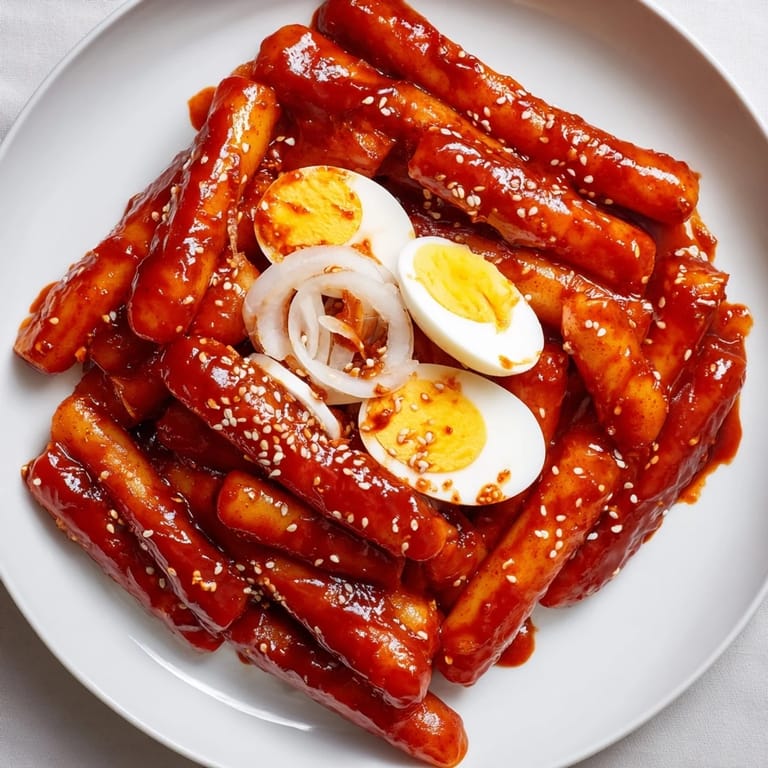
- Add your drained tteok, sliced onion, and fish cake (if using) to the sauce and turn the heat to medium. Stir occasionally, watching as the sauce gradually thickens and coats each rice cake. This should take 10 to 12 minutes, and you'll know it's ready when the sauce looks glossy and clings to the spoon like it doesn't want to let go.
- Finish with the eggs:
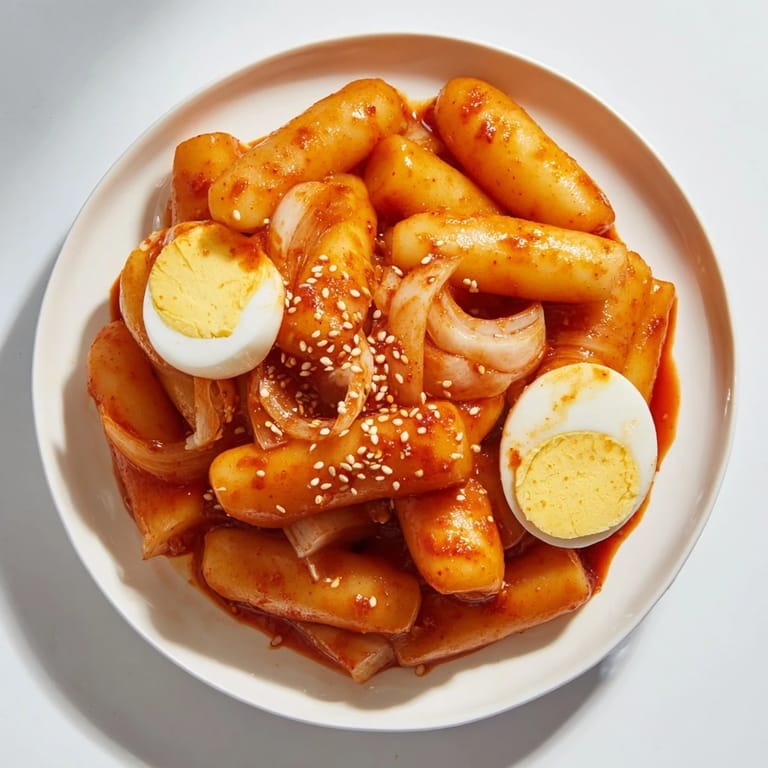
- Gently nestle your peeled eggs into the sauce and let everything simmer together for another 2 to 3 minutes so the eggs warm through and absorb a little of that red spice.
- Crown it and serve:
- Pour everything into a serving bowl, scatter green onions and sesame seeds across the top, and serve while it's still steaming hot—this is a dish that demands immediacy.
 Save
Save I remember my grandmother telling me that tteokbokki was originally a sweet rice cake dessert, and only street vendors decided it needed to be this wildly spicy thing. Whether that's true or not, I've always loved that food has a memory, a history of people changing their minds and making things better. Every time I make this, I'm part of that tradition of tinkering and improving.
Why This Dish Works
Tteokbokki is a study in contrast—heat meets sweetness, chewiness meets the soft give of a boiled egg, umami wraps around everything like a warm blanket. The rice cakes themselves are almost neutral, which means they're a perfect canvas for the sauce to shine without any competing flavors. It's the kind of dish that seems simple until you realize there are at least five different flavor layers happening at once, and somehow they all make sense together.
Street Food vs. Homemade
There's something honest about making this at home instead of buying it from a vendor—you control how spicy it gets, whether you want fish cake or not, if you prefer more eggs or fewer. I've found that homemade versions are often less oily and more intentional, because you're not trying to serve fifty people at once with sauce that's been simmering all day. It's worth the small effort to make it yourself, if only so you can taste exactly what you wanted instead of guessing at a street stall.
Variations and Additions
Once you've made the basic version, you might find yourself wanting to add things—and that's exactly how home cooking should feel, experimental and personal. Cabbage adds a subtle crunch and sweetness, carrots bring a gentle earthiness, and if you're feeling adventurous, thin ramen noodles will turn this into something closer to a full meal. Some people add a dollop of mayo on the side for dunking, others stir in cream for a slightly mellowed version, and I've seen versions with cheese that absolutely shouldn't work but somehow do.
- Mushrooms or vegetables like bok choy can be added during the last few minutes of cooking without changing the overall character of the dish.
- A squeeze of fresh lime juice at the end brightens everything and adds a layer of complexity you didn't know was missing.
- Leftover tteokbokki reheats beautifully with just a splash of water added back to the sauce, so make extra if you can.
 Save
Save Tteokbokki has become my comfort food, the thing I make when I want something that feels like a hug but tastes like an adventure. I hope it becomes yours too.
Recipe FAQs
- → How can I soften the rice cakes quickly?
Soak the rice cakes in warm water for about 10 minutes before cooking to ensure they become soft and chewy during simmering.
- → What can I use instead of anchovies for a vegetarian version?
Omit anchovies and prepare the broth with kombu and water alone to keep the umami flavor without seafood.
- → How spicy is this dish, and can it be adjusted?
The spicy level depends on gochujang and gochugaru amounts; reduce or increase these for milder or hotter tastes.
- → What ingredients add sweetness to the sauce?
Sugar and honey or corn syrup provide a balanced sweetness that complements the heat from the chili paste and flakes.
- → Can I add vegetables or other ingredients?
Yes, adding sliced cabbage, carrots, or ramen noodles introduces extra texture and flavor to the dish.
- → How long should eggs be boiled for optimal texture?
Boil eggs for 8–9 minutes to achieve a firm but tender yolk that pairs well with the sauce and rice cakes.