 Save
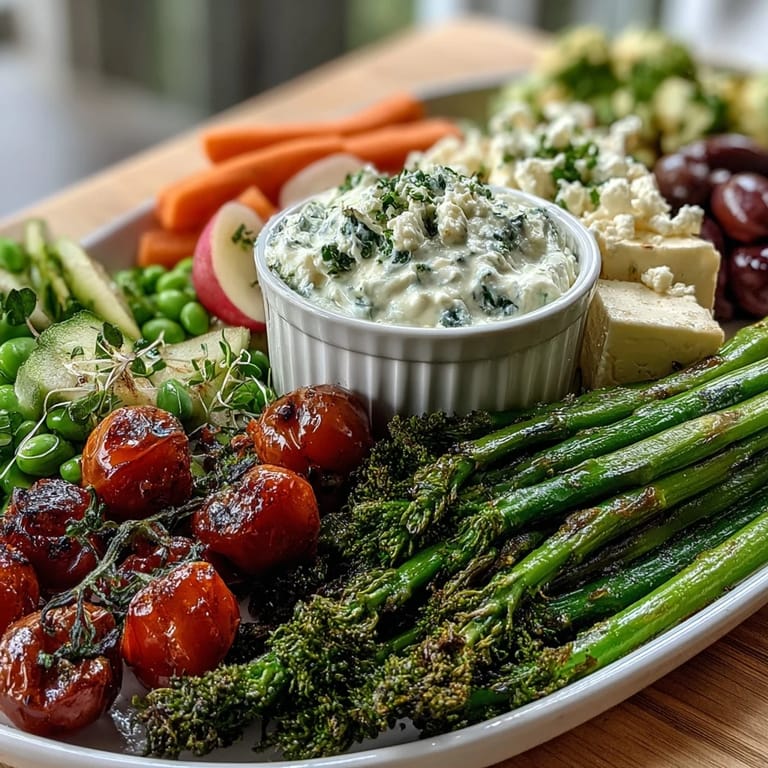
Save Last spring, I found myself hosting a last-minute gathering on a Tuesday evening, and the farmers market had just restocked with the most stunning radishes I'd seen all year. Their crimson skin practically glowed under the afternoon light, and I realized right then that I didn't need to overthink entertaining—sometimes the best meals are just an honest arrangement of what's in season, dressed simply and shared with people you enjoy. That evening taught me that a beautiful board, made with intention but without fuss, can say more than hours spent in the kitchen.
My neighbor brought her daughter over one April afternoon, and watching that little girl's face light up when she discovered that peas were actually fun to eat changed something for me about how I think about food on a board. She'd sneak them one at a time, dipping each one in the herb mixture like she'd uncovered some delicious secret, and suddenly I understood that presentation matters not because it looks impressive, but because it makes eating feel like play rather than obligation.
Ingredients
- Breakfast radishes: These thin-skinned varieties are crisp and peppery without being aggressive—trim and halve them to show off their jewel-bright interiors, which tell guests this is springtime on a plate.
- Sugar snap peas: Leave these whole and raw so people can feel the snap between their teeth; blanching them would rob them of that satisfying crunch.
- Fresh peas: If using fresh, a quick blanch and cool bath keeps them bright green and tender, though frozen peas work beautifully and require no prep.
- Baby carrots: Their natural sweetness balances the earthiness of radishes and the freshness of herbs in ways larger carrots can't quite manage.
- Cherry tomatoes: Halving them prevents them from rolling around and somehow makes them taste sweeter, perhaps because the cut surfaces caramelize slightly as they sit.
- Cucumber slices: Thin cuts mean they soften just slightly as they sit out, creating a pleasant texture contrast with the crisp vegetables around them.
- Greek yogurt: This is your dip's backbone—it's tangy enough to stand up to all those fresh herbs without needing cream or heavy additions.
- Fresh herbs (chives, parsley, dill): Use all three and mince them finely so they distribute evenly and release their oils throughout the dip rather than sitting as visible chunks.
- Lemon juice: It keeps the dip from tasting heavy and ensures the herbs' brightness shines through rather than getting lost.
- Garlic and sea salt: One small clove minced fine is all you need—this dip is meant to be a whisper, not a shout.
Tired of Takeout? 🥡
Get 10 meals you can make faster than delivery arrives. Seriously.
One email. No spam. Unsubscribe anytime.
Instructions
- Wash and ready your vegetables:
- Run everything under cool water and pat it dry thoroughly, because wet vegetables won't arrange nicely and damp surfaces make the dip slide around. As you trim and cut, arrange pieces on your board in loose groupings by color and type so the whole thing feels casual rather than fussy.
- Build your herb dip:
- Combine the yogurt and mayonnaise first to create a smooth base, then add the lemon juice before anything else so the acid brightens the foundation. Fold in your herbs gently and taste as you go, adding garlic and salt gradually since these flavors intensify as the dip sits.
- Transfer to its home:
- Move your dip to a small bowl and nestle it somewhere prominent on your board where it can be a destination, not an afterthought. This small gesture says you're proud of what you've made, even if it took you ten minutes.
- Add your finishing touches:
- Scatter microgreens and feta across the board like you're creating a little edible landscape, letting them fall where they may. The randomness is part of the charm and makes everything look intentionally natural rather than over-arranged.
- Serve with no apologies:
- Bring this to the table immediately and watch people's faces when they see it. This is the kind of food that makes eating feel like a small celebration, which is exactly what it should be.
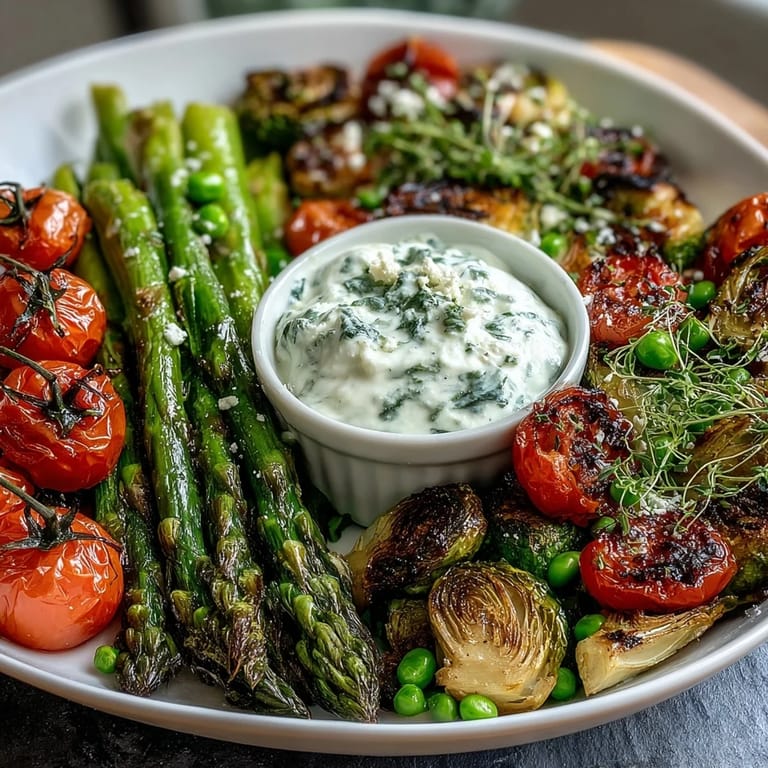 Save
Save There's a moment right before people arrive when the board is arranged and you step back to look at it, and in that moment you realize you've created something that says you care without looking like you stressed. That's when food becomes hospitality, and that's when a simple spring board becomes something people remember.
The Art of Arranging Without Overthinking
The first time I arranged one of these boards, I spent forty minutes trying to make it look perfect, creating symmetrical rows that looked more like a produce stand than an inviting spread. Then a friend casually rearranged half of it while talking to me, and suddenly it looked ten times better—looser, more abundant, more real. I learned that boards are meant to look like you just pulled together beautiful things, not that you solved a geometric puzzle.
Why Spring Vegetables Taste Different
Spring vegetables have a crispness and brightness that later-season produce simply can't match, because they haven't been stressed by heat or long storage. When you bite into a spring radish or a fresh sugar snap pea, you're tasting the plant's own energy right at its peak, before anything has slowed it down. This is why serving these vegetables raw rather than cooked matters so much—cooking would only diminish what makes them special in the first place.
Making This Board Your Own
The vegetables here are suggestions, not rules, and some of the best boards I've made used whatever I found at the market that morning instead of sticking to a predetermined list. Blanched asparagus tips, thin slices of radish greens (yes, the leafy tops are delicious), roasted beets cooled to room temperature, and thinly shaved fennel all work beautifully here. The dip is flexible too—add a pinch of fresh tarragon if you have it, or swap the dill for mint if that's what's thriving in your garden.
- Keep your dip simple and let the herbs be the star, because that's what makes it taste fresh rather than heavy.
- Arrange your board no more than an hour before serving so everything stays crisp and the vegetables don't begin to weep and soften.
- If you're serving this at a picnic or taking it somewhere, pack the dip separately and add it just before people gather around.
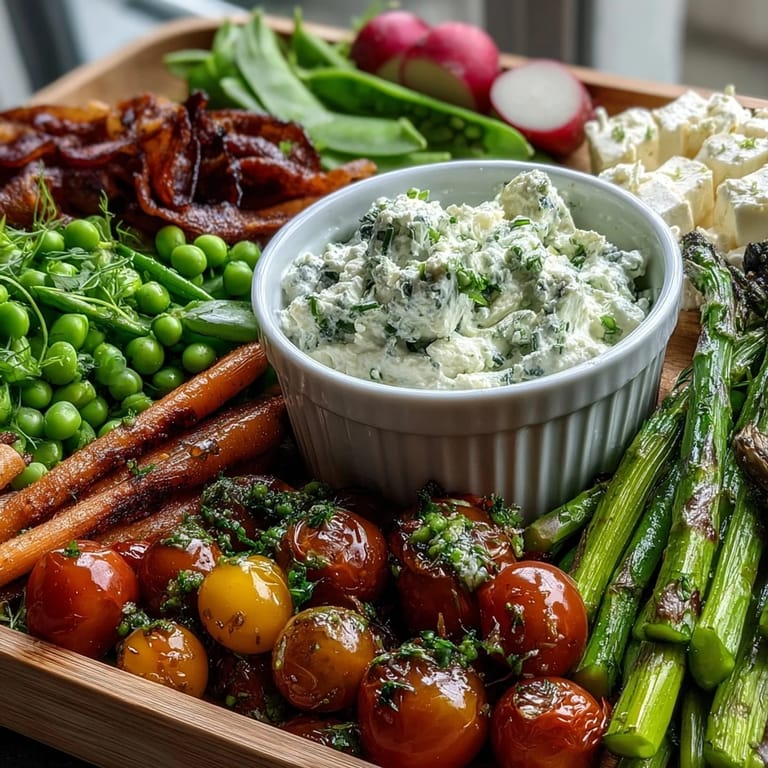 Save
Save A spring board is one of those rare foods that feels celebratory without any of the stress, and that's why it becomes a favorite. Make one, and you'll find yourself making them again and again as soon as the markets fill with color.
Recipe FAQs
- → Can I prepare the herb dip in advance?
Yes, the herb dip can be made ahead and refrigerated for up to 2 days, allowing the flavors to meld together nicely.
- → What vegetables pair well with this board?
Alongside radishes and peas, baby carrots, cherry tomatoes, and cucumber slices add color and crunch. Seasonal options like asparagus or bell pepper work well, too.
- → Is there a dairy-free option for the dip?
You can substitute Greek yogurt with plant-based yogurt to create a dairy-free version of the creamy herb dip.
- → How should the vegetables be prepared?
Wash, trim, and cut vegetables as needed—radishes halved, peas trimmed or blanched, and carrots peeled—to create an appealing arrangement on the board.
- → What garnishes enhance the board’s presentation?
Sprinkling microgreens and crumbled feta cheese adds visual appeal and flavor contrast, while serving with crackers or sliced baguette adds texture variety.