 Save
Save I discovered this bowl while scrolling through a cozy cooking video at midnight, the kind where someone's kitchen glows golden under soft lights. The combination of sticky orange and spicy gochujang felt like it was calling to me, promising something bright and comforting all at once. I made it the next evening, and the moment that glaze hit the hot salmon, the smell of caramelized citrus and fermented chili filled my kitchen in the most inviting way. My roommate wandered in asking what smelled so good, and by the time the salmon came out of the oven, we were both reaching for bowls. It became the recipe I make when I want to feel like I'm cooking something special without spending hours in the kitchen.
The first time I brought this to a friend's place for a weeknight dinner, I was honestly nervous about bringing a fish dish that needed last-minute assembly. But watching everyone's faces when they tasted it, seeing them go back for seconds and asking if I'd made the glaze myself, something clicked. It became the bowl I make when I want to show someone I care about cooking for them without the pretense of a three-course meal.
Ingredients
- Salmon fillets (about 150 g each): Look for bright pink flesh that smells clean and ocean-like, not fishy—that's the sign of freshness. Skin-on is fine if that's what you have; just pat it dry before seasoning so it browns properly.
- Gochujang: This Korean chili paste is the backbone of everything, bringing heat that doesn't burn and a depth that regular hot sauce can't match. Keep a jar in your fridge; it transforms so many ordinary dishes into something memorable.
- Fresh orange juice: Bottled works in a pinch, but squeeze it fresh if you can—it makes the glaze brighter and cuts through the umami in a way that tastes purposeful.
- Soy sauce: Use good quality here; it's one of just three umami hits in this dish, so it deserves to be real soy sauce, not the watered-down versions.
- Honey: This balances the chili's heat with gentle sweetness, making the glaze feel complex instead of one-dimensional.
- Rice vinegar: That small teaspoon brings unexpected brightness and keeps the glaze from tasting too heavy or thick.
- Toasted sesame oil: Just a teaspoon goes a long way—this is where the warmth and nuttiness come from, rounding out all the sharper flavors.
- Fresh ginger and garlic: These two together create that little spice note that makes you feel like you're eating something authentic, not just Asian-adjacent.
- Short-grain rice: This holds the glaze beautifully and creates little pockets for all the toppings to settle into. Warm rice is essential; cold rice changes how everything tastes.
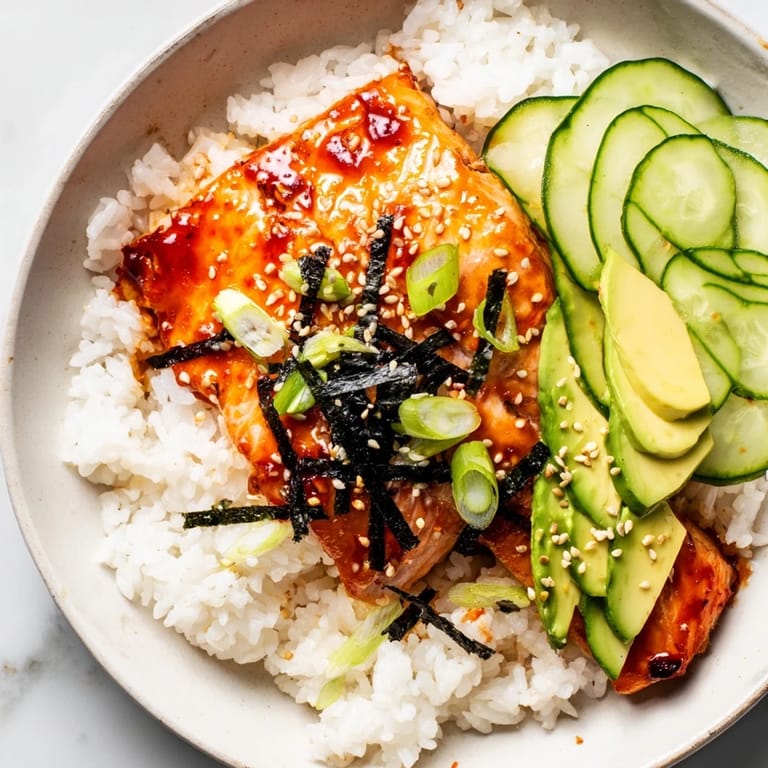
- Cucumber, avocado, and nori: These toppings do the real work—they add freshness, creaminess, and umami that make the sticky salmon feel balanced and complete rather than heavy.
- Sesame seeds and scallions: The finishing touches that make it look intentional and taste like you've done this a hundred times before.
Tired of Takeout? 🥡
Get 10 meals you can make faster than delivery arrives. Seriously.
One email. No spam. Unsubscribe anytime.
Instructions
- Get your oven ready and prep the stage:
- Preheat to 200°C (400°F) and line your baking tray with parchment paper. This takes just three minutes but saves you from stuck-on salmon and makes cleanup almost disappear.
- Season the salmon with intention:
- Pat the fillets dry with paper towels, then sprinkle salt and pepper evenly on both sides. Dry salmon browns better and absorbs seasoning more honestly than wet fish.
- Whisk the glaze until it's glossy and smooth:
- Combine gochujang, orange juice, soy sauce, honey, rice vinegar, sesame oil, ginger, and garlic in a bowl, stirring until there are no lumps of chili paste hiding at the bottom. This should take about a minute, and you'll know it's ready when it looks silky and cohesive.
- Brush, bake, and listen for the sizzle:
- Place salmon on the parchment, brush with half the glaze, and bake for 12–14 minutes until the fish flakes easily when you test it with a fork. The edges might brown slightly, which is beautiful and exactly what you want.
- Add that final glossy coat (if you're feeling fancy):
- Brush the remaining glaze over the hot salmon and slide it under the broiler for 1–2 minutes. It'll bubble and caramelize, turning sticky and deeply flavorful—this step is optional but transforms the whole dish.
- Assemble like you're building something edible and beautiful:
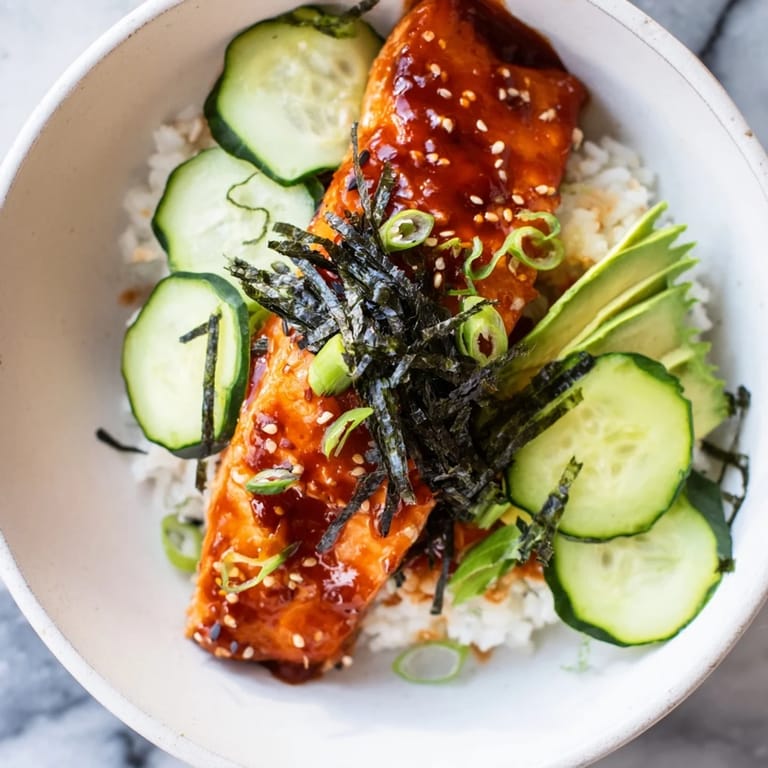
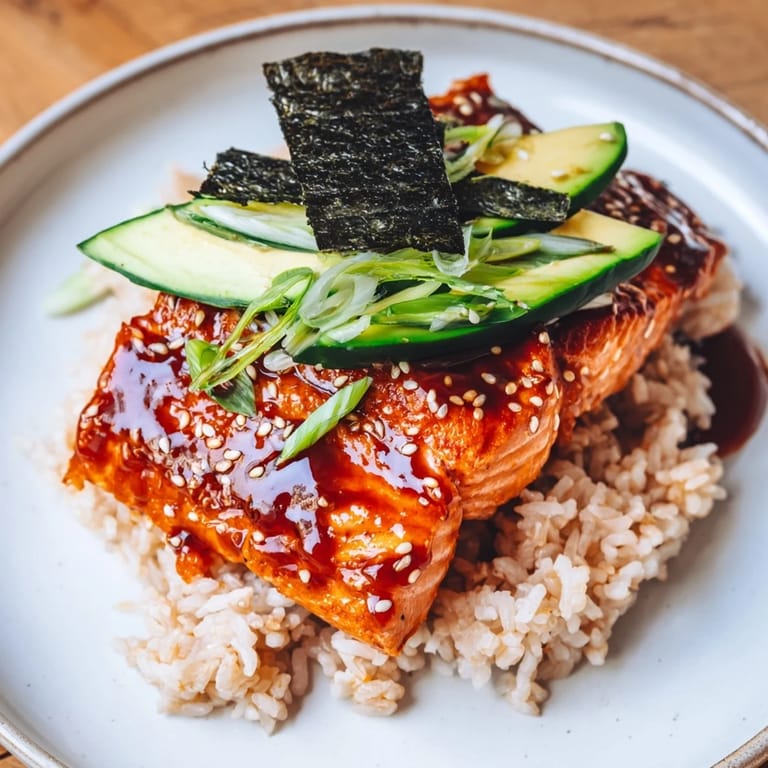
- Divide warm rice between two bowls, then arrange your salmon fillet on top like it's the star of the show. Scatter cucumber, avocado, nori strips, sesame seeds, and scallions around it, leaving little gaps so each component shows.
- Serve while the salmon is still warm:
- This is when the rice soaks up that sticky glaze, when the avocado is at its creamiest, and when everything tastes like it was meant to be together.
 Save
Save There's something about a bowl this colorful that makes you feel like you're taking care of yourself while also indulging. The first time I caught my own reflection in a spoon while eating, seeing the salmon, the green avocado, the bright nori, I realized this had become one of those recipes that's equal parts delicious and restorative.
The Science Behind That Sticky Glaze
The magic here is the interplay between gochujang's fermented depth, honey's sweetness, and orange juice's acidity—they create a glaze that clings to the salmon instead of sliding off. When you brush it on before baking, the heat concentrates the flavors and creates a little crust. That final broil step (if you do it) caramelizes the honey, turning the whole thing glossy and irresistible. I learned this by accident the first time, forgetting the broil step and wondering why my second bowl looked less impressive than my first—now I never skip it.
Why This Works as a Weeknight Dinner
Salmon cooks fast, the glaze comes together in under a minute, and most of the prep is just slicing vegetables. I've made this on nights when I got home tired and wanted something that felt like effort without the actual effort. The beauty is that everything can be prepped ahead—rice cooked earlier, vegetables sliced and stored, glaze mixed and waiting—so assembly is genuinely five minutes. It's the kind of recipe that makes you feel capable in the kitchen without demanding your entire evening.
Endless Variations That Still Feel Right
Once you understand how this bowl works, you can riff on it endlessly. Tofu takes the glaze beautifully and cooks even faster than salmon, making it perfect when you're feeding vegetarians or just want something lighter. I've added pickled ginger for brightness, shredded carrots for snap, and edamame for extra protein when I'm extra hungry. The nori is non-negotiable in my opinion—it brings umami that ties everything together—but if you have crispy seaweed snacks or even crushed peanuts on hand, those work too.
- Swap salmon for firm tofu, baked or pan-fried, and the glaze clings just as beautifully.
- Add pickled ginger, shredded carrots, edamame, or roasted broccoli for color and texture shifts.
- A squeeze of lime juice right before eating brings everything into sharper focus.
 Save
Save This bowl taught me that simple ingredients and a few minutes of intention can create something that tastes like you spent all evening cooking. It's the kind of recipe that becomes a favorite not because it's fancy, but because it's honest.
Recipe FAQs
- → How do I achieve the sticky glaze on the salmon?
Brush the salmon with the prepared orange-gochujang glaze before baking, then broil briefly at the end for a sticky, caramelized finish.
- → Can I substitute the salmon with another protein?
Yes, firm tofu works well for a vegetarian variation, offering a similar texture and absorbing the glaze flavors nicely.
- → What type of rice is best for this dish?
Short-grain rice is ideal as it stays fluffy and slightly sticky, complementing the glazed salmon and toppings.
- → How spicy is the gochujang glaze?
The glaze balances gentle heat from gochujang with sweetness from orange juice and honey, resulting in a mild to moderate spice level.
- → What toppings add texture to the bowl?
Sliced cucumber, avocado, toasted sesame seeds, nori strips, and scallions provide crunchy, creamy, and fresh contrasts to the tender salmon and rice.