 Save
Save There's something about the sizzle of salmon hitting a hot pan that makes me pause whatever I'm doing. Years ago, a friend brought a bottle of mirin to my kitchen and casually mentioned teriyaki, as if it wasn't about to change how I cook fish. That first bowl—rice still steaming, vegetables still snapping with color—felt like discovering a secret shortcut to something restaurants charge extra for. Now it's the meal I make when I want to feel like I've actually accomplished something in thirty-five minutes.
I made this for my sister on a Thursday when she texted asking what I was cooking. She arrived unannounced thirty minutes later, and the house smelled exactly like the Japanese restaurant we'd visited the summer before. Watching her face when she tasted it—that quiet moment of recognition before she asked for the recipe—reminded me that the best meals aren't about complexity. They're about knowing exactly what you're doing and doing it with intention.
Ingredients
- Salmon fillets: Look for fillets that feel firm and smell like the ocean, not fishy. Skin-on keeps the fish moister, but skinless works just as well if that's what you prefer.
- Soy sauce: The backbone of your glaze. Use full-sodium soy sauce here—the salt matters for building that savory depth.
- Mirin: This sweet rice wine is what makes teriyaki actually taste like teriyaki. Don't skip it or substitute with honey.
- Brown sugar: Adds roundness to the sauce and helps it caramelize slightly on the salmon.
- Rice vinegar: The bright note that keeps the sauce from becoming cloying.
- Sesame oil: Use the toasted kind for real flavor, but measure carefully because a little goes a long way.
- Garlic and ginger: Mince the garlic fine and grate the ginger so they dissolve into the sauce rather than floating around.
- Cornstarch slurry: This is your thickening agent. Mix it with cold water right before you need it so it actually works.
- Bell pepper, carrot, broccoli, snap peas: Choose vegetables that are firm and bright. The slight char from high heat makes them taste better than steamed.
- Jasmine or sushi rice: Jasmine rice is more forgiving and has a gentle fragrance that complements everything else.
Tired of Takeout? 🥡
Get 10 meals you can make faster than delivery arrives. Seriously.
One email. No spam. Unsubscribe anytime.
Instructions
- Prepare your rice first:
- Rinse the rice under cold running water until the water runs completely clear—this takes longer than you think but prevents gumminess. Combine with water in a saucepan, bring to a boil, then reduce heat to low, cover, and simmer for exactly fifteen minutes without peeking.
- Build the teriyaki sauce while rice cooks:
- In a small saucepan over medium heat, combine soy sauce, mirin, brown sugar, rice vinegar, sesame oil, garlic, and ginger. Stir constantly until the sugar dissolves completely, which takes about two minutes. Just before serving, stir in your cornstarch slurry and cook for another minute until the sauce thickens enough to coat a spoon.
- Sear the salmon with confidence:
- Pat the salmon fillets dry with paper towels—this helps them brown instead of steam. Season generously with salt and pepper, then place skin-side down in a hot nonstick skillet with a touch of oil and let it sear undisturbed for three to four minutes. Flip carefully and cook for two to three minutes more until the flesh is opaque but still soft in the center.
- Glaze and finish the fish:
- Brush the teriyaki sauce over the salmon fillets and cook for one more minute, letting the glaze cling to the surface. The heat will caramelize it slightly, adding depth.
- Stir-fry vegetables at high heat:
- Heat vegetable oil in a wok or large skillet over high heat until it shimmers. Add your vegetables starting with the ones that take longest to cook—carrots first, then broccoli and snap peas. Toss constantly for three to four minutes until they're tender but still have a bite to them.
- Assemble your bowl:
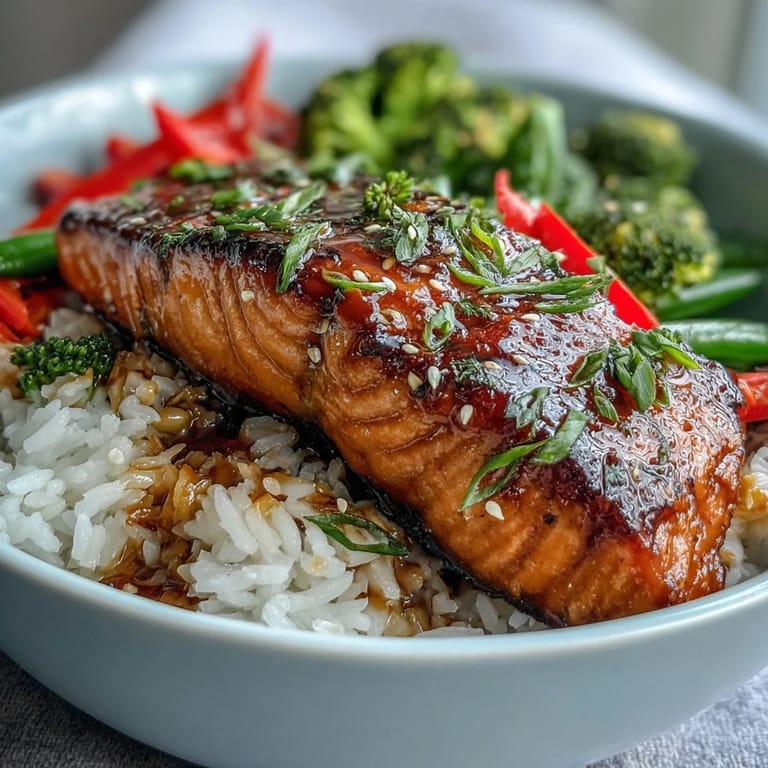
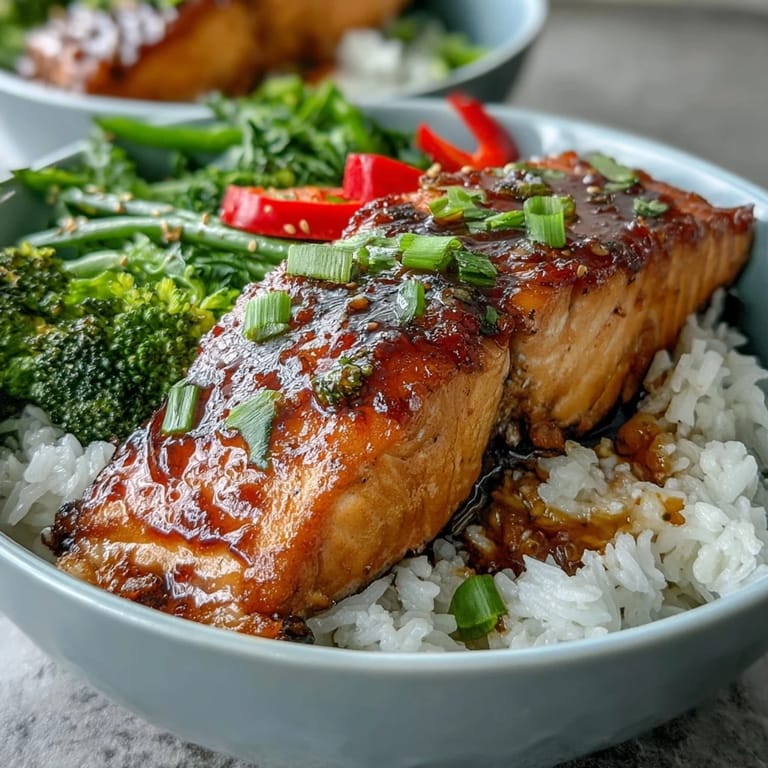
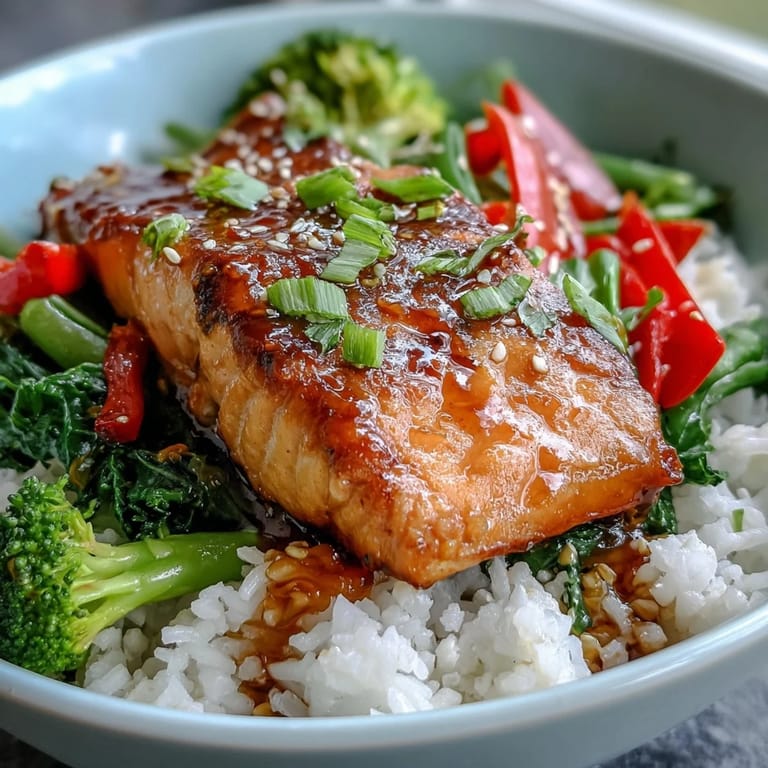
- Divide the rice among four bowls, top with stir-fried vegetables, then crown with a piece of teriyaki salmon. Drizzle extra sauce over everything and scatter sesame seeds and spring onions on top if you're using them.
 Save
Save There's a moment, right when you plate this, where everything aligns. The rice releases its steam, the salmon glistens with glaze, the vegetables are still warm and snapping. It stops being dinner and becomes the kind of meal you'll think about when someone asks what you cooked last week.
Timing Is Everything
The thirty-five-minute total is real only if you read through everything first and get your ingredients prepped. Mince your garlic and ginger before you start, slice your vegetables into bite-sized pieces, and measure out your sauce ingredients into a small bowl. This takes five minutes upfront but means you're never scrambling while something's cooking.
Making This Sauce Your Own
Once you understand how the teriyaki sauce works—salty, sweet, sour, nutty—you can adjust it to your taste. Some people like it deeper and more savory, so they use less mirin and add a teaspoon of molasses. Others prefer it brighter, so they add a touch more rice vinegar. The beauty of making it from scratch is that it becomes yours.
Vegetables and Variations
Winter brought zucchini and mushrooms into my version, and neither disappointed. Spring called for asparagus and snap peas. The magic is using whatever is at peak ripeness and flavor in your market, because those vegetables need almost no help tasting extraordinary. Roasted vegetables work too if you want to skip the last-minute cooking, though the direct heat of stir-frying creates a subtle caramelization that's hard to replicate.
- If you're marinating the salmon beforehand, use only half the teriyaki sauce and keep it in the refrigerator for up to an hour.
- Leftover teriyaki sauce keeps in a jar for two weeks and works beautifully drizzled over roasted chicken or stirred into yogurt as a dipping sauce.
- Make extra rice—it reheats perfectly and transforms into fried rice the next day with a beaten egg and whatever vegetables you have left.
 Save
Save This is the kind of dinner that bridges the gap between what feels possible on a weeknight and what tastes like actual cooking. Make it once and it becomes a trusted friend.
Recipe FAQs
- → Can I use other types of fish?
Yes, you can substitute salmon with other firm fish like cod, halibut, or sea bass. Adjust cooking time slightly based on thickness.
- → How do I store leftovers?
Store components separately in airtight containers in the refrigerator for up to 3 days. Reheat gently and assemble before serving.
- → Can I make the teriyaki sauce ahead?
Absolutely. Prepare the sauce up to a week in advance and store it in the refrigerator. Reheat gently before using.
- → What vegetables work best in this bowl?
Bell peppers, carrots, broccoli, and sugar snap peas provide great crunch and color. You can also use zucchini, mushrooms, baby corn, or bok choy.
- → Is this dish freezer-friendly?
The cooked salmon and rice freeze well for up to 2 months. Stir-fried vegetables are best enjoyed fresh but can be frozen if needed.
- → How can I make this gluten-free?
Use gluten-free soy sauce or tamari in place of regular soy sauce. All other ingredients are naturally gluten-free.