 Save
Save The first time I tasted mango sticky rice, I was sitting on a sticky vinyl stool at a street cart in Bangkok, the vendor's hands moving with practiced speed as she assembled plate after plate. The warm rice clung to my spoon, sweet and creamy, while the mango's cool perfume seemed to cut through the humid air. I spent the next two years chasing that exact moment in every Thai restaurant I visited before realizing I could make it at home—and honestly, the kitchen version tastes even better because it's unhurried.
I made this for my roommate Maya one evening after she'd had a genuinely terrible day, and watching her face soften at that first bite—the way the sweetness and salt played together on her tongue—made me understand why this dessert exists. It's not just food; it's a small act of comfort that happens to be from Thailand and absolutely worth the minimal effort.
Ingredients
- Glutinous (sweet) rice, 1 cup: This isn't regular rice—the high starch content creates that signature clingy, almost custardy texture that makes the dish work. You'll find it at any Asian grocery store, and it's worth seeking out because regular rice won't give you the same magic.
- Water for soaking and cooking: Patience here matters more than precision; the soaking step softens the grains and ensures even cooking.
- Coconut milk (full fat), 1 cup: Absolutely do not use the lite version—you need that richness to coat every grain and create the creamy sauce that makes this sing.
- Granulated sugar, 1/4 cup: This sweetens both the sauce and the rice itself, creating a subtle caramel note when combined with coconut milk.
- Salt, 1/4 tsp: The secret weapon that amplifies the mango's flavor and prevents the dish from tasting one-dimensional.
- Large ripe mangoes, 2: This is where you can taste the season—use mangoes that smell fragrant and yield slightly to pressure, never the hard ones that taste faintly of pine.
- Coconut cream (optional) and toasted sesame seeds or mung beans (optional): These add a finishing touch of texture and visual appeal, though the dish is perfect without them.
Tired of Takeout? 🥡
Get 10 meals you can make faster than delivery arrives. Seriously.
One email. No spam. Unsubscribe anytime.
Instructions
- Rinse and soak the rice:
- Run the glutinous rice under cold water, stirring with your fingers until the water clears—this removes excess starch so the grains don't clump into a solid block. Cover it with fresh water and let it sit overnight, or at least four hours; you'll notice the grains soften and the water becomes slightly opaque.
- Steam the rice until tender:
- Drain the soaked rice and spread it into a cheesecloth-lined steamer basket, then steam for 25 to 30 minutes over simmering water. The rice is ready when each grain is translucent and tender enough to bite through without resistance.
- Warm the coconut sauce:
- While rice steams, combine coconut milk, sugar, and salt in a small pot and warm it over medium heat, stirring until the sugar dissolves completely. The sauce should be warm but never boiling, which would cause the coconut milk to separate.
- Combine rice with sauce:
- Transfer the hot rice to a bowl and pour in three-quarters of the coconut sauce, stirring gently to coat every grain evenly. Let it sit covered for 10 to 15 minutes, allowing the rice to absorb the coconut flavor and become even creamier.
- Prep the mangoes:
- While the rice absorbs its sauce, peel and slice your mangoes into half-inch planks, arranging them on your serving plates.
- Assemble and serve:
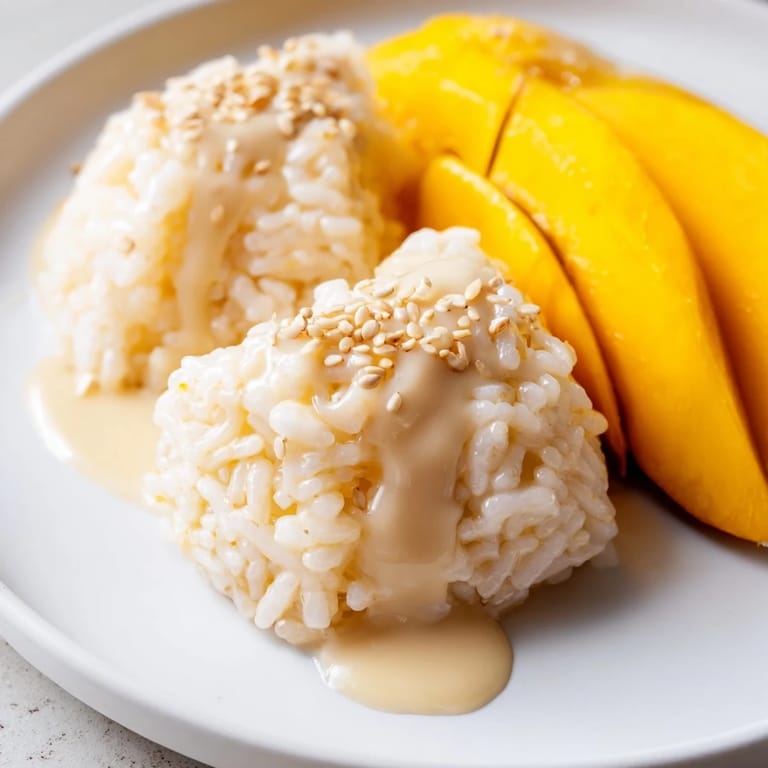
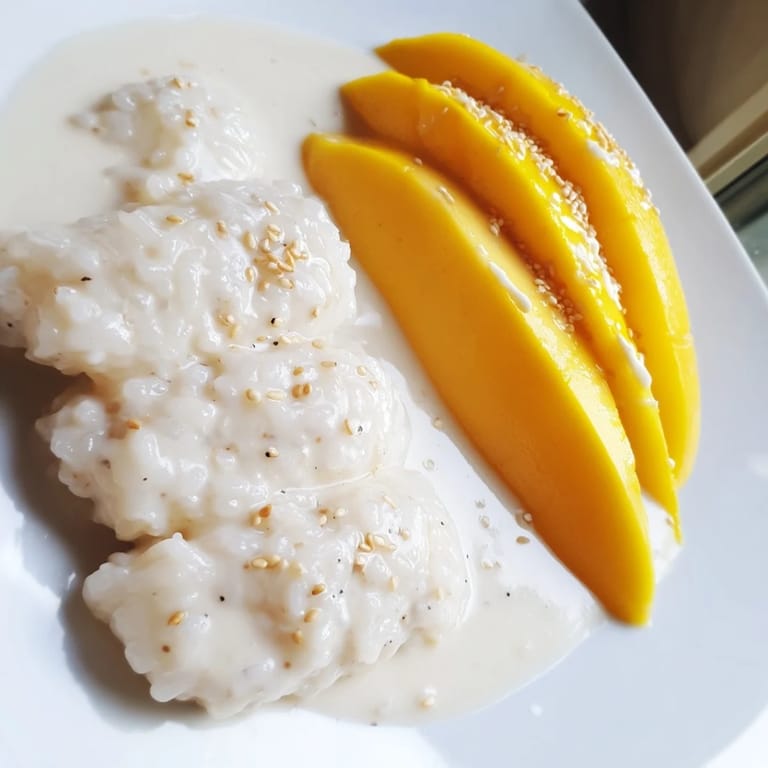
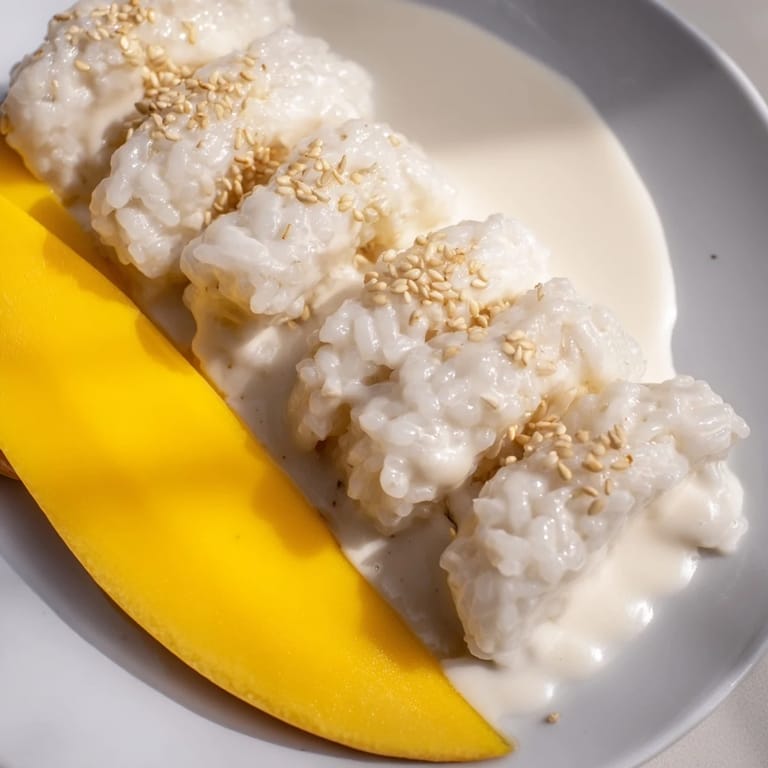
- Mound a generous portion of sticky rice in the center of each plate, arrange the mango slices alongside, and drizzle with the reserved coconut sauce. Add a small dollop of coconut cream and a sprinkle of sesame seeds or mung beans if you're feeling fancy.
 Save
Save I learned about the refrigeration mistake the hard way, prepping a batch the night before and discovering the next morning that my careful work had turned into rubber. Now I understand why street vendors make this fresh to order, and why showing up at the right moment matters—some things genuinely aren't designed for convenience.
Choosing Your Mangoes
The mango is doing half the work here, so pick them with care. A ripe mango yields gently to thumb pressure and smells sweet and floral—if it's hard, it will taste starchy and faintly sour no matter how good your sauce is. The variety matters less than the ripeness; I've used Ataulfo, Alphonso, and Kent mangoes all with success, as long as they were at peak sweetness.
Making It Your Own
Once you master the basic version, you can play with the details. Some versions add a splash of pandan extract or steep pandan leaves in the coconut milk for a subtle vanilla-floral note that deepens the whole experience. Others swap palm sugar for the white granulated kind, creating a richer caramel complexity. Even the garnish invites creativity—toasted sesame seeds add nuttiness, while mung beans provide a delicate crunch.
Kitchen Timing and Prep
The beauty of this recipe is that most of it happens in the background while you do something else. Once the rice is soaking and the coconut sauce is on the stove, you have genuine downtime. I often prep mangoes while the rice steams, chat with whoever's in the kitchen, or simply step outside for ten minutes of quiet. It's one of those rare desserts that feels relaxed to make rather than frantic.
- Soak the rice overnight or at least four hours ahead if you're planning dinner service.
- The sauce can be made and gently reheated just before serving without losing quality.
- Slice mangoes no more than 15 minutes before serving so they stay firm and fragrant.
 Save
Save This dessert has a way of ending conversations mid-sentence, of making people pause and just taste. That's the real magic you're creating here.
Recipe FAQs
- → What type of rice is best for this dish?
Glutinous or sweet rice provides the sticky and chewy texture essential to this dish’s character.
- → How is the coconut sauce prepared?
Coconut milk is gently heated with sugar and a pinch of salt until the sugar dissolves, creating a sweet, fragrant sauce without boiling.
- → Can I enhance the flavor of the sticky rice?
Adding pandan leaves while steaming introduces a subtle floral aroma that complements the coconut notes beautifully.
- → How long should the rice soak before cooking?
Soaking for at least four hours or overnight softens the rice, ensuring it steams evenly and achieves the desired tenderness.
- → What are some suitable garnishes?
Coconut cream enhances richness, while toasted sesame seeds or mung beans add a pleasant crunch and nuttiness.