 Save
Save My neighbor came back from Bangkok with a jar of red curry paste and wouldn't stop talking about the ramen she'd had in a tiny shop near Khao San Road. She described it as neither fully Thai nor fully Japanese, just intensely good. I made this the next week using what I had on hand, and the smell that filled my kitchen—ginger, garlic, sesame—made me understand exactly what she meant.
I served this to friends on a rainy Saturday, and no one touched their phones for twenty minutes. Everyone was too busy slurping noodles and comparing who got the best soft boiled egg. One friend asked if I'd trained in a ramen shop, which I hadn't, but I took it as the highest compliment anyway.
Ingredients
- Vegetable oil: Use a neutral oil with a high smoke point so it doesn't interfere with the delicate balance of flavors.
- Onion: Finely chopped onion melts into the broth and adds a subtle sweetness that balances the curry paste.
- Garlic cloves: Fresh garlic is essential here, jarred just doesn't give the same punch.
- Fresh ginger: Grate it finely so it dissolves into the broth and leaves behind warmth without fibrous bits.
- Thai red curry paste: This is the bridge between Thai and Japanese, bringing heat and complexity in one spoonful.
- Chicken broth: Low sodium gives you control over the salt level, especially once miso and soy go in.
- White miso paste: It adds umami depth and a creamy texture that rounds out the spice.
- Soy sauce: A little goes a long way, enhancing the savory backbone of the broth.
- Fish sauce: This is the secret ingredient that makes people ask what they're tasting.
- Sugar: Just a teaspoon balances the saltiness and heat beautifully.
- Sesame oil: Adds a toasty, nutty finish that lingers on your palate.
- Chicken breasts: Boneless and skinless cook quickly and shred easily for topping.
- Salt and pepper: Season the chicken well before searing for better flavor throughout.
- Fresh ramen noodles: They have the perfect chew, but dried works fine if that's what you have.
- Bok choy: Blanching it in the noodle water saves time and keeps it crisp tender.
- Eggs: Soft boiled eggs with jammy yolks are non negotiable in a proper ramen bowl.
- Crispy fried shallots: Store bought is perfectly fine and adds crunch and sweetness.
- Scallions: Slice them thin for a fresh, sharp bite.
- Red chili: Optional, but the color and heat make each bowl look alive.
- Fresh cilantro leaves: A handful on top adds brightness and a pop of green.
- Lime wedges: A squeeze just before eating brings everything into focus.
Tired of Takeout? 🥡
Get 10 meals you can make faster than delivery arrives. Seriously.
One email. No spam. Unsubscribe anytime.
Instructions
- Prepare the chicken:
- Season the chicken breasts generously with salt and pepper on both sides. Heat a splash of oil in a large pot over medium heat and sear the chicken for 2 to 3 minutes per side until golden, then remove and set aside.
- Make the broth:
- In the same pot, add 1 tablespoon vegetable oil and sauté the chopped onion for 2 minutes until softened. Stir in the minced garlic and grated ginger, cooking for 1 minute until the kitchen smells incredible, then add the Thai red curry paste and cook for another minute.
- Simmer the chicken:
- Pour in the chicken broth and bring to a gentle simmer. Return the seared chicken breasts to the pot and let them simmer for 12 to 15 minutes until cooked through, then remove, shred or slice thinly, and set aside.
- Finish the broth:
- Whisk in the miso paste, soy sauce, fish sauce, sugar, and sesame oil until everything dissolves smoothly. Keep the broth hot but avoid boiling, which can dull the miso flavor.
- Cook eggs:
- Bring a small pot of water to a rolling boil, carefully lower in the eggs, and cook for exactly 7 minutes for soft boiled perfection. Transfer immediately to ice water, peel gently, and halve them.
- Cook noodles and bok choy:
- Cook the ramen noodles in a separate pot according to package directions. In the last 2 minutes, drop in the halved bok choy to blanch until just tender.
- Assemble bowls:
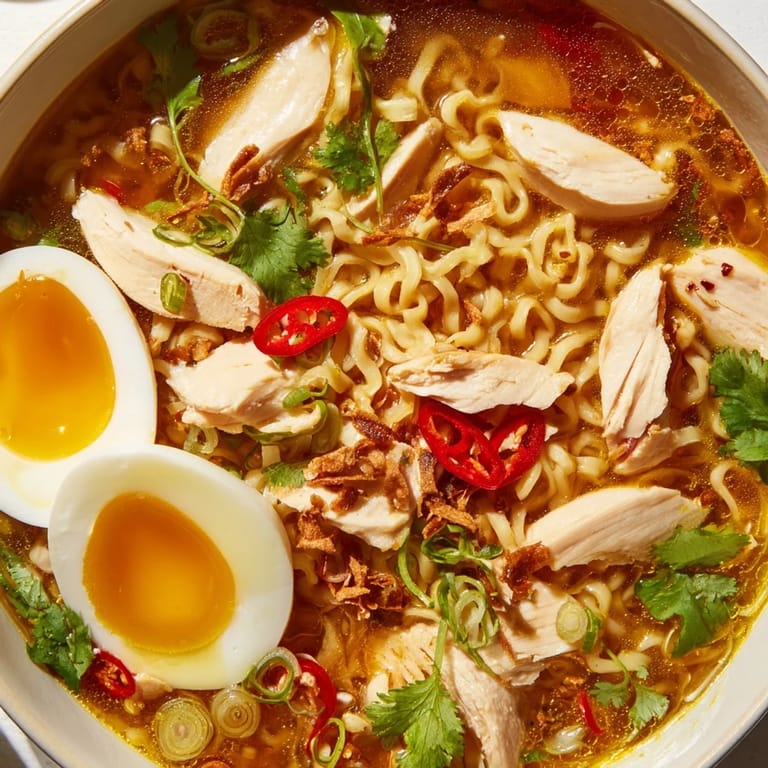
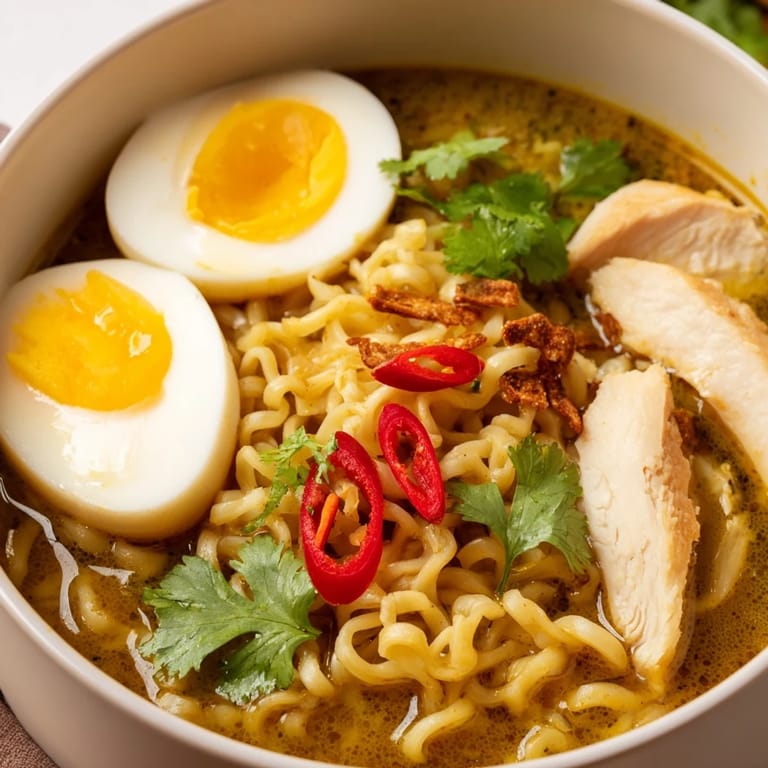
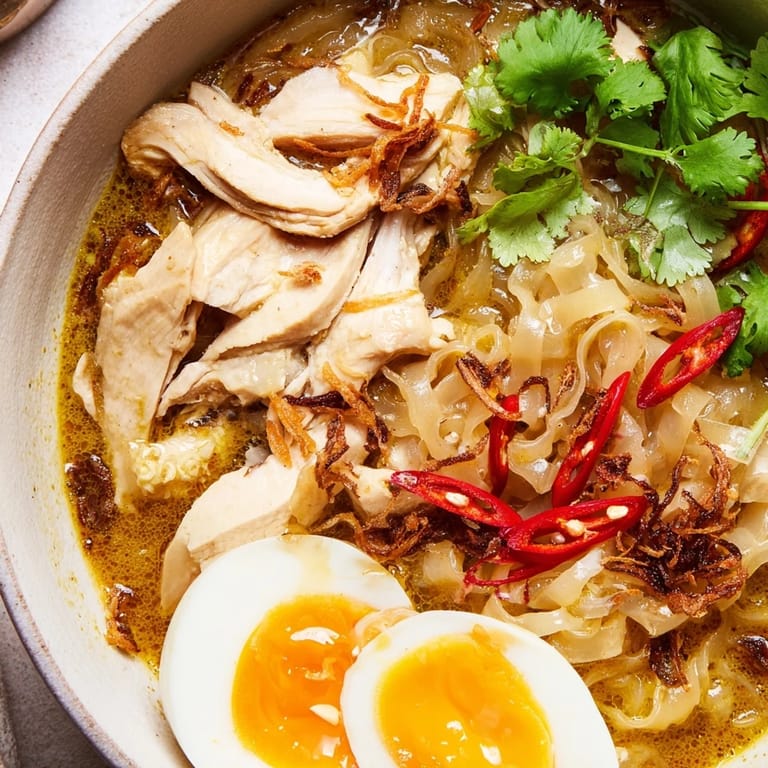
- Divide the noodles and bok choy among 4 bowls, ladle over the hot broth, then top each with sliced chicken, halved eggs, crispy shallots, scallions, chili slices, and cilantro. Serve with lime wedges on the side.
 Save
Save The first time I made this, I forgot to prepare the toppings in advance and ended up scrambling while the noodles sat getting soggy. Now I lay everything out like a little assembly line, and it turns the final plating into something calm and satisfying. That small shift made this recipe feel less like a race and more like a ritual I actually enjoy.
Making It Your Own
This recipe is endlessly flexible once you understand the base. Swap chicken for shrimp or pork belly if you want a richer bite. Go vegetarian by using vegetable broth, cubed tofu, and skipping the fish sauce. I've even added mushrooms, snap peas, and baby corn when I had them in the fridge, and it all worked beautifully.
Storing and Reheating
Store the broth, noodles, and toppings separately in airtight containers in the fridge for up to three days. The noodles can get mushy if left sitting in liquid, so keep them apart. When reheating, warm the broth gently on the stove, cook fresh noodles if possible, and assemble just before serving. The eggs and crispy shallots are best made fresh each time.
Pairing and Serving Suggestions
This bowl is a full meal on its own, but I like to serve it with a simple cucumber salad dressed in rice vinegar and a pinch of sugar. A crisp, citrusy white wine like Riesling cuts through the richness beautifully. If you want to lean into the Thai side, add a small dish of chili oil or Sriracha on the side for those who like extra heat.
- Serve in deep bowls so the broth stays hot longer.
- Offer extra lime wedges and fresh herbs at the table.
- Let everyone customize their heat level with chili slices or hot sauce.
 Save
Save This dish has become my go to when I want something comforting but not boring, familiar but not predictable. It reminds me that the best meals often come from mixing traditions and trusting your instincts in the kitchen.
Recipe FAQs
- → Can I prepare the broth ahead of time?
Yes, the broth can be prepared up to 2 days in advance and stored in the refrigerator. Reheat gently before serving, as boiling can break down the miso paste's beneficial properties and flavor.
- → What's the best way to achieve soft-boiled eggs?
Bring water to a rolling boil, carefully add eggs, and cook for exactly 7 minutes. Immediately transfer to an ice bath to halt cooking. This creates a set white with a creamy, runny yolk perfect for ramen bowls.
- → How can I make this vegetarian?
Substitute vegetable broth for chicken broth, replace chicken with pressed tofu or mushrooms, and omit the fish sauce. Add extra miso or a splash of soy sauce to maintain umami depth and savory complexity.
- → Can I adjust the spice level?
Absolutely. Control heat by reducing or increasing the Thai red curry paste in the broth, and add fresh chili slices to individual bowls. Start with less paste and taste as you go to find your preferred level.
- → What type of noodles work best?
Fresh ramen noodles provide the best texture and absorb broth beautifully, but dried ramen works well too. Cook according to package directions, being careful not to overcook. Some prefer egg noodles or even thin rice noodles for variation.
- → How do I store leftovers?
Keep broth and toppings separate in airtight containers for up to 3 days. Store noodles separately as they continue absorbing liquid. Reheat broth gently and assemble fresh bowls for best texture and flavor.