 Save
Save The first time I made pho at home, I was chasing a memory of a rainy Hanoi street, where steam rose from a vendor's pot like fog rolling through the city. I didn't have hours to spend nursing a broth, so I learned to work backwards—letting spices do the heavy lifting, letting heat do the work that time usually does. This version proved something to me: you don't need to spend all day in the kitchen to capture that warm, aromatic soul of real pho.
I remember making this for my sister on a weeknight when she said she was craving something that felt like comfort but tasted like an adventure. Watching her squeeze lime into the steam, pile on the herbs, taste it and close her eyes—that's when I realized this quick version wasn't a shortcut at all. It was just as honest as the real thing, just faster.
Ingredients
- Low-sodium beef or chicken broth (8 cups): The foundation of your pho; I prefer beef for deeper flavor, but chicken works beautifully and keeps things lighter.
- Onion (1 small, peeled and halved): Charring it first adds subtle sweetness and complexity—a step that seems small but changes everything.
- Fresh ginger (2-inch piece, sliced): This is your warmth, your spice without heat; don't peel it, just slice it thick so it releases its oils slowly.
- Star anise (3 whole): Each one brings that licorice-like aromatic magic that makes pho unmistakably pho.
- Cinnamon stick (1): A whisper of warmth that ties the spices together without announcing itself.
- Whole cloves (3): Use restraint here—they're potent, and three is the sweet spot.
- Fish sauce (1 tablespoon): Trust this; it doesn't taste fishy when balanced right, it tastes like depth and authenticity.
- Soy sauce (1 tablespoon): Salt, umami, and a gentle savory note that rounds out the broth.
- Sugar (1 teaspoon): Just enough to balance the spices and let the broth sing.
- Rice noodles (300 g): Use the flat bánh phở style if you can find them; they hold the broth better than thin ones.
- Beef sirloin or eye round (300 g, thinly sliced): Slice it as thin as you can manage, against the grain; the hot broth will cook it in seconds.
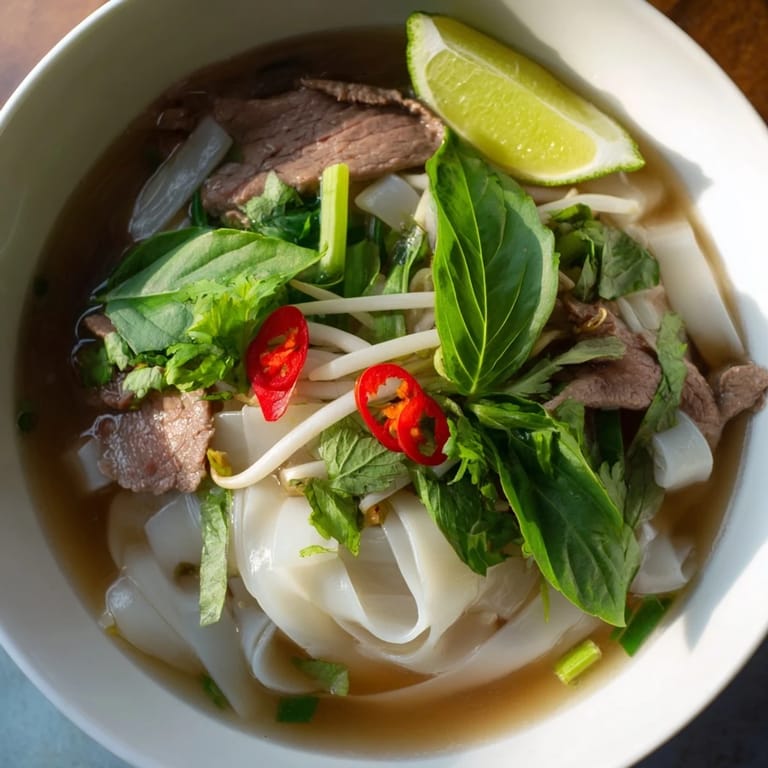
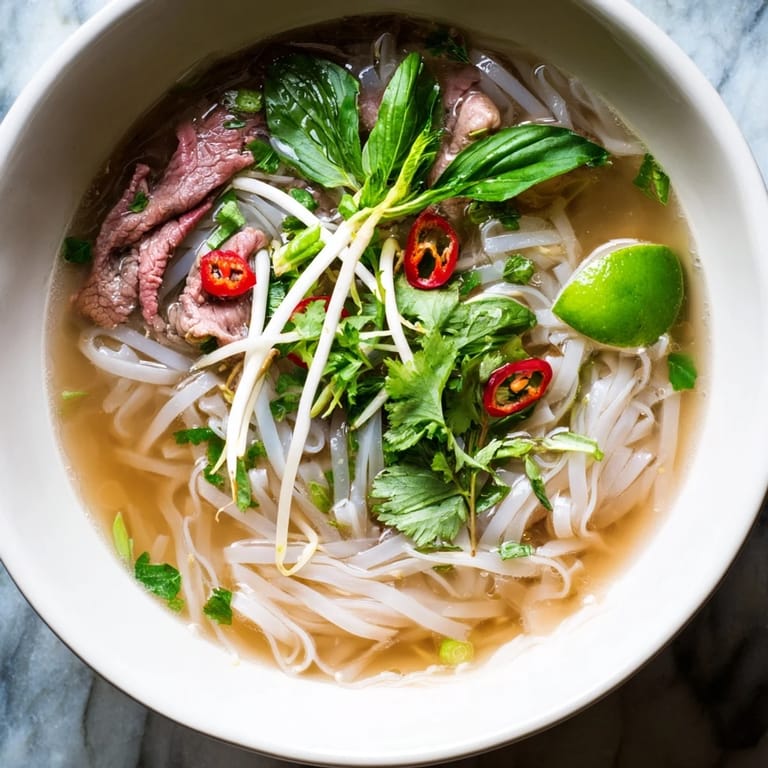
- Bean sprouts, Thai basil, cilantro, scallions: These are your freshness, your textural contrast—don't skip them, they make the dish.
- Lime and chili: Brightness and heat, added to taste by whoever's eating.
Tired of Takeout? 🥡
Get 10 meals you can make faster than delivery arrives. Seriously.
One email. No spam. Unsubscribe anytime.
Instructions
- Toast your spices (optional but worth it):
- If you have a moment, lightly char your onion halves in a dry pan until they're golden on the cut side. The same goes for your ginger—a quick pan sear wakes up their aromatics. It's not essential, but it's the difference between good pho and pho that makes you stop mid-bite.
- Build the broth:
- Combine your broth with the onion, ginger, star anise, cinnamon, and cloves in a large pot. Bring it to a boil, then lower the heat and let it simmer uncovered for 20 minutes—you're not rushing, you're letting the spices unfold into the liquid.
- Season and strain:
- After 20 minutes, add fish sauce, soy sauce, sugar, and salt. Simmer for 5 more minutes, then pour everything through a fine-mesh strainer, pressing gently on the solids. Return the clear, fragrant broth to the pot and keep it hot over low heat.
- Cook your noodles:
- Follow the package directions—most fresh rice noodles need just 2-3 minutes in boiling water, dried ones a few minutes more. Drain them well and divide them among four large, warm bowls.
- Layer your meat:
- Arrange your thin-sliced beef directly over the noodles in each bowl. This is where the magic happens—everything's about to come together.
- The final pour:
- Ladle the hot broth directly over the meat and noodles. Watch it work: the beef turns from raw to perfectly cooked in the time it takes you to grab a spoon. Top with bean sprouts, basil, cilantro, scallions, and chili if you like heat.
- Finish and serve:
- Set out lime wedges, hoisin sauce, and sriracha on the side. Let everyone build their own flavor—it's part of the ritual.
 Save
Save One night, my neighbor smelled the pho simmering through our shared wall and knocked to ask what I was making. Twenty minutes later she was sitting at my table with a bowl in front of her, and I watched her experience Vietnamese food the way it's meant to be experienced—customized, shared, alive with fresh herbs and the sound of satisfied eating.
Why This Broth Works in a Hurry
Traditional pho broth simmers for hours because time extracts flavor from bones and connective tissue. Here, we're using store-bought broth as our base—which is already rich—and letting spices do the extraction work instead. Star anise, cinnamon, and cloves are potent flavor carriers; they don't need hours to give everything they've got. The result tastes like you've been tending a pot all day, even though you haven't. It's not cheating; it's just understanding how flavor actually works.
The Customization Magic
One of my favorite things about pho is that it arrives at the table as potential—a hot bowl of broth and noodles that everyone finishes differently. Your coworker might pile on cilantro and go light on chili. Your friend might squeeze half a lime and drown everything in sriracha. That variability is the whole point. It's food that asks you what you want, then lets you have it. Keep extra herbs in the center of the table and let people play.
Timing and Temperature
The only real rule here is temperature: everything works because of the heat differential. The broth must be actively hot when it hits the raw beef, and the bowls should be warm before they ever touch your table. Cold dishes absorb the broth and go limp; warm ones stay textured and alive. This is why pho tastes so good when you eat it immediately—it's a race against physics, and the race is half the pleasure.
- If your bowls have been sitting out, microwave them with a splash of water for 30 seconds before assembly.
- Cook your noodles just before you ladle, not five minutes ahead; they continue softening even off the heat.
- Have your garnish platter completely assembled before you start the final pour—you're moving fast now.
 Save
Save This pho isn't a compromise or a shortcut—it's proof that the best meals don't require the most time, just the most intention. Make it when you're hungry, when you want something that tastes like home, or when someone you care about needs exactly this.
Recipe FAQs
- → Can I substitute the meat with a vegetarian option?
Yes, you can replace meat with tofu and use vegetable broth to maintain the dish's depth and aromatic flavors.
- → What gives the broth its distinctive aroma?
The broth’s aroma comes from spices like star anise, cinnamon, cloves, and fresh ginger simmered gently for full flavor.
- → How do I cook the noodles properly?
Cook the flat rice noodles according to the package instructions, then drain them well before serving.
- → Is it necessary to strain the broth?
Straining removes solids for a clear, smooth broth, enhancing presentation and texture.
- → What fresh herbs are recommended for garnish?
Thai basil, cilantro, and scallions are traditional garnishes that add freshness and vibrant flavor.
- → Can I prepare this dish ahead of time?
The broth can be prepared in advance and reheated, but assemble the noodles and meat just before serving for best texture.