 Save
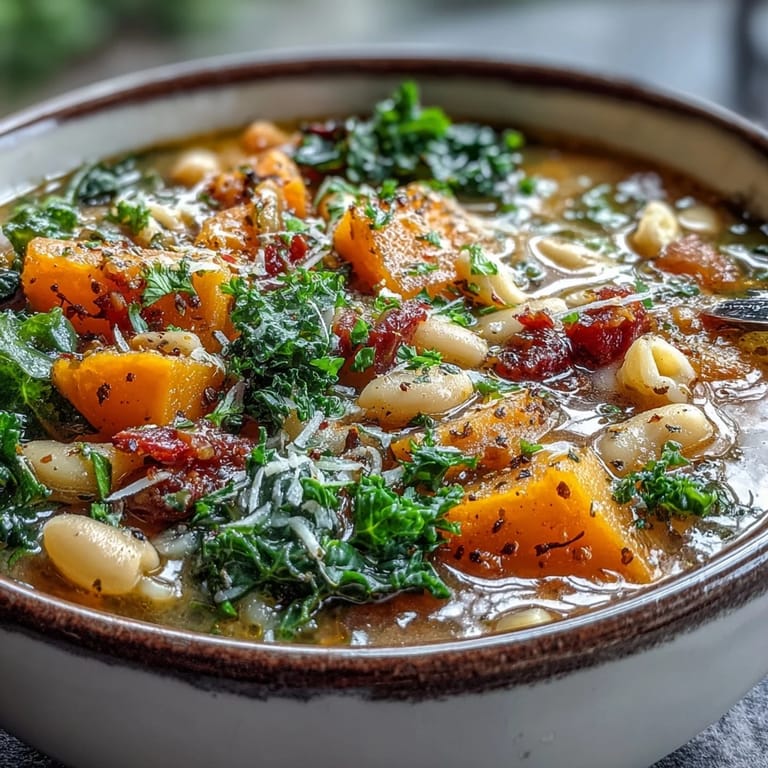
Save The first cold snap of November always signals minestrone season in my house. Last year, I was battling a particularly stubborn cold when I threw together this winter version with butternut squash from my neighbor's garden. Standing over the steaming pot, my sinuses clearing with each aromatic stir, I knew this recipe would become a seasonal staple. The kitchen windows fogged up as the herbs infused the broth, creating a cozy barrier against the frost-covered world outside.
My friend Sofia stopped by unexpectedly one Sunday afternoon while this soup was simmering. She had just moved from Italy and was feeling homesick for her mothers cooking. The look on her face when she walked in and inhaled was worth a thousand thank-yous. We sat at my kitchen counter, steam rising from our bowls, as she told stories of her grandmothers minestrone in Tuscany. By the third spoonful, she was scribbling notes of my recipe variations to send to her mother.
Ingredients
- Butternut Squash: Look for one with a matte rather than glossy skin which indicates its perfectly ripe and will break down beautifully in the soup.
- Kale: Massage the chopped leaves between your fingers for about 30 seconds before adding to the pot if you want them less bitter and more tender.
- Cannellini Beans: Give them a quick rinse until the water runs clear to remove the canned flavor and prevent any unwanted cloudiness in your broth.
- Pasta: The smaller the better here since theyll continue absorbing liquid even after cooking, so those tiny ditalini or even broken spaghetti work wonderfully.
- Dried Herbs: I crush them between my palms right over the pot to release their oils before they hit the broth for maximum flavor infusion.
Tired of Takeout? 🥡
Get 10 meals you can make faster than delivery arrives. Seriously.
One email. No spam. Unsubscribe anytime.
Instructions
- Build Your Flavor Base:
- Heat olive oil in your largest pot and add the diced onion, carrots, and celery with a pinch of salt. Listen for that gentle sizzle that tells you the heat is just right as the vegetables release their sweetness.
- Wake Up The Garlic:
- Once the vegetables have softened and your kitchen smells like comfort, add the minced garlic and let it perfume the oil for just a minute. Your nose will tell you when its ready to move on as the sharp garlic smell mellows.
- Introduce The Stars:
- Add your butternut squash and zucchini to the pot, giving everything a good stir to coat with the aromatic oil. Watch as the edges of the squash begin to glisten slightly as they take on flavor.
- Create The Soup Canvas:
- Pour in those tomatoes and watch that beautiful color bloom throughout the pot before adding your vegetable broth and herbs. The liquid should be bubbling gently around the vegetables like a warm bath.
- Simmer Patiently:
- Let everything simmer under a partially covered lid, the steam occasionally escaping in aromatic puffs. You want the squash just tender enough to hold its shape but yield easily to your spoon.
- Bring Everything Together:
- Add beans, pasta, and kale at the end so they maintain their distinct textures and the kale keeps its vibrant color. Watch the soup transform as the kale wilts and the pasta plumps up, absorbing all those fantastic flavors.
- Final Touches:
- Fish out that bay leaf like finding a prize and then taste for seasoning. The soup should taste complete but not salty, with each spoonful offering a slightly different combination of vegetables.
 Save
Save One particularly hectic Tuesday, I served this minestrone to my children after a long day of winter sports and homework struggles. The kitchen fell silent except for the sound of spoons against bowls and appreciative slurps. My normally picky 8-year-old, who categorically rejected anything green, asked for seconds and then sheepishly admitted that maybe kale wasnt so bad after all. That small triumph made me feel like I had won some invisible parenting award that only I knew about.
Seasonal Adaptations
Ive made this soup through various winters, each time adapting to whatevers available. During January blizzards, I substitute sweet potatoes when butternut squash is scarce, and theyve lent an even more velvety texture to the broth. After experimenting with different greens, I discovered that lacinato kale holds its structure better than curly varieties, maintaining that perfect balance between chewy and tender even when reheated. Spring versions welcome asparagus snippets and baby spinach, while late autumn calls for additions of roasted Brussels sprout halves that contribute a smoky dimension.
Serving Suggestions
The ritual of serving this minestrone has evolved in my home to include a toppings bar that brings everyone to the table with excitement rather than the usual coaxing. Small bowls of lemon zest, chili flakes, torn basil, and toasted pine nuts allow each person to customize their experience. My husband prefers a heavy hand with freshly cracked pepper and a splash of good olive oil floating on top, creating tiny pools that catch the light beautifully. For dinner parties, I serve it in wide, shallow bowls that showcase the colorful medley of vegetables and place a wedge of Parmesan on the table with a small grater for guests to shower their portions with as much cheese as they desire.
Storage and Leftovers
Through multiple batches and many containers of leftovers, Ive learned that this soup ages like a fine wine in your refrigerator. The flavors meld and deepen, with the broth becoming increasingly nuanced as it sits. By day three, the garlic and herbs have fully infused every component, creating an even more satisfying experience than the initial serving. When reheating, I always add a fresh splash of olive oil and a handful of newly torn herbs to awaken the flavors that may have settled.
- Store any leftover soup in airtight glass containers rather than plastic to prevent the tomato-based broth from staining.
- If freezing portions for later, leave about an inch of space at the top of containers as the soup will expand slightly when frozen.
- Consider reserving some fresh herbs to add to reheated portions for a burst of color and flavor that makes leftovers feel like new.
 Save
Save This winter minestrone has become more than just a recipe in my household its a signal that the cozy season has truly arrived. Whenever I make it, the kitchen becomes the warmest room in both temperature and spirit, drawing everyone in with promises of comfort in a bowl.
Recipe FAQs
- → Can I freeze this soup?
Yes, though it's best to freeze without the pasta. Cook and add fresh pasta when reheating to prevent it from becoming mushy. The soup keeps well for up to 3 months in the freezer.
- → What pasta works best?
Small shapes like ditalini, elbow macaroni, or shells hold up beautifully in broth. For gluten-free needs, choose rice-based pasta or substitute with additional beans or rice.
- → How do I store leftovers?
Keep refrigerated in an airtight container for up to 4 days. The pasta will absorb liquid as it sits—simply add a splash of broth when reheating to reach desired consistency.
- → Can I use other greens?
Absolutely. Spinach, chard, or collard greens work well. Add delicate greens like spinach in the last few minutes to prevent wilting, while heartier greens can simmer longer.
- → Is this suitable for meal prep?
Perfect for weekly planning. Make a batch on Sunday, portion into containers, and enjoy throughout the week. The flavors deepen over time, making leftovers even more delicious.